

Cosmic Refuges on Our Doorstep
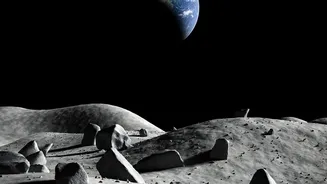
For decades, the Moon has been considered a dead world, blasted by unfiltered solar radiation and subject to extreme temperature swings. But recent findings are changing that perception. Scientists have identified and mapped specific areas, primarily
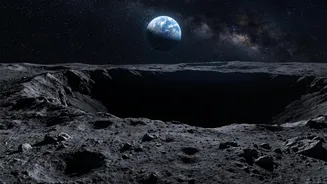
within permanently shadowed regions (PSRs), where conditions are just right to allow some of the hardiest Earth microbes to survive. These PSRs are craters and crevices near the lunar poles that never see direct sunlight due to the Moon's slight axial tilt. As a result, they remain incredibly cold and are shielded from the most damaging ultraviolet radiation, creating tiny pockets where life, as we know it, might just hang on.
How the Maps Were Made
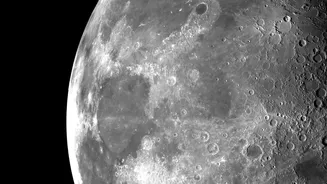
The groundbreaking maps were not created by sending new probes, but by cleverly combining existing data with sophisticated computer models. A research team led by NASA scientists used high-resolution environmental maps built from elevation and temperature data collected by instruments aboard the Lunar Reconnaissance Orbiter (LRO). They then simulated how radiation strikes the lunar surface, paying close attention to how crater walls, ridges, and even small bumps could cast protective shadows. Into this virtual lunar landscape, they introduced several types of bacteria and fungi commonly found on spacecraft and associated with human astronauts. By modeling their known resistance to radiation and cold, the team could predict and map out the “survivable niches” across the south pole.
Survival, Not Growth
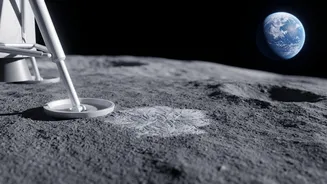
It is crucial to understand that these zones are for survival, not thriving. The study makes it clear that the Moon still lacks the key ingredients for microbial growth, most notably liquid water and a nurturing atmosphere. Microbes in these zones would enter a dormant, freeze-dried state called cryptobiosis, where all metabolic activity pauses. They wouldn't be growing or reproducing. However, the fact that they could survive at all—for days, or in the case of the hardiest fungus, Aspergillus niger, possibly more than a week—is a monumental discovery. It means that even a simple bootprint could create a sheltered micro-environment for these tiny hitchhikers.
A Double-Edged Sword for Science
This discovery presents both an opportunity and a challenge. The primary concern is forward contamination: astronauts or robotic landers could unintentionally introduce Earth microbes that contaminate the pristine lunar environment. This could corrupt future scientific investigations searching for the Moon's original chemical signatures or evidence of prebiotic materials preserved in the ice. On the other hand, scientists also see the Moon as a perfect natural laboratory. By studying how these terrestrial microbes fare in a real extraterrestrial environment, we can learn invaluable lessons about the absolute limits of life—knowledge that will be critical for future missions to Mars and beyond.
The Indian Connection to the South Pole
This focus on the lunar south pole holds special significance for India. With the historic landing of Chandrayaan-3 and the continued operation of the Chandrayaan-2 orbiter, India has established itself as a key player in the exploration of this very region. The global scientific community's growing interest in the south pole validates India's strategic foresight in targeting this scientifically rich area, known to harbour water ice in its PSRs. As global agencies like NASA plan their Artemis missions to the south pole, data from studies like this will be vital. It informs not only where to look for interesting science but also how to protect these unique environments—a principle that will guide all future lunar explorers, including those from India, as they collaborate and operate in this new frontier.