




Understanding Visual Depth
Before diving into materials, it’s important to understand what “visual depth” means in design. It’s the art of making a space feel layered and interesting, rather than flat and one-dimensional. Texture, variation in colour, and the interplay of light
and shadow are key. Unlike uniform, man-made surfaces, natural materials have inherent imperfections—the grain in wood, the veins in stone, the weave of a textile—that draw the eye in and create a richer, more dynamic environment. This tactile quality prevents a room from feeling sterile and adds a sense of warmth and character.
Embrace the Warmth of Wood
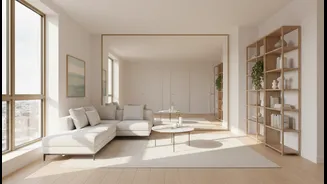
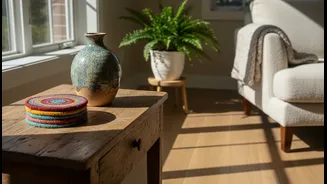
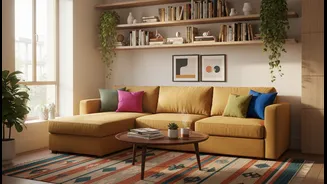
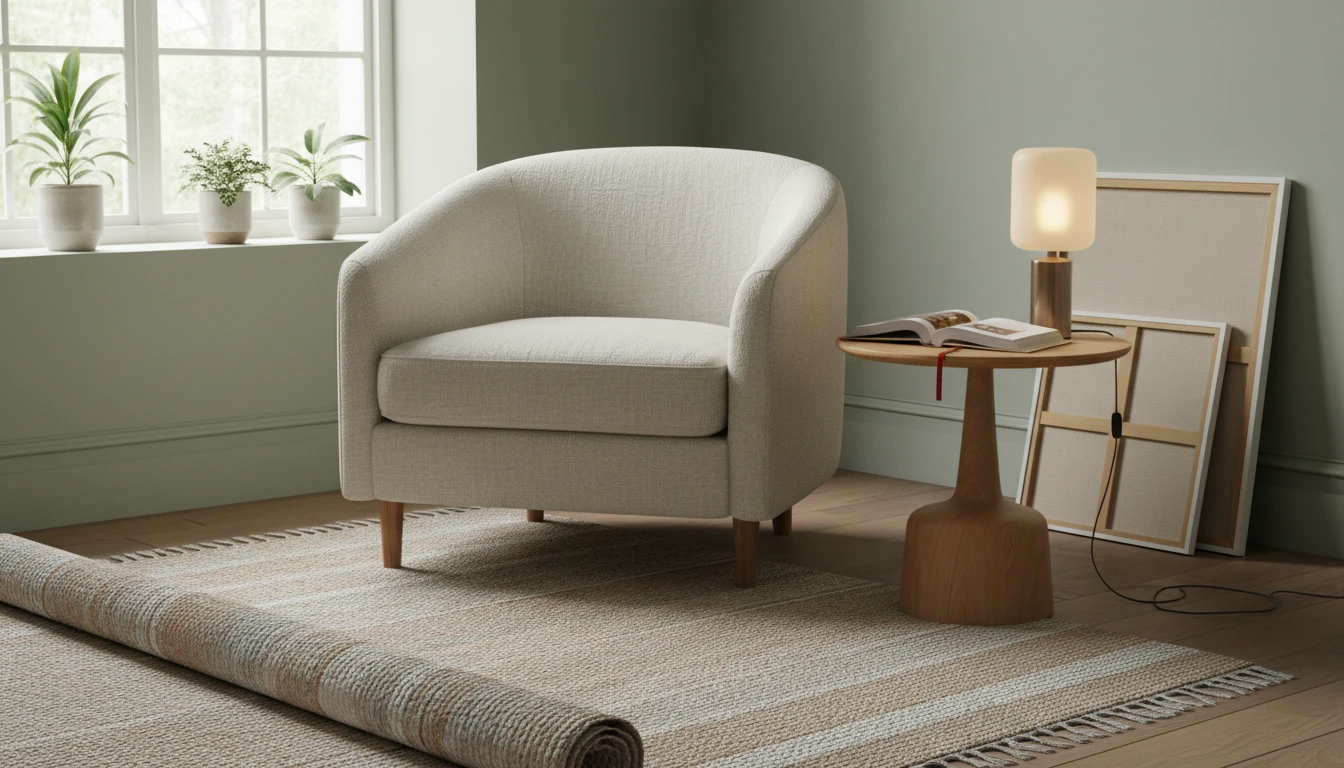
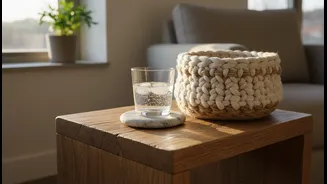
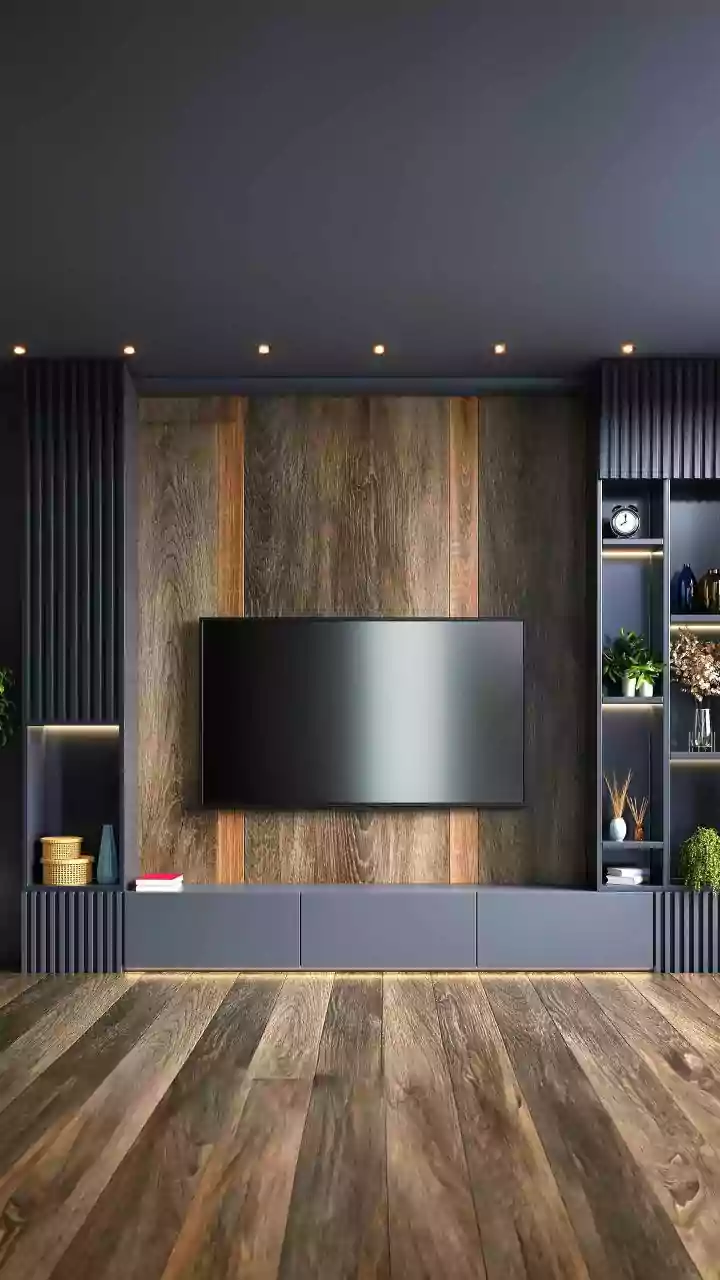
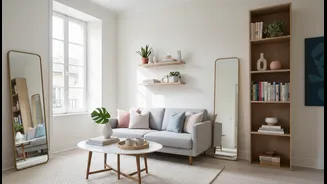
Wood is a foundational material for adding warmth and depth. Its natural grain tells a story and provides texture that softens architectural corners and balances cooler elements in a room. In a small apartment, you don’t need to install wall-to-wall wood flooring. Instead, think of strategic accents. A single accent wall with light-coloured wood panels can draw the eye and create a focal point. Consider furniture with visible grain, like a reclaimed wood coffee table or open-style bookshelves. These pieces add character without the visual bulk of heavy, dark furniture, which can make a space feel cramped.
Weave in Natural Textiles
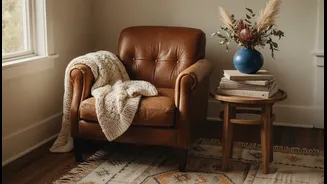
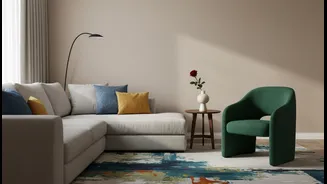
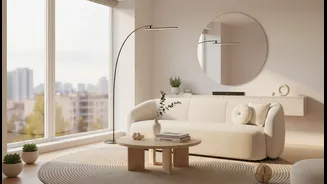
Fabrics are perhaps the easiest way to start layering textures. Materials like jute, cotton, linen, and wool add softness and absorb sound, making a room feel calmer and more comfortable. A jute or sisal rug is a classic choice for anchoring a living area; its coarse texture provides a beautiful contrast to a smooth floor and helps to define the space. You can also layer textiles by using linen curtains, which allow natural light to filter through, and adding chunky knit throws or cotton pillows to your sofa. This mix of different weaves and materials creates a tactile experience that adds significant depth.
Incorporate Stone and Earthenware
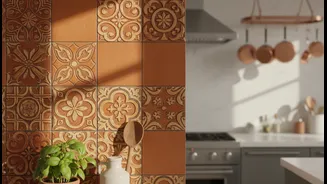
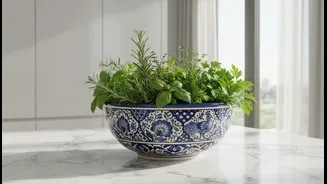
Stone and clay elements bring a grounding, earthy feel to an interior. While a full stone wall might be too much for a compact flat, you can introduce this material in smaller, impactful ways. Consider a stone or travertine-effect backsplash in the kitchen, or use elegant marble for a small countertop or decorative tray. Terracotta and clay are also making a huge comeback. Use terracotta pots for indoor plants or group a few unglazed clay vases as a centrepiece. These materials offer subtle, natural variations in colour and a matte finish that beautifully absorbs and softens light.
Let There Be (Natural) Light
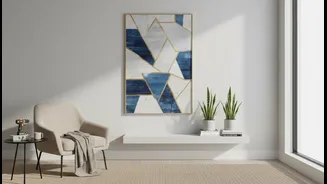
The effectiveness of these natural materials is amplified by good lighting. Maximise natural light wherever possible by using sheer curtains made of linen or cotton that diffuse light gently without blocking it. Light interacts beautifully with textured surfaces, highlighting the grain in wood, the weave of a rug, and the subtle imperfections in stone. This interplay of light and shadow is what ultimately brings the visual depth to life, making the room feel more dynamic and spacious throughout the day.
Don't Forget Living Greenery
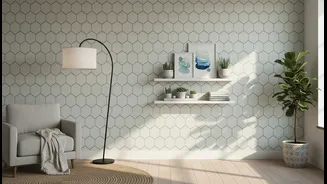
Finally, no naturally inspired home is complete without plants. Greenery is the ultimate natural accessory, bringing life, colour, and organic shapes into your home. In a small apartment, think vertically. Use hanging planters or wall-mounted shelves to display trailing plants like pothos. A single, large sculptural plant in a corner can act as a living focal point. Plants not only improve air quality but also provide a direct connection to the outdoors, making your home feel like a tranquil retreat.