







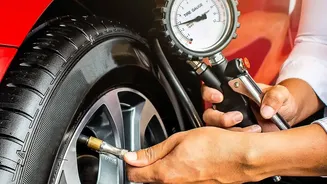
Grip is Everything: Tyres and Brakes
Your tyres are the only connection between your car and the slippery mountain road. Before you even think of starting the engine, inspect them thoroughly. The legal minimum tread depth in India is 1.6mm, but for monsoon safety in the hills, you should
aim for at least 3mm. A simple way to check is with a one-rupee coin; if you can see the entire Ashoka Pillar when inserted into the groove, your tyres are too worn for wet conditions. Also, check the tyre pressure, including the spare. Incorrect pressure can significantly increase the risk of hydroplaning. Brakes work harder in the rain and on steep inclines. Ensure your brake pads have sufficient thickness and that the brake fluid is not old or contaminated with moisture, which can make the pedal feel spongy and reduce stopping power.
See and Be Seen: Wipers and Lights
Heavy rain and fog can reduce visibility to near zero in the mountains. Your wipers and lights are your first line of defence. Wiper blades often crack and harden during the harsh Indian summer. If they leave streaks or make a chattering noise, replace them immediately. It’s a small investment for priceless visibility. Top up your windshield washer fluid, preferably with a proper cleaning solution, not just water, to cut through oily road grime. Next, walk around your car and test every single light: headlights (both high and low beam), tail lights, brake lights, and indicators. Clean the lenses, as a foggy or dirty headlight can significantly reduce brightness.
The Heart of Your Car: Engine and Battery
Getting stranded with a dead car is never fun, but it’s especially dangerous on a remote mountain pass. The monsoon puts extra strain on your vehicle's electrical system. Moisture and humidity can accelerate corrosion on battery terminals. Ensure the connections are clean and tight. If your battery is more than three years old, get it tested before you leave. Also, check all essential fluids, including engine oil and coolant. Driving up steep inclines puts a heavy load on the engine, causing it to run hot, and you don’t want to risk overheating halfway up a ghat road. A quick look at the belts and hoses for any cracks or signs of wear can also prevent a sudden breakdown.
Be Ready for Anything: The Emergency Kit
In the hills, especially during monsoon, you are often far from immediate help. A well-stocked emergency kit is non-negotiable. Your kit should contain items for both car trouble and personal safety. Essentials include a tow rope, jumper cables, a portable tyre inflator, and a puncture repair kit. Also pack a powerful flashlight (with extra batteries), a first-aid kit, a reflective warning triangle, and a multi-tool. Given the risk of getting stuck due to landslides or roadblocks, it's wise to carry extra non-perishable food like energy bars, and plenty of drinking water. An umbrella and a waterproof sheet or towel will also prove invaluable.
Smart Driving for Slippery Slopes
A prepared car is only half the battle; the other half is how you drive. On steep, wet ascents, use a lower gear to maintain momentum and prevent the engine from labouring. When descending, use a low gear again to take advantage of engine braking, which prevents your brakes from overheating. Avoid sudden acceleration, braking, or sharp steering movements, as these can easily cause a skid on a slippery surface. Maintain a much larger following distance than you would on dry roads. If you encounter a waterlogged patch, avoid driving through it if you can't judge its depth. Deep water can stall your engine or, worse, cause catastrophic water ingress.