





A Day in 90 Minutes
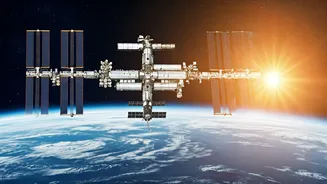
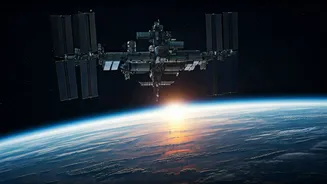
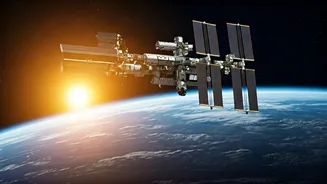
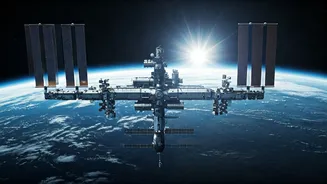
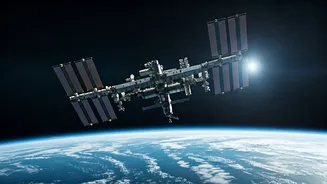
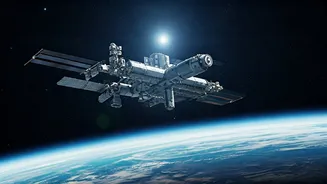
Here is the fact: the International Space Station (ISS) hurtles through space at a staggering 28,000 kilometres per hour. To put that into perspective, it completes a full orbit of our planet roughly every 90 to 93 minutes. This isn't just fast; it’s
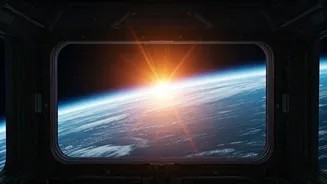
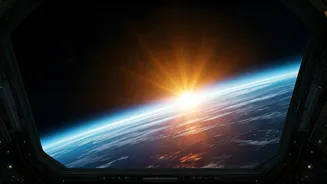
a velocity that fundamentally changes the human experience of day and night. While we on Earth go about our 24-hour cycle, the astronauts aboard the ISS witness a sunrise and a sunset approximately every 45 minutes. In a single Earth day, they experience this breathtaking cycle 16 times. Imagine watching 16 sunrises and 16 sunsets before you go to sleep. This incredible speed is essential to keep the station in orbit; it's constantly falling toward Earth, but moving so fast sideways that it continually 'misses' the planet.
Living on an Alien Schedule
Experiencing 16 sunsets a day sounds poetic, but it would wreak havoc on the human body's internal clock, or circadian rhythm. Our bodies are tuned to a 24-hour cycle of light and dark. To combat this, life on the ISS runs on a strict schedule based on Coordinated Universal Time (UTC). Astronauts have designated sleep times where they retreat into small, closet-like sleeping cabins, often covering the windows to block out the disorienting, rapid-fire sunrises. Even with these measures, sleep can be challenging. The station is filled with the constant hum of fans, pumps, and life-support systems, leading many astronauts to use earplugs to get some rest. It's a highly regimented existence, all designed to maintain health and productivity in an environment utterly alien to our biology.
A Football Field Floating in Space
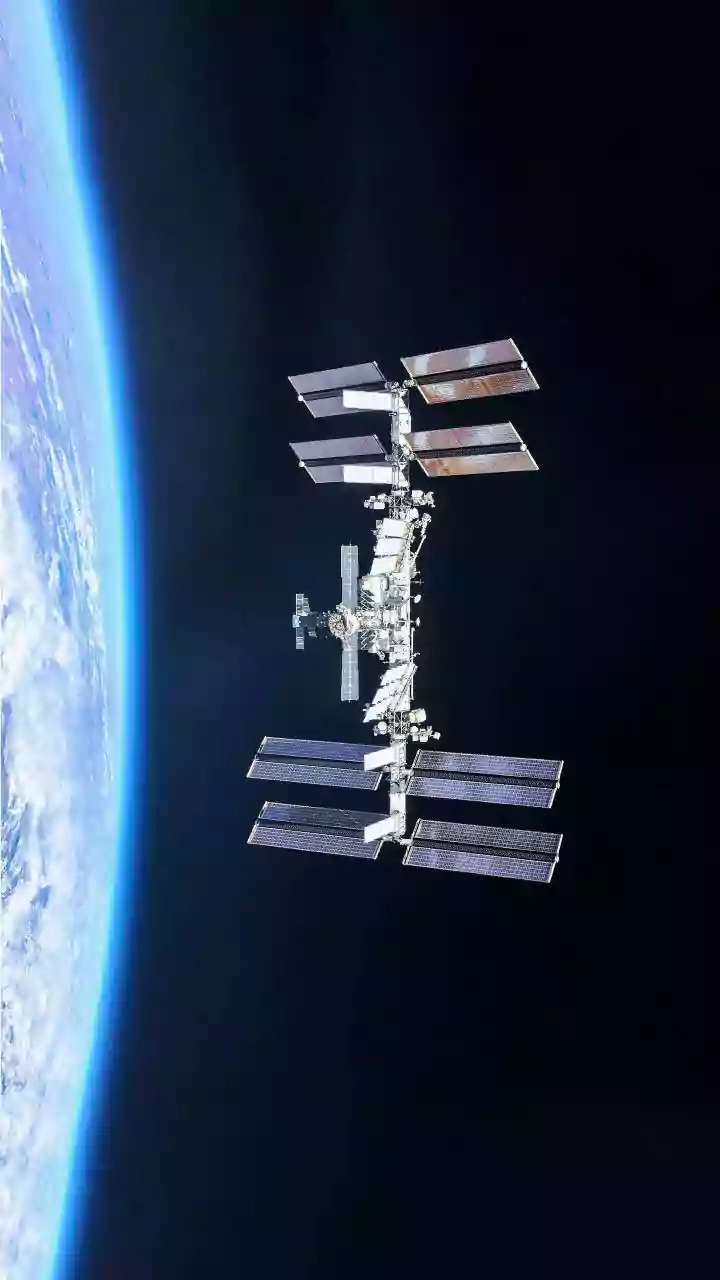
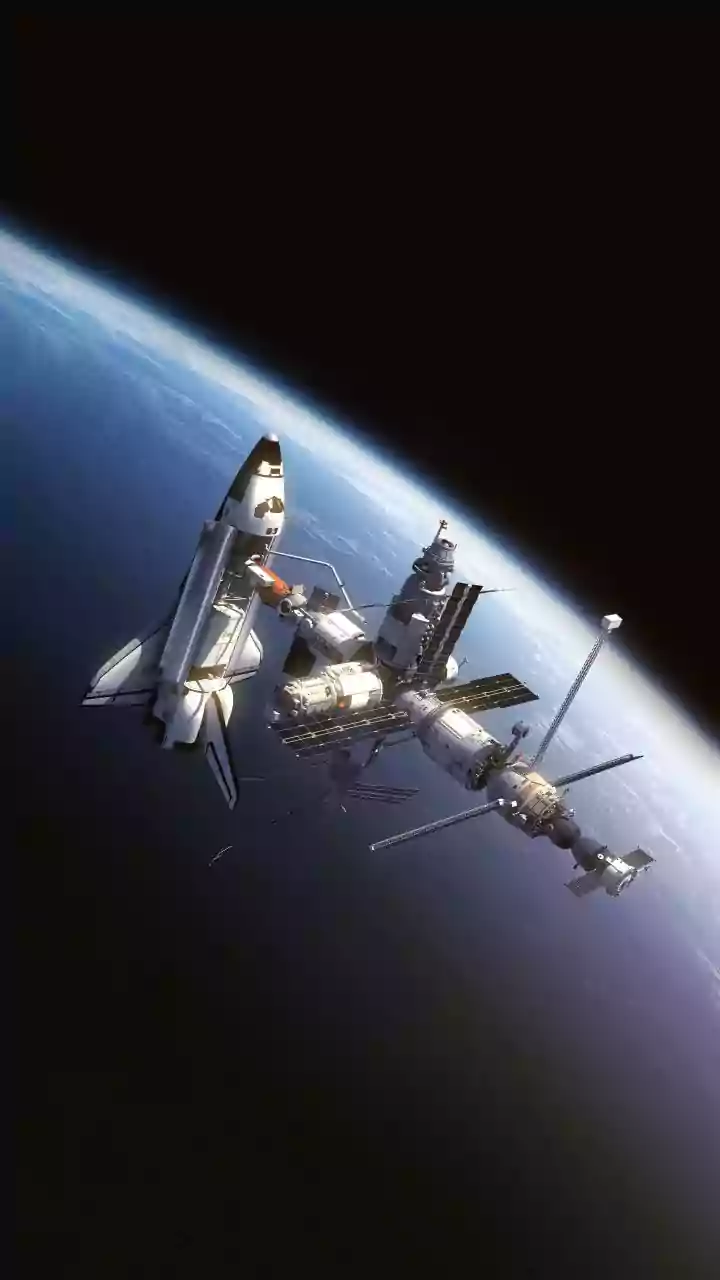
The ISS isn't just fast; it's also colossal. End-to-end, including its vast solar arrays, the station measures about 109 meters (356 feet) long—roughly the size of a football field. It weighs nearly 420,000 kilograms and has more livable space than a conventional six-bedroom house, complete with two bathrooms, a gym, and a 360-degree bay window called the Cupola, which offers stunning views of Earth. This enormous structure wasn't launched in one piece. It was assembled module by module in orbit over many years, a complex construction project involving 15 countries and dozens of launches on US space shuttles and Russian rockets. It stands as the single most expensive object ever built by humanity, with an estimated cost of over $150 billion.
The Purpose of This Orbiting Marvel
Beyond the incredible statistics, the ISS is a world-class scientific laboratory. For over two decades, it has been continuously inhabited by humans, a record for the longest human presence in space. Astronauts living on the station are not just passengers; they are full-time researchers. They conduct experiments in biology, physics, astronomy, and medicine that are impossible to perform on Earth. A key area of research is understanding the effects of long-duration spaceflight on the human body, such as muscle and bone density loss. These lessons are critical as agencies like NASA plan for future missions to the Moon and Mars. The station also serves as a platform for technology demonstrations and Earth observation, providing invaluable data about our planet's climate and environment.