




Taming the Cosmic Data Deluge
Modern space missions generate an overwhelming amount of information. Telescopes and satellites capture dozens of terabytes of data every single day, far more than humans can manually sift through. This is where AI excels. Machine learning algorithms
can process and analyze vast quantities of satellite imagery and sensor data at incredible speeds. They can spot anomalies, identify patterns, and filter out irrelevant information, such as cloud-covered images, to improve the quality of observations. This allows scientists to more quickly discover exoplanets, classify celestial objects, monitor environmental changes on Earth, and even predict solar flares. Essentially, AI acts as a super-powered filter and analyst, turning chaotic raw data into structured, actionable insights.
Smarter, Faster, and Farther Navigation
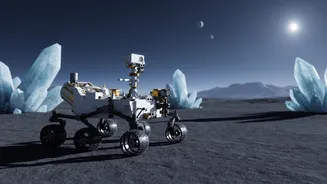
One of the biggest hurdles in deep-space exploration is the communication delay. It can take many minutes for a radio signal to travel from Earth to Mars, making real-time control of a rover impossible. AI solves this by enabling autonomous navigation. Spacecraft and rovers equipped with AI, like NASA's Perseverance Mars rover, can make decisions on their own. Using onboard cameras and sensors, they create 3D maps of the terrain, identify hazards like craters or sharp rocks, and plot the safest and most efficient path forward—all without waiting for instructions from ground control. This ability not only speeds up the pace of exploration but is also critical for missions to distant planets where direct human oversight isn't practical.
The Ultimate Mission Control Assistant
Keeping spacecraft and satellites healthy is a complex, 24/7 job. AI is increasingly being used to monitor the health of these multi-million dollar assets in real time. Predictive maintenance algorithms can analyze telemetry data to anticipate potential system failures before they happen, allowing operators to make corrective adjustments. AI also plays a crucial role in managing large satellite constellations. It can automate complex tasks like scheduling data collection, managing communication links, and optimizing satellite positioning to avoid collisions with other satellites or space debris. This automated management makes constellations more efficient, responsive, and reliable.
India's Own AI-Powered Ambitions
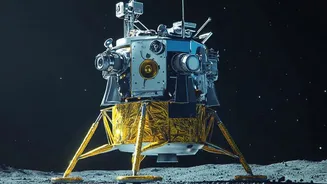
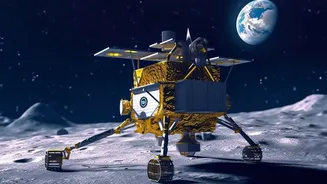
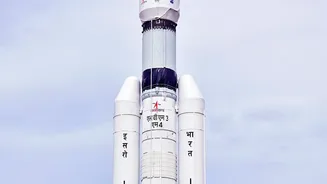
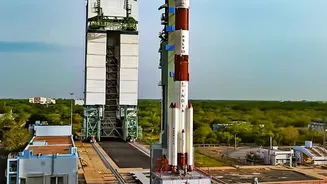
The Indian Space Research Organisation (ISRO) is actively integrating AI into its missions to enhance capabilities and reduce costs. AI played a significant role in the success of the Chandrayaan-3 mission, where algorithms helped guide the Pragyan rover's navigation on the lunar surface, steering it clear of obstacles. A special camera on the lander also used AI to analyze the landing area for potential hazards, contributing to the historic soft landing. Looking forward, ISRO is developing AI and machine learning solutions for a wide range of applications, including launch vehicle design, spacecraft operations, big data analytics, and space robotics, signalling a deep investment in the technology for future explorations.