

The New Digital Space Race
For decades, India's space journey was synonymous with the Indian Space Research Organisation (ISRO). While ISRO remains the anchor, the landscape is rapidly changing. The government's decision in 2020 to open the sector to private participation has unleashed
a wave of innovation. Today, India is home to around 440 space-tech startups, attracting significant private investment that surged from about $100 million in FY22 to over $600 million by March 2026. This privatisation, managed by the single-window agency IN-SPACe, means the future of space is a collaborative effort. This shift is redefining career paths. The focus is no longer solely on traditional aerospace and mechanical engineering. Instead, the industry is becoming a hotbed for tech talent, where data is as valuable as rocket fuel.
AI: The Brains of the Mission
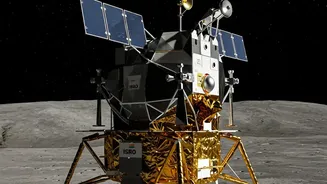
Artificial Intelligence (AI) is becoming the central nervous system for modern space exploration. ISRO is increasingly integrating AI and Machine Learning (ML) into its missions for everything from data analysis to autonomous navigation. For instance, AI algorithms were crucial in analysing the lunar surface for the Chandrayaan missions to ensure a safe landing. Future missions, including the Gaganyaan human spaceflight programme, will rely on AI-enabled systems to monitor crew health and manage spacecraft operations with minimal ground control. This creates a huge demand for AI specialists, data scientists, and ML engineers who can build algorithms to process vast amounts of satellite data for applications like climate monitoring, precision agriculture, and disaster management. These roles involve sifting through terabytes of data to find patterns that can predict crop yields or track deforestation in near real-time.
Robotics: The Hands of Exploration
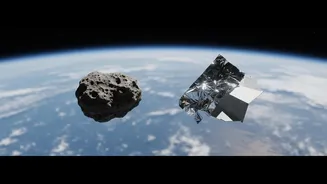
From rovers navigating alien terrain to robotic arms assembling structures in orbit, robotics is essential for missions that are too dangerous or distant for humans. ISRO has used AI-powered rovers like Pragyan, and for the upcoming Gaganyaan mission, a humanoid robot named 'Vyommitra' will fly on test missions to simulate human presence. The need for robotics extends beyond exploration. On Earth, automation is transforming the manufacturing of satellites and launch vehicles, making the process faster and more cost-effective. This opens up exciting careers for robotics engineers, mechatronics experts, and automation specialists who can design, build, and maintain these complex systems. These professionals will be at the forefront of developing robots for on-orbit servicing, asteroid mining, and building future lunar bases.
Electronics: The Heart of the Machine
Every sensor, communication system, and navigation computer on a spacecraft relies on advanced electronics. The harsh environment of space—with extreme temperatures and radiation—demands highly specialised, radiation-hardened components. As India expands its satellite constellations for communication, navigation, and defence, the demand for cutting-edge electronics is booming. This is creating jobs in semiconductor design, embedded systems engineering, and Very Large-Scale Integration (VLSI). Professionals in these fields will develop the powerful, resilient, and miniaturised electronic systems that serve as the backbone of every satellite, probe, and rocket. A deep understanding of electrical and electronics engineering is becoming a critical skill for the next generation of space hardware.
Building India's Future Space Workforce
The jobs of India's future space economy are interdisciplinary. A successful career will no longer reside in a single silo of engineering. Future experts will need to blend skills. For example, a robotics engineer will need to understand AI to program autonomous rovers, and a data scientist will need domain knowledge of orbital mechanics to analyse satellite trajectories. Programming languages like Python, C++, and MATLAB are becoming as fundamental as physics and mathematics. As private companies like Skyroot Aerospace and Agnikul Cosmos build their own launch vehicles, they are seeking talent with hands-on experience in these blended disciplines. This new ecosystem demands a workforce that is adaptable, collaborative, and fluent in the language of both software and hardware.