







A Sudden and Shocking Reversal
For years, the story of Antarctica’s sea ice was one of puzzling stability. While the Arctic was in a clear, well-documented melt, the ice surrounding the southern continent was holding its own and, in some years, even growing. Then, around 2016, the script
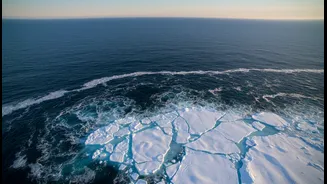
flipped dramatically. Sea ice extent plummeted to record lows, and it has struggled to recover since. The record low was set in February 2023, and while the 2026 minimum was closer to the long-term average, scientists note the system remains in a state of flux. This abrupt shift from a period of slight expansion to a series of historic lows has convinced many researchers that Antarctica has entered a new, less predictable, and worrying phase, forcing them to re-evaluate their understanding of the continent's climate dynamics.
The Hunt for Hidden Culprits
To understand this rapid change, scientists are looking deep into the Southern Ocean. Recent studies point to a powerful combination of factors. For decades, increased rain and meltwater created a fresh, cool layer on the ocean surface, which acted like a lid, trapping warmer, saltier water below. This process actually helped insulate and grow sea ice. However, changes in wind patterns, likely linked to broader climate change, have begun to drive more upwelling. This process churns the ocean layers, bringing that trapped, warmer deep water to the surface where it can melt sea ice from below. Robotic ocean probes and satellite data have been crucial in piecing together this complex interplay of wind, water salinity, and temperature, revealing a battle between competing forces that the warmer ocean now seems to be winning.
Why This Matters for the World
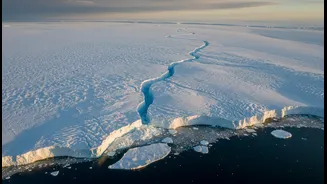
Antarctica might seem remote, but what happens there has global consequences. The vast, white sea ice acts as a planetary sun shield, reflecting solar radiation back into space. When it vanishes, the darker ocean water below absorbs that heat, creating a feedback loop that accelerates warming. This process doesn't just affect Antarctica; it has the potential to disrupt global ocean circulation patterns that move heat and nutrients around the planet. Furthermore, sea ice acts as a protective buffer for the massive land-based ice sheets and floating ice shelves. Without it, these shelves are more exposed to wave action and warm water, increasing the risk of collapse and accelerating the flow of glaciers into the sea — the primary driver of global sea-level rise.
The Direct Impact on India
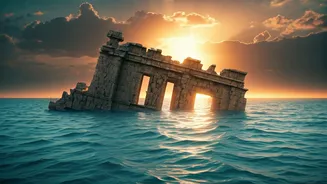
The melting of Antarctic ice is not a distant problem for India. With a 7,500-kilometre coastline and numerous low-lying major cities, including Mumbai, Chennai, and Kolkata, India is highly vulnerable to sea-level rise. Studies have shown that melt from Antarctica does not raise sea levels uniformly; in fact, due to complex gravitational effects, it can cause a greater-than-average rise in the Indian Ocean basin. The complete collapse of the West Antarctic Ice Sheet alone could raise global sea levels by several metres, which would have devastating consequences for India's coastal communities, threatening displacement, saltwater intrusion into freshwater sources, and immense economic disruption. While the direct link is still an area of active research, disruptions to massive ocean systems can also influence larger climate patterns like the monsoon, which is the lifeblood of the subcontinent's agriculture and economy.