




From Hints to Hard Evidence
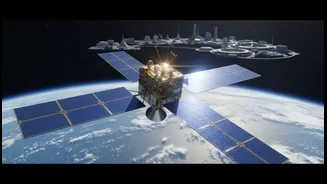
The story of water on the Moon has been a slow-burn thriller, and ISRO has written some of its most exciting chapters. While initial missions hinted at its presence, data from the Chandrayaan-2 orbiter has provided some of the strongest evidence to date
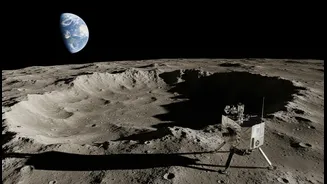
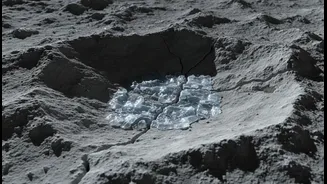
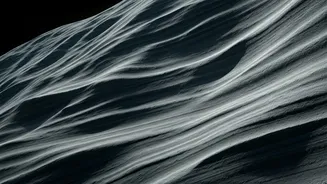
for subsurface water ice. Using a sophisticated instrument called the Dual Frequency Synthetic Aperture Radar (DFSAR), scientists have peered beneath the lunar surface, particularly in the Moon's south polar region. They focused on “doubly shadowed craters”—areas so perpetually dark and cold, with temperatures dipping to around -248°C, that they have never seen sunlight. These ultra-frigid conditions are perfect for preserving water ice for billions of years. The radar signals bouncing back from the floors of these craters are consistent with buried ice, transforming what was once theory into a compelling case for a hidden reservoir.
Why Water Is the Gold of Space
In space, water isn't just for drinking; it's the ultimate multi-tool resource. Its value lies in a concept called In-Situ Resource Utilisation (ISRU), which essentially means living off the land. Launching anything from Earth is incredibly expensive, so the ability to find and use resources on the Moon is a game-changer. Lunar ice can be melted for drinking water and to grow plants. More importantly, through a process called electrolysis, water (H₂O) can be split into its component parts: breathable oxygen for life support and hydrogen, which, when combined with oxygen, becomes a powerful rocket propellant. This means the Moon could one day become a refuelling station for missions heading deeper into the solar system, like to Mars, dramatically cutting the cost and complexity of space exploration.
A Seat at the High Table
Finding potential water reserves isn't just a scientific victory; it's a major geopolitical development. As nations and private companies set their sights on the Moon, the question of who gets to use these resources is becoming critical. The United States-led Artemis Accords, which India has signed, provide a set of principles for space exploration, including the utilisation of space resources. These accords state that the extraction of resources does not inherently constitute national appropriation, which is forbidden by the Outer Space Treaty of 1967. By providing strong evidence of accessible water ice, ISRO’s findings give India a more influential voice in the crucial negotiations that will shape the rules of the road for the emerging lunar economy. This discovery strengthens India’s position as a key player in the new space race, where the prize isn’t just flags and footprints, but access to resources that will fuel the next era of human expansion.
From Discovery to Drilling
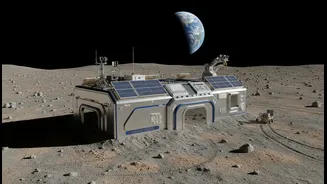
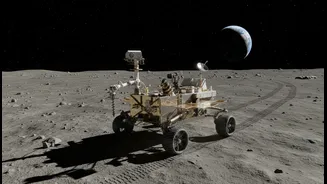
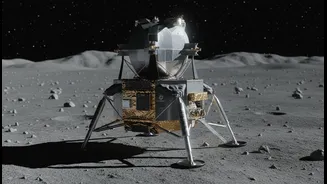
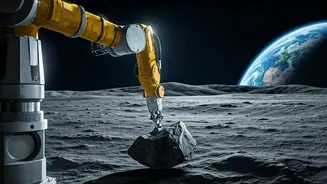
Confirming the presence of ice is just the first step. The next great challenge is figuring out exactly how much is there and how to get it out. This is where ISRO’s future plans come into focus. The upcoming Lunar Polar Exploration Mission (LUPEX), a joint project between ISRO and Japan’s space agency, JAXA, is designed to do just that. Scheduled to launch no earlier than 2028, the mission will send a lander and a heavy-duty rover to the Moon's south pole. The rover will be equipped with a drill capable of reaching about 1.5 meters below the surface to collect samples and directly analyse the quantity and quality of water ice. This mission will move beyond remote sensing to on-the-ground prospecting, providing the detailed data needed to plan for future mining and extraction operations.