




The Pressure Puzzle: Altitude and Your Tires
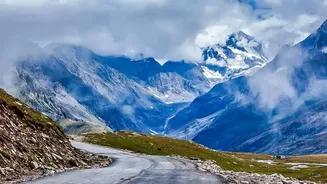
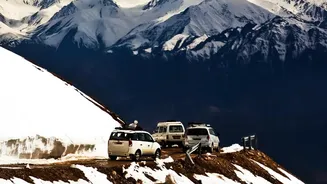
The physics are simple but have major consequences. As you ascend the high-altitude passes on the Manali-Leh route, like Tanglang La, the atmospheric pressure outside your vehicle drops significantly. According to Boyle's Law, this causes the air trapped
inside your tires to expand, increasing the internal pressure or PSI. A tire inflated correctly in Manali will become overinflated at 17,000 feet. This might not sound like a big problem, but over-inflation is dangerous. It reduces the amount of tire tread in contact with the road, decreasing grip on already tricky surfaces. An overinflated, stiff tire is also much more susceptible to a blowout, a risk you do not want to take on a remote mountain pass.
Managing Your Tire Pressure
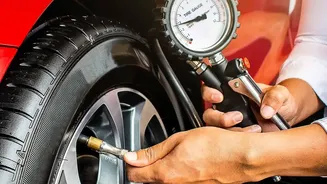
Preparation is key. Before starting, ensure all your tires, including the spare, have at least 70-80% tread depth. Start your journey from Manali with the tire pressure set to the manufacturer's recommended level for a cold tire, or even 2-3 PSI lower. The most important tool you can carry is a reliable pressure gauge. Check your tire pressure every morning when the tires are cold, as pressure also drops with temperature. As you gain significant altitude, you may need to release some air to keep the pressure within a safe range. Conversely, as you descend, you might need to add air. A portable tire inflator is an invaluable piece of equipment for this journey.
The Cold Truth: Batteries vs. Altitude
Both high altitude and extreme cold are enemies of battery performance. The primary issue is the cold. Low temperatures, which are common on the highway even in summer nights, slow down the chemical reactions inside a battery. This reduces the battery's ability to deliver power, which is why your car might struggle to start on a frigid morning in Sarchu or Pang. The thin air at high altitudes also means your engine has to work harder to combust fuel, putting additional strain on the entire electrical system. For conventional petrol or diesel vehicles, this means getting your battery professionally tested before the trip is a non-negotiable step.
Keeping Your Engine Cranking
Before you leave, have your battery and its terminals checked and cleaned. If it's more than a few years old, consider replacing it. During the trip, try to park your vehicle in a spot that gets morning sun, as even a few degrees of warmth can make a difference. At night, covering the bonnet area can help trap some residual engine heat. Avoid using your vehicle's electronics, like the stereo or interior lights, for extended periods with the engine off. One of the most crucial pieces of backup equipment you can carry is a set of quality jump-starter cables or a modern lithium-ion jump starter pack.
The Electric Vehicle (EV) Challenge
For electric vehicle owners, the Manali-Leh highway presents a magnified set of challenges. Cold weather is notoriously hard on EV batteries, significantly reducing their range—by up to 40% or more in freezing conditions. This is because the battery must power not only the drivetrain but also the thermal management system needed to keep itself warm enough to function. Furthermore, the scarcity of charging stations between Manali and Leh makes meticulous planning an absolute necessity. While regenerative braking on descents can recover some energy, it will not be enough to compensate for the massive range loss caused by the cold, altitude, and steep ascents. EV drivers must plan their route around the very few available charging points and be prepared for significantly longer charging times in the cold.