



Why All The Buzz?
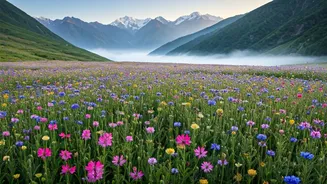
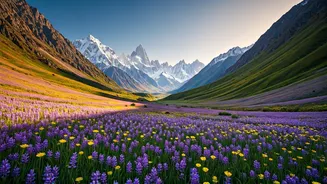
The Valley of Flowers isn't just another pretty landscape; it's a UNESCO World Heritage Site located in the Garhwal Himalayas. Its fame comes from the astonishing variety of alpine flowers that bloom here during the monsoon. After being covered in snow
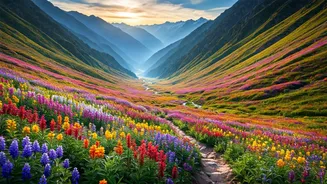
for most of the year, the valley floor transforms into a vibrant carpet of over 500 different floral species. This natural spectacle, combined with its accessibility for moderately fit beginners, has cemented its place on every nature lover's bucket list. The park officially opened for the 2026 season on June 1, sparking renewed excitement and planning among trekkers.
The Perfect Window to Visit
Timing is everything. While the park is open from June 1 to late October, the best time to witness its full glory is between mid-July and mid-August. This is when the monsoon rains trigger a peak bloom, and the valley is bursting with colour. Visiting in June offers a quieter experience with early bloomers and lingering snow patches, while September provides clearer skies as the flowers begin to fade. The park has strict timings: entry is allowed from 7:00 AM to 2:00 PM, and all visitors must exit by 5:00 PM. No overnight stays are permitted inside the valley itself.
Your Journey to the Valley
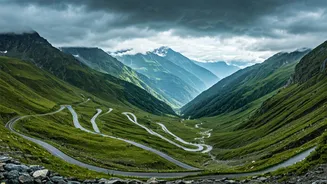
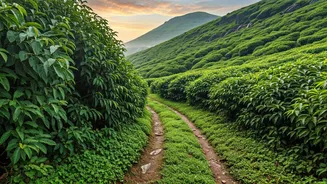
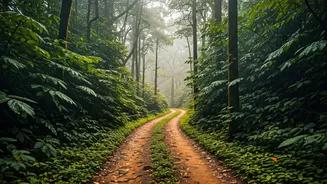
Reaching this remote paradise is an adventure in itself. The journey typically starts from Rishikesh or Haridwar with a long road trip (around 10-11 hours) to Joshimath, and then another hour to Govindghat. Govindghat is the last motorable point. From here, you can take a local taxi for about 4-5 km to Pulna. The actual trek begins from Pulna, with a roughly 9-10 km walk to the base camp, Ghangaria. This trek along the Pushpawati River is a scenic but moderately challenging ascent, passing through forests and small villages.
The Trek from Ghangaria
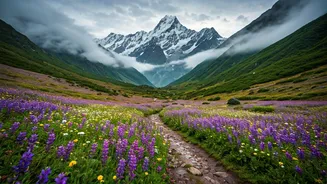
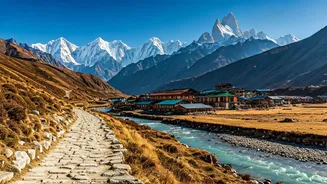
Ghangaria, a small hamlet at an altitude of about 10,000 feet, serves as the base for exploring the area. The trek from Ghangaria to the Valley of Flowers is a much shorter 3-4 km walk. The trail is well-defined and leads you past a forest checkpoint where you'll need to show your permit. As you ascend, the landscape opens up dramatically, revealing meadows blanketed in flowers against a backdrop of snow-capped peaks. Since mules are not allowed inside the valley, the trail is a peaceful and immersive experience. Many visitors also use Ghangaria as a base to visit the revered Sikh pilgrimage site of Hemkund Sahib, a steep but rewarding trek on a separate day.
A Kaleidoscope of Flora
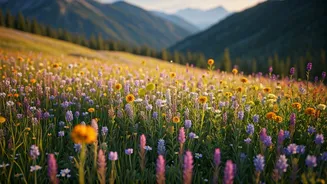
The valley is a living library of rare and beautiful flowers. Some of the most sought-after blooms include the ethereal Himalayan Blue Poppy, the sacred Brahma Kamal (the state flower of Uttarakhand), and the uniquely shaped Cobra Lily. You’ll also find meadows carpeted with Geraniums, Primulas, Marsh Marigolds, and Himalayan Bistort. The colours of the valley are in constant flux, with different species dominating the landscape each week, creating a new masterpiece for every visitor.
Know Before You Go
A permit from the Forest Department is mandatory to enter the valley; it can be obtained offline near Ghangaria and is valid for three days. Accommodation is available at Ghangaria and Govindghat, but options are basic and it's wise to book in advance, especially during the peak season. Pack layers of warm clothing and reliable rain gear, as mountain weather is unpredictable. Good trekking shoes are non-negotiable. Mobile connectivity is weak to non-existent after Joshimath, so prepare to be disconnected. Lastly, respect the fragile ecosystem—plucking flowers and using drones are strictly prohibited.