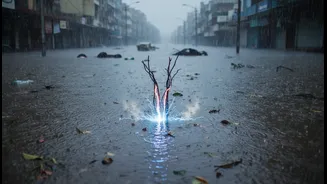








How a Puddle Becomes a Live Wire
It’s a common yet terrifying scenario each monsoon: a fallen power line, a damaged underground cable, or a faulty electrical pole makes contact with standing water. Unlike in a clean, controlled environment, the murky, mineral-heavy water on Indian streets
is an excellent conductor of electricity. The current doesn’t stay contained; it spreads outward from the source, electrifying the entire waterlogged patch. This means you don’t have to touch a wire to be electrocuted. Simply stepping into the same body of water can complete a fatal circuit, a danger made worse because the murky water makes it impossible to see the source of the current.
The Unseen Risks in Urban Infrastructure
Much of the danger stems from urban infrastructure that is ill-prepared for the annual deluge. Ageing electrical poles, exposed wiring near roads, corroded connections in streetlights, and unprotected transformers are ticking time bombs. Heavy rains and waterlogging expose these weak points with deadly consequences. Recent incidents across cities like Mumbai and Delhi highlight this recurring tragedy, where commuters and even residents in their homes have fallen victim to electrocution from submerged hazards or faulty wiring exacerbated by the rains. Official data highlights that electrocution is a major cause of accidental death in India, with the risk escalating significantly during the monsoon.
Golden Rules for Staying Safe Outdoors
The most crucial rule is to treat all waterlogged areas as potentially electrified. If you can, avoid walking or driving through them entirely. Maintain a safe distance from all electrical infrastructure, including poles, transformers, feeder boxes, and even metal fences, as they can become energized. Never touch a streetlamp or utility pole, especially when it's wet. It's also critical to stay alert. Avoid looking at your phone while navigating wet streets so you can spot potential hazards like hanging or submerged wires. Teach children to stay clear of puddles and any electrical equipment, as they are particularly vulnerable.
What to Do If You See Someone in Trouble
If you witness someone collapse in floodwater, your first instinct may be to rush in, but you must not. Do not touch the person or enter the water, as the electrical current can pass to you as well. The absolute first step is to try and turn off the power source if it can be safely identified and accessed. Call for emergency medical help immediately. If you cannot switch off the power, use a long, dry, non-conductive object—like a wooden stick or a bamboo pole—to try and move the person out of the water. Never use anything metal. Once they are clear of the water, check for breathing and a pulse and administer CPR if you are trained to do so.
Protecting Your Home and Community
Safety starts even before you step outside. At home, ensure your wiring is checked by a licensed electrician before the monsoon. Installing a Residual Current Circuit Breaker (RCCB) can be a life-saver, as it is designed to cut power instantly if it detects a leak, such as when a person accidentally touches a live circuit. If water starts entering your home, switch off the main power supply from a dry location before doing anything else. Finally, be a vigilant member of your community. If you spot a downed wire, sparking pole, or any other hazard, report it immediately to your local electricity board instead of assuming someone else will.