



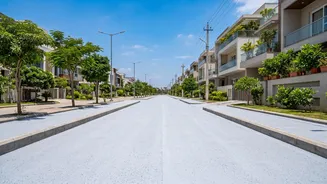

The Sizzling City Problem
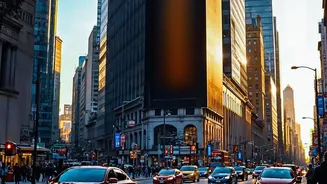
Our cities are getting hotter, and it's not just due to climate change. They generate their own heat through a phenomenon called the Urban Heat Island (UHI) effect. Vast expanses of dark materials like asphalt roads and conventional roofing absorb a huge
amount of sunlight, soaking up between 80% to 95% of its energy. This stored heat is then released back into the air, particularly at night, raising temperatures significantly higher than in surrounding rural areas. In India, where heatwaves are becoming more frequent and intense, this effect exacerbates public health risks, from heat exhaustion to heat stroke, especially in densely populated areas. The problem is baked into the very fabric of our cities, where paved surfaces can make up about a third of the total area.
A Cooler Path Forward
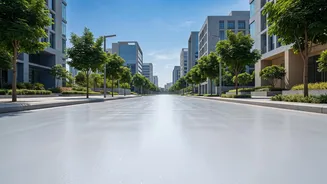
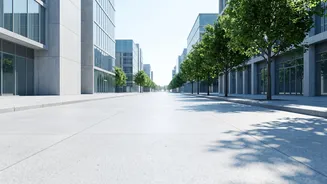
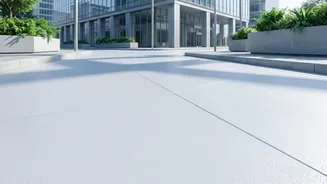
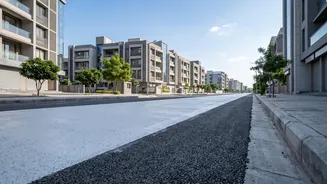
The solution might be surprisingly simple: make the streets lighter. 'Cool pavements' are designed to stay cooler in the sun by reflecting more solar radiation and absorbing less heat. The core principle is based on albedo, a measure of reflectivity. A dark surface has a low albedo, while a light, reflective one has a high albedo. By applying special coatings or using different materials, the albedo of a street can be significantly increased. This prevents the pavement from reaching the scorching temperatures of conventional asphalt—which can get up to 150°F (65°C)—and in turn, helps lower the temperature of the air around it. It's an intuitive idea being tested in hot cities around the world as a direct way to counteract the UHI effect.
How Science Fights the Heat
The most common method for creating cool pavements is applying a solar reflective coating. These are specialized paints or surfacing systems engineered to reflect not just visible light, but also the heat-carrying infrared wavelengths of the sun. The coatings are often grey or other light colours and can be applied to existing asphalt. Studies and pilot programs, such as a major project in Phoenix, USA, have shown that these coatings can lower pavement surface temperatures by 10-12°F (about 5.5-6.7°C), and in some cases, much more. While the impact on ambient air temperature is more modest, often a reduction of around 1°C, deploying this strategy at scale could have a significant cooling benefit, reducing demand on air conditioning and making outdoor spaces more comfortable.
Real-World Results and Unforeseen Hurdles
While cool pavements show great promise, they are not a silver bullet. One of the most-discussed drawbacks is glare. Reflecting all that sunlight away from the ground means it goes somewhere else—including into the eyes of drivers and pedestrians, or onto the sides of buildings, potentially increasing their heat load. The cost of these coatings and their application can also be higher than traditional asphalt maintenance. Furthermore, the long-term durability and performance are still being studied; dirt and tire marks can reduce the pavement's reflectivity over time, diminishing its cooling effect. Some studies have also noted that while the surface is cooler, the pedestrian-level thermal comfort might actually decrease during the day due to the increased reflected radiation. These challenges mean that implementation must be carefully considered.
A Viable Solution for Indian Cities?
Given that India is projected to see a massive increase in its urban population and already suffers from deadly heatwaves, any strategy that mitigates urban heat is worth exploring. While cool roof programs have already seen success in cities like Ahmedabad and Hyderabad, cool pavements are a newer concept for the region. The potential benefits are enormous, but so are the challenges. The upfront cost could be a barrier for municipal budgets, and the coatings would need to withstand the intense Indian sun and heavy monsoon rains. However, some states and cities are already including cool pavements in their heat mitigation plans. The technology could be integrated into broader 'cool corridor' strategies, which combine reflective surfaces with tree planting and other shading measures to create genuinely cooler and more resilient public spaces. As innovation continues, this technology could become a crucial part of making India's growing cities more liveable in a warming world.