

The Irresistible Crunch of an Apple
The humble apple is a salad’s best friend, offering a satisfying crunch and a burst of sweetness that can balance savoury ingredients. For the best texture, choose firm, crisp varieties. Honeycrisp, Fuji, or Pink Lady apples hold their shape well and provide
a sweet-tart flavour. Granny Smith apples, known for their distinct tartness, are also an excellent choice, especially when paired with rich components like aged cheese or fatty nuts. The key is to slice them thinly or cut them into matchsticks just before serving. To prevent browning if you're prepping ahead, toss the apple slices in a little lemon juice. Beyond just texture, apples pair beautifully with a range of ingredients, from sharp cheddars and salty prosciutto to toasted walnuts and pecans.
The Subtle Sweetness of Pears
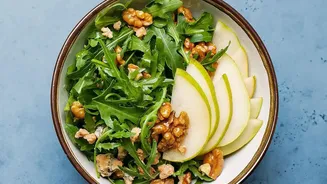
Pears offer a softer, more subtle sweetness compared to apples, with a grainy texture that complements leafy greens. Varieties like Bartlett or Anjou are fantastic when thinly sliced and added to salads raw. Their gentle flavour works wonderfully with stronger tastes like rocket (arugula), blue cheese or gorgonzola, and walnuts. For a deeper, more complex flavour, try roasting or grilling pear slices before adding them to your salad. This caramelises their natural sugars and makes them incredibly tender. Pears can elevate more than just green salads; they can be diced and added to chicken or tuna salads for a touch of sweetness and a different texture, or even used as a topping for pizza alongside onions and balsamic vinegar. They are a versatile fruit that can stand up to both sweet and savoury pairings.
Citrus: The Ultimate Flavour Brightener
When it comes to dressings, nothing provides a vibrant lift quite like citrus. Lemons, limes, and oranges are your secret weapons for cutting through richness and adding a zesty punch. A basic citrus vinaigrette can be made in minutes by whisking together olive oil, the juice of an orange or lemon, a touch of mustard to help it emulsify, and a little sweetener like honey or maple syrup if needed. Don't forget the zest. The outer peel of citrus fruits contains essential oils that deliver an intense aromatic flavour far beyond what the juice alone can provide. Adding just a teaspoon of lemon or orange zest to your dressing will make the flavours pop. You can also segment citrus fruits and toss them directly into salads for juicy bursts of flavour that complement everything from greens to grilled chicken.
Quick Chutneys and Relishes
The headline's mention of chutneys points to another fantastic use for these fruits. While traditional chutneys can take time, you can create a quick fruit relish that serves a similar purpose. For a simple apple and pear chutney, finely chop the fruit and simmer it in a saucepan with a splash of vinegar, a little sugar or honey, some chopped onion, and spices like ginger or cinnamon. Cook the mixture until the fruit has softened and the liquid has thickened into a jam-like consistency. This can take as little as 20 minutes and creates a delicious condiment that pairs wonderfully with roasted meats, cheeses, and even burgers. A fruit chutney or relish is an excellent way to use up fruit that might be slightly past its prime for eating raw.
Principles of Perfect Pairing
Successfully using fruit in savoury dishes comes down to balance. Think about what each fruit brings to the table. Apples provide a crisp texture and malic acid, which cuts through fat—that's why they're so good with cheese and pork. Pears offer a softer bite and gentle sweetness, which is why they are often paired with salty cured meats and pungent cheeses. Citrus delivers the acidity needed to brighten heavy dressings and lift the overall flavour profile of a dish. When building your salad, consider these functions. If you have rich, creamy cheese, add a tart apple. If your salad has bitter greens, a sweet pear can provide a pleasant contrast. A well-made citrus dressing can tie all the elements together, ensuring your creation is balanced and delicious.