


1. Ghent, Belgium: A Fairytale Alternative
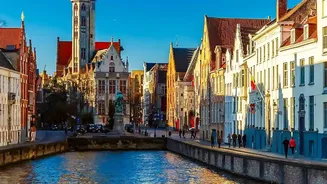
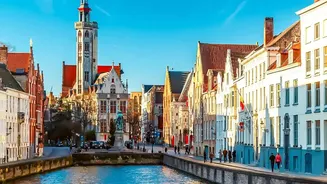
Often living in the shadow of its picturesque sibling, Bruges, Ghent offers a more vibrant and authentic Flemish experience. This lively university city is a treasure trove of medieval architecture, scenic canals, and a palpable energy. The city's heart
is a stunning collection of gothic towers and guildhalls lining the Graslei and Korenlei quays. A must-see is the Gravensteen, or Castle of the Counts, a formidable 12th-century moated castle right in the city center that offers panoramic views and a quirky torture museum. For art lovers, St. Bavo's Cathedral houses the world-renowned Ghent Altarpiece, a masterpiece by the Van Eyck brothers. Unlike more tourist-focused towns, Ghent is a living city. Take a boat tour along its canals, explore the street art in Graffiti Alley, and enjoy the buzzing atmosphere of its many squares and cafes. It provides the medieval charm you're looking for but with fewer crowds and a more contemporary feel.
2. Ljubljana, Slovenia: The Green Gem
Slovenia's capital is a fairytale city that proves great things come in small packages. As one of Europe’s greenest and most liveable capitals, Ljubljana is incredibly pedestrian-friendly, with its historic centre being largely car-free. The Ljubljanica River flows through the city's heart, its banks lined with bustling cafes and crossed by beautiful bridges, including the famous Triple Bridge and the Dragon Bridge. Presiding over the city from a hill is Ljubljana Castle, which you can reach by a funicular railway for stunning views. The city has a relaxed, friendly vibe, encouraging leisurely exploration. Spend time at the vibrant Central Market, designed by famed architect Jože Plečnik, where you can sample local produce and Slovenian dishes. With its charming architecture, expansive Tivoli Park, and easy access to iconic day trips like Lake Bled, Ljubljana is a perfect base for exploring the region.
3. Bologna, Italy: The Foodie Capital
While many flock to Rome and Florence, Italy’s culinary heart arguably beats strongest in Bologna. Known as 'La Grassa' (the fat one) for its rich cuisine, this is the place to experience authentic Italian food. Forget spaghetti bolognese; here, the signature dish is tagliatelle al ragù, a sublime combination of fresh egg pasta and slow-cooked meat sauce. Beyond the food, Bologna is a beautiful city of red-tiled roofs and endless porticoes (covered walkways) that make it perfect for exploring in any weather. At its center are the Piazza Maggiore and the Two Towers, leaning symbols of the city. Dive into the Quadrilatero, the city's ancient market district, for a sensory overload of fresh pasta, cheeses like Parmigiano Reggiano, and cured meats. Bologna offers a more authentic, less frantic Italian city experience, where life revolves around good food and leisurely strolls.
4. Porto, Portugal: The Douro's Darling
As an alternative to Lisbon, Porto offers its own distinct charm, built on the steep banks of the Douro River. Famous as the home of port wine, the city is a visual delight of colourful houses, baroque churches, and the stunning Dom Luís I Bridge, a double-decker metal arch bridge. The historic Ribeira district, a UNESCO World Heritage site, is a maze of narrow cobbled streets that open onto a lively riverfront plaza. A key experience is crossing the bridge to Vila Nova de Gaia, where you can tour the famous port cellars of brands like Taylor's and Graham's and enjoy a tasting with incredible city views. Don't miss climbing the Clérigos Tower for a panoramic perspective of the city's terracotta rooftops and winding river. With its world-class food scene, stunning azulejo-tiled buildings, and a more relaxed atmosphere than the capital, Porto is a captivating destination.
5. Gdańsk, Poland: The Baltic Jewel
Rebuilt meticulously after World War II, Gdańsk is a stunning port city on the Baltic coast that often surprises visitors with its beauty. The main thoroughfare, the Royal Route, is lined with colourful, narrow burgher houses and leads to the Motława River waterfront, which features a picturesque promenade and the iconic medieval crane (Żuraw). The city has a rich maritime history and is known as the world capital of amber; you can find beautiful amber jewelry and art in the shops along Mariacka Street. History buffs will be captivated by Gdańsk's significant 20th-century history, as the starting point of World War II at Westerplatte and the birthplace of the Solidarity movement, which is documented at the excellent European Solidarity Centre. For the best views, climb the tower of St. Mary's Church, one of the largest brick churches in the world.