




A New Target for a Veteran Explorer
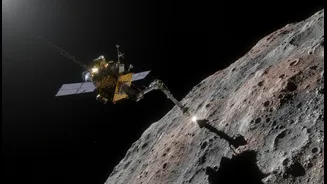
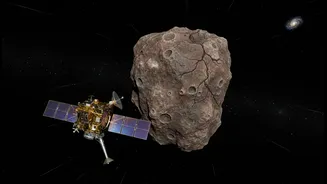
The Hayabusa2 probe, operated by the Japan Aerospace Exploration Agency (JAXA), is no stranger to deep space. It famously visited the asteroid Ryugu, collected samples, and successfully returned them to Earth in 2020. Those samples provided incredible
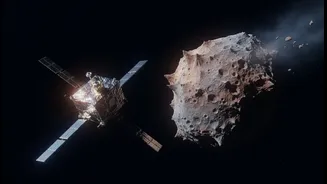
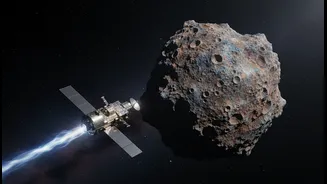
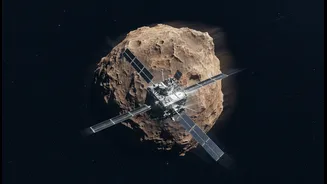
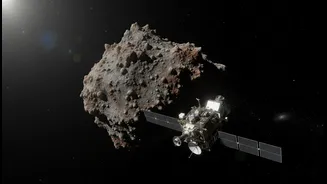
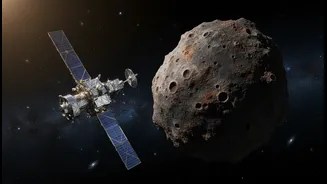
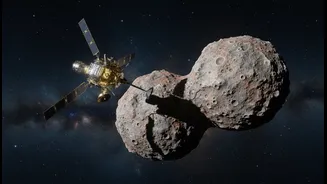
insights into the early solar system, revealing organic molecules and water-bearing minerals. Instead of retiring the successful probe, JAXA sent it on an extended mission. The first major milestone was the July 5, 2026, flyby of a near-Earth asteroid known as Torifune (also designated 2001 CC21). The spacecraft zipped past the asteroid at a relative speed of about 5 kilometers per second, or roughly 18,000 kilometers per hour, capturing close-up images and data from a distance of only a few hundred meters.
The Risks: A High-Speed, High-Stakes Maneuver
Executing a close flyby at such extreme speeds is incredibly risky. The spacecraft was not originally designed for this type of high-speed encounter, making the maneuver a significant technical challenge for JAXA's engineers. The primary risk was navigation. Guiding a probe to a precise point in space, millions of kilometers from Earth, to intercept a fast-moving target requires extraordinary accuracy. A JAXA team leader compared the difficulty to hitting a one-yen coin in Hokkaido from Okinawa. There's also the physical danger posed by the asteroid itself. Asteroids are often surrounded by clouds of dust and small debris. At such high velocities, even a tiny particle impact could have caused catastrophic damage to the spacecraft's instruments or systems. Finally, there was the risk of failure in data acquisition; the window to capture images and scientific readings was incredibly brief, demanding flawless performance from the probe's autonomous systems.
The Benefits: Planetary Defense and Scientific Discovery
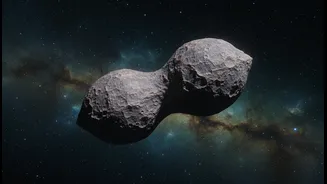
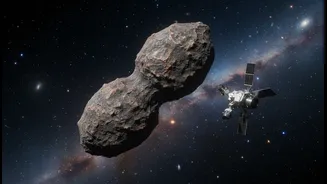
The potential rewards from this risky maneuver are immense. A key objective was to test and refine technologies crucial for planetary defense. By demonstrating the ability to precisely guide a spacecraft to a near-Earth object, JAXA has taken a major step in developing methods to intercept and potentially deflect an asteroid on a collision course with our planet. Scientists estimate that an asteroid the size of Torifune, which is about 450 meters wide, could cause significant damage if it hit Earth. The data gathered will help scientists better understand an asteroid's size, shape, and structure, which is vital information for planning any future deflection mission. Scientifically, the flyby offered a rare close look at a different class of asteroid. Initial images revealed Torifune to be a 'contact binary,' resembling two asteroids stuck together, speckled with boulders. This provides new clues about how these celestial bodies form and evolve.
The Reader Takeaway: Why This Mission Matters
While the encounter happened millions of kilometers away, its implications are felt right here on Earth. Firstly, it enhances our global safety net. Missions like Hayabusa2's flyby are critical steps in building a reliable planetary defense system to protect humanity from a potential asteroid impact. Japan now joins the United States as one of the few nations to demonstrate this level of precision technology. Secondly, it pushes the boundaries of exploration and future resource utilization. The technologies developed for navigating to and analyzing asteroids could one day be used for asteroid mining. These celestial bodies are rich in valuable metals and water ice, which could be used to produce rocket fuel or build structures in space, making future deep-space exploration more sustainable and less costly. Ultimately, each mission like this expands our fundamental understanding of the universe, our solar system's history, and our place within it, turning science fiction concepts into practical reality.