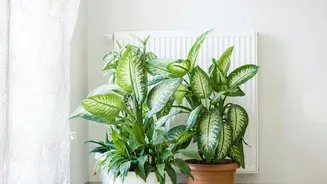




As smog season descends, many of us look for ways to keep our indoor air breathable. A popular, green solution is to fill our homes with plants. But while they beautify a space, science says they are no match for serious air pollution.
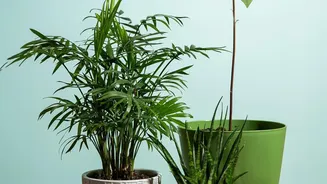
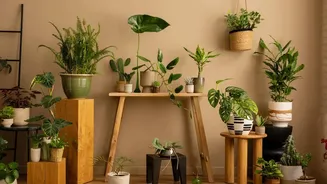
The Great Houseplant Myth
The idea that houseplants
are powerful air purifiers stems largely from a 1989 NASA study. Researchers found that in a small, sealed chamber, certain plants could remove volatile organic compounds (VOCs) like benzene and formaldehyde from the air. This finding was exciting and quickly became a popular piece of advice for homeowners. The problem, however, is that your living room is not a sealed NASA chamber. Subsequent research has shown that in a real home with natural air exchange—air moving through doors, windows, and vents—the cleaning effect of a few plants is almost negligible. One 2019 review estimated you would need between 10 to 1,000 plants per square meter to match the air cleaning rate of a building's standard ventilation.
What's Really in Smoggy Air?
During a smog event, the primary villain is PM2.5—tiny particulate matter smaller than 2.5 microns that can penetrate deep into your lungs and even enter your bloodstream. This is the pollutant that makes the air hazy and poses the most significant health risks. Other pollutants include gases like nitrogen dioxide (NO2) and VOCs from both outdoor and indoor sources. While some studies show plants can absorb certain gases like NO2 in controlled settings, they are not effective at removing particulate matter like PM2.5. A plant's leaf might collect a bit of dust, but it cannot filter the microscopic particles that are most dangerous to our health.
The Power of Mechanical Filtration
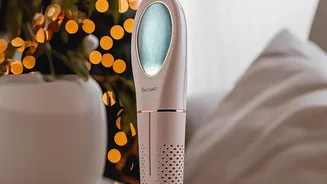
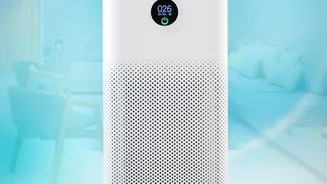
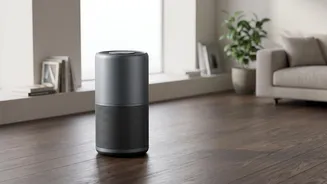
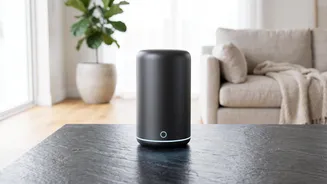
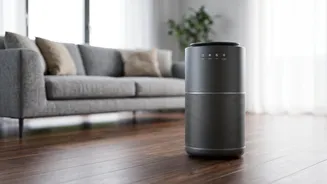
This is where technology comes in. High-Efficiency Particulate Air (HEPA) filters are the gold standard for cleaning indoor air. A true HEPA filter is a physical mesh of fine fibers designed to trap at least 99.97% of airborne particles that are 0.3 microns in size—the size that is often the hardest to catch. This makes them extremely effective at capturing PM2.5, smoke, pollen, dust, and mould spores. An air purifier equipped with a HEPA filter works by pulling in the room's air, forcing it through this dense filter, and circulating the cleaner air back out. This mechanical process is thousands of times more effective at removing harmful particles than the slow, passive biological processes of a plant.
Choosing the Right Air Purifier
When buying an air purifier, the most important metric to look for is the Clean Air Delivery Rate (CADR). This number tells you how much clean air the unit produces on its highest setting and helps you match the purifier to your room size. Look for a unit with a CADR that is appropriate for the square footage of the room where you'll use it most, like your bedroom. For smog, a combination of a HEPA filter for particles and an activated carbon filter for gases and odours is the most effective solution. The carbon filter uses adsorption to trap gas molecules, tackling the elements that HEPA filters can't catch.
A Holistic Approach to Clean Air
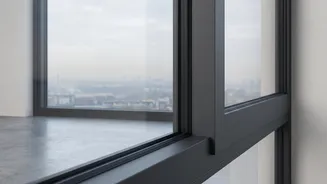
An air purifier is a powerful tool, but it works best as part of a broader strategy. During heavy smog, the first step is to reduce the amount of polluted air entering your home. Keep windows and doors closed as much as possible and seal any obvious gaps with weather stripping or even towels. Limit activities that create indoor pollution, such as burning incense or frying food without good ventilation. Running your air conditioner on its recirculation mode can also help, as it avoids pulling in more outside air. Finally, designating one room as a 'clean air room' with a purifier running continuously can provide a safe haven for your family.