
The Challenge of Photographing the Stars
Astrophotography is fundamentally difficult for one simple reason: a lack of light. To capture faint, distant stars, a camera's sensor needs to gather as much light as possible. Traditionally, this is done with a long exposure, keeping the shutter open
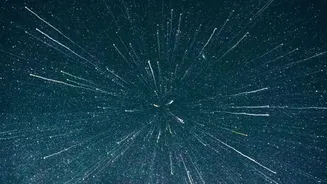
for seconds or even minutes. However, this introduces two major problems. First, because the Earth is rotating, a long exposure will cause stars to appear as streaks or trails. Second, long exposures on digital sensors generate 'noise'—a grainy, static-like pattern that degrades image quality. Professional photographers use expensive, heavy tracking mounts to counteract Earth's rotation and sophisticated techniques to manage noise. These are not practical solutions for a device that fits in your pocket.
Why Phones Traditionally Struggle in the Dark
Smartphone cameras face an even greater challenge due to physics. Their camera sensors are tiny compared to those in dedicated DSLR or mirrorless cameras. A smaller sensor has less surface area to collect light, making it inherently less sensitive in dark conditions. A single long exposure on a phone would be an unusable, noisy mess. For years, this physical limitation made high-quality astrophotography on a phone seem impossible. The hardware simply wasn't up to the task of capturing the faint light of the cosmos cleanly. The solution came not from better hardware, but from smarter software.
The Solution: Taking Many Pictures, Not One
Instead of attempting one long, difficult exposure, phones with astrophotography modes do the opposite. When you press the shutter button, the phone captures a rapid sequence of many shorter exposures. For example, a feature like Google's Astrophotography mode might take up to fifteen separate 16-second exposures over a four-minute period. This process is the heart of exposure stacking. The phone isn't just taking one picture; it's gathering dozens of individual frames that will be computationally merged into a single, final image.
Stacking to Boost Light and Reduce Noise
The magic happens when the phone's processor begins to stack these images. The primary goal is to increase the 'signal' (the starlight) while reducing the 'noise' (the random grain). The light from a star is a consistent signal, appearing in the same place in each frame (relative to the moving sky). Digital noise, however, is random in each shot. By aligning the images and averaging the pixel data, the software can effectively cancel out the random noise, making it fade into a smooth background. Simultaneously, the consistent light from the stars adds up, becoming brighter and more prominent. Stacking more images increases this effect; stacking nine images can reduce noise by a factor of three.
Aligning the Stars with Software
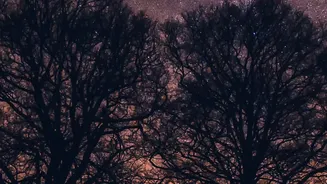
This process is more complex than simply layering the images. Because the stars move across the sky during the several minutes of capture, the software must intelligently align each frame. It identifies the stars in each shot and rotates and shifts the images so the stars perfectly overlap. Some advanced systems even separate the foreground (like trees or mountains), which is stationary, from the sky, which is moving. The sky layers are aligned and stacked, the foreground layers are stacked, and then the two are seamlessly blended back together to create a sharp final picture without blurry stars or a blurry landscape.
AI's Finishing Touches
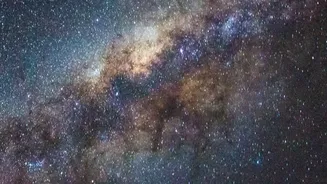
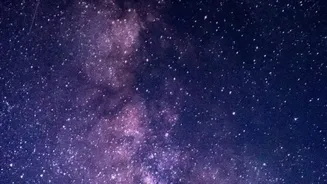
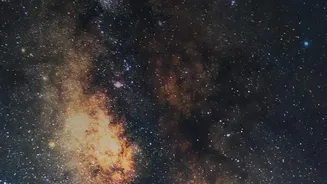
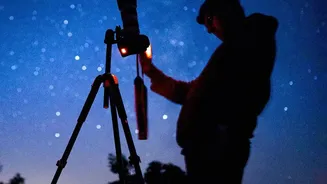
The final step often involves a dose of artificial intelligence. After the image has been stacked and aligned, AI models analyze the content to make final adjustments. These models, often trained on thousands of professionally captured astrophotos, can enhance colours, improve contrast, and bring out faint details in nebulae or the Milky Way that might otherwise be invisible. This is what gives modern smartphone astro shots their hyper-realistic and vibrant look, turning a technically clean image into a visually stunning one. Thanks to this blend of rapid-fire capture and intelligent software processing, what once required dedicated equipment and expertise is now accessible to anyone with a tripod and a modern smartphone.