

Simulating a Knockout Blow
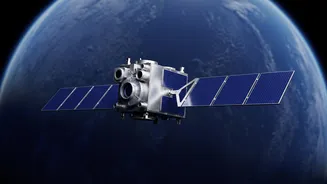
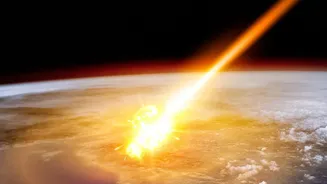
A recent computer simulation paints a sobering picture of the threat facing our orbital infrastructure. Research led by the University of Wisconsin–Madison modelled a one-megaton nuclear explosion about 500 kilometres above the Earth. The findings, published
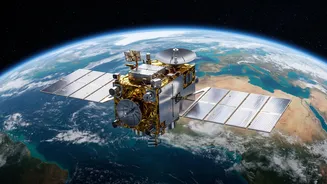
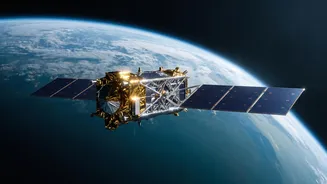
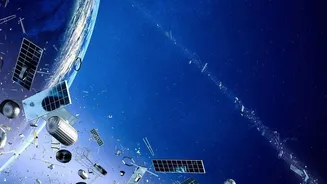
on the arXiv preprint server, suggest that a single blast could have a devastating, cascading effect. The simulation showed that the initial explosion would disable about 3% of satellites in low-Earth orbit (LEO). However, the real damage comes later. The detonation would create an artificial radiation belt of trapped high-energy electrons, repeatedly exposing satellites to damaging particles as they orbit the Earth. According to the model, this lingering radiation would lead to a catastrophic failure rate: 25% of LEO satellites would be disabled within a day, 78% within three days, and a staggering 98% within just one week.
How Radiation Disables a Satellite
Radiation harms satellites not through a physical impact, but by disrupting and degrading their sensitive electronics. High-energy particles from solar flares, cosmic rays, or a nuclear event can bombard a satellite's systems. This can cause several types of damage. 'Single Event Effects' (SEEs) occur when one particle strikes a microchip, causing issues like a 'bit flip' in memory, a system freeze, or a short circuit that can burn out a component entirely. Over time, the cumulative exposure to radiation, known as the 'Total Ionising Dose' (TID), gradually degrades electronic performance, increases power consumption, and ultimately leads to failure. These effects are becoming more pronounced as modern satellites rely on smaller, more powerful microchips that are inherently more vulnerable to radiation.
The Quest for Resilience
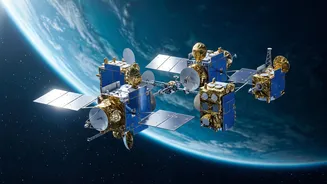
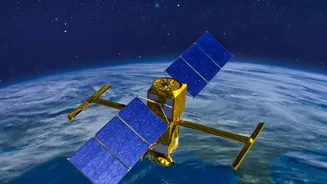
Given the threat, the focus has shifted to 'satellite resilience'. This involves making spacecraft tough enough to withstand the harsh environment of space, including radiation. The primary method is 'radiation hardening', which means designing and building specialised electronic components that can resist radiation damage. These 'rad-hard' components are often more expensive and less flexible than their commercial counterparts. Other strategies include adding physical shielding to protect sensitive parts, though this adds weight and cost to a mission. Engineers also design systems with redundancy—creating backups that can take over if a primary component fails—and use error-correction software to fix data corruption caused by radiation strikes. The challenge is balancing the need for resilience with the economic pressures of the 'New Space' era, which often favours cheaper, faster-to-deploy satellites.
Why This Matters on the Ground
The vulnerability of satellites is not an abstract problem for scientists and defence agencies; it has profound implications for our modern, connected world. A widespread loss of satellites would cripple global communications, disrupt financial markets that rely on precise timing signals, and render GPS navigation useless. Weather forecasting, environmental monitoring, and disaster response efforts would be severely hampered. For a country like India, which is increasingly reliant on space technology for everything from digital payments to agricultural monitoring and national security, the stakes are particularly high. The simulation underscores a critical vulnerability at the heart of the global economy and security infrastructure, making the study of satellite resilience a matter of urgent importance.