






The Hidden Cost of Quiet
For decades, creating acoustically controlled environments like recording studios, home cinemas, or even quiet office spaces has meant relying on materials like fiberglass, mineral wool, and polyurethane foam. While effective at trapping sound waves,
these materials come with significant downsides. Most are derived from petroleum, a non-renewable resource, and their manufacturing process is energy-intensive, contributing to a high embodied carbon footprint. Furthermore, materials like fiberglass can be irritants to the skin and respiratory system during installation, and their end-of-life disposal poses a challenge as they are not biodegradable.
A Greener Solution from the Fields
The solution to this environmental dilemma is sprouting in an unlikely place: the farm. Researchers and innovative companies are now transforming agricultural waste into effective acoustic insulation. Materials that were once discarded or burned, such as rice straw, sugarcane bagasse, coconut husks, and hemp fibers, are being given a new life. India alone produces over 400 million tons of agricultural waste each year, representing a massive, untapped resource for sustainable manufacturing. These natural fibers are abundant, renewable, and biodegradable, offering a stark contrast to their synthetic counterparts.
How Natural Fibers Trap Sound
The secret to their acoustic prowess lies in their natural structure. Sound absorption works by converting sound energy into heat through friction. When sound waves encounter a porous material, they travel through its intricate network of voids and channels. The fibrous, irregular, and porous nature of materials like coconut coir or straw creates an ideal maze for this to happen. The friction between the vibrating air particles and the fiber surfaces effectively dampens the sound energy. The more porous and complex the internal structure of the material, the better it is at absorbing sound, particularly in the mid-to-high frequency ranges where human speech and music are most prominent.
Performance That Rivals Synthetics
A common question is whether these green alternatives can truly compete with industry standards. The data is promising. Studies show that panels made from materials like rice straw, water hyacinth, and sugarcane fiber can achieve Noise Reduction Coefficients (NRC) comparable to conventional materials like glass wool. For example, research has demonstrated that sugarcane fiber can reach a sound absorption coefficient of 0.95 at certain frequencies, which is highly effective. Blends of materials, such as coconut coir and recycled paper, have also shown excellent results. By varying the density, thickness, and fiber combination, manufacturers can fine-tune the acoustic properties to suit specific needs, proving that sustainability does not require a compromise on performance.
From Waste to Wall Panel
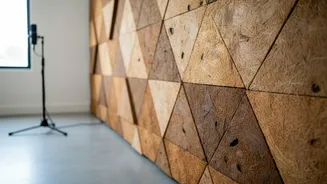
The manufacturing process is a key part of the sustainability story. Typically, the agricultural fibers are collected, cleaned, and sometimes mixed with a natural, non-toxic binder. Some innovative processes use natural starches or even mycelium—the root structure of fungi—to bind the fibers together, creating a completely organic composite. The mixture is then pressed and cured, often using low-energy methods, to form rigid or semi-rigid panels. This approach not only diverts waste from landfills but also supports a circular economy, turning a low-value byproduct into a high-value construction material. Some companies, like BAUX and Mogu, are already marketing beautifully designed acoustic panels made from wood pulp, mycelium, and other natural materials.