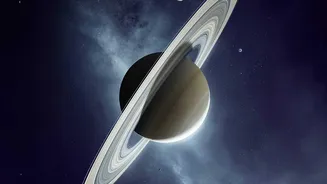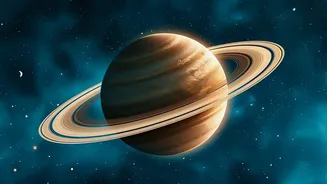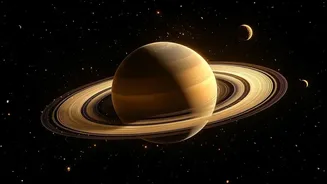



Why August is Prime Time for Saturn
The main reason for Saturn's fantastic visibility this month is an astronomical event called opposition. While the official date of opposition falls in early October, the weeks leading up to it provide an excellent viewing window. Opposition occurs when
Earth passes directly between the Sun and an outer planet, in this case, Saturn. Think of it as a celestial lineup with Earth in the middle. This alignment means a few things for observers on the ground: Saturn is at its closest point to Earth for the year, making it appear larger and significantly brighter in our sky. It also means the planet rises in the east around sunset and remains visible throughout the entire night, setting in the west around sunrise. This extended viewing period gives you ample opportunity to find a clear moment to step outside and marvel at the solar system's jewelled wonder.
How to Find the Ringed Planet
Fortunately, you don't need to be an expert astronomer to locate Saturn. This August, it will be situated in the constellation Pisces, the Fish. Pisces is a relatively faint constellation, which is actually good news for novice spotters, as the bright, steady light of Saturn will stand out prominently. To find it, look towards the eastern sky after twilight. At the beginning of the month, Saturn rises around 11 p.m. local time, but it will appear progressively earlier each night, rising closer to 9 p.m. by the end of August. It will appear as a bright, yellowish-white point of light that shines with a steadier glow compared to the twinkling of distant stars. On several nights this month, the Moon will serve as a handy guide. On August 4th and again overnight from August 30th to 31st, the Moon will pass close to Saturn, making it exceptionally easy to identify.
What You'll Need for the Best View
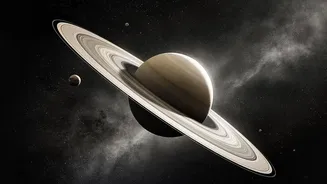
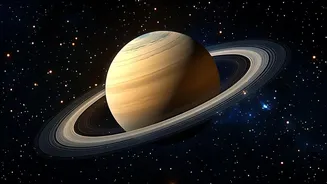
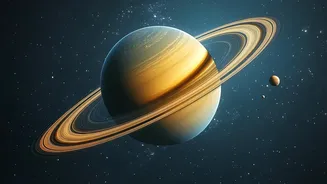
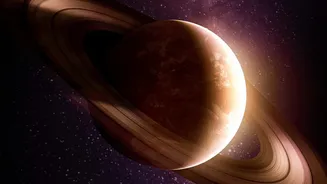
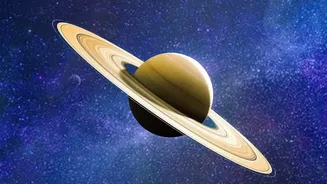
The great thing about Saturn's current brightness is that it is easily visible to the naked eye. You can walk outside, find it, and appreciate that you are looking at a planet over a billion kilometres away. However, to truly appreciate its famous features, some form of magnification is recommended. A good pair of binoculars will reveal that Saturn is not just a point of light but a distinct disc, and you might even glimpse that it has 'ears'—the first hint of its incredible ring system. To actually see the rings as a separate structure from the planet, you’ll need a telescope. Even a small telescope with at least 50mm aperture and 25x magnification will do the trick, revealing the planet's iconic shape. Larger telescopes will, of course, provide more detail, potentially showing divisions within the rings like the famous Cassini Division, and even Saturn's largest and brightest moon, Titan, which appears as a tiny star-like point nearby.
Tips for a Successful Viewing
For the best experience, try to find a location away from the glare of city lights. A darker sky will make Saturn and its surrounding stars appear much clearer. Give your eyes about 15-20 minutes to fully adjust to the darkness. Patience is key when observing planets. Wait for moments of steady air, as atmospheric turbulence can make the planet appear to shimmer or wobble. If using a telescope, start with a lower magnification to find and centre the planet before switching to a higher-power eyepiece for a closer look. And remember to get comfortable; stargazing can be a relaxing and meditative activity, so bring a chair and take your time. This August provides a perfect, accessible opportunity to connect with the cosmos from your own backyard.