




The Persistent Narrative
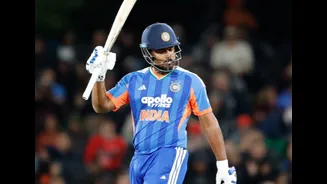
In the unforgiving arena of public opinion, few aspects of Rohit Sharma’s career have been scrutinized more intensely than his physical fitness. Casual observers and social media critics have often labelled him as 'lazy' or naturally gifted but not hardworking,
pointing to a physique that differs from the chiselled ideal personified by some of his contemporaries. This narrative has persisted for years, creating a constant hum of criticism that has often overshadowed his immense achievements on the field. The commentary suggests a player who relies on talent alone, seemingly indifferent to the rigorous demands of modern athletic conditioning. It’s a simple, catchy, and ultimately misleading story that has stuck, shaping the perception of one of India’s greatest modern-era batsmen.
A Career on the Brink
In a recent podcast interview, former Team India fitness coach Soham Desai dismantled that narrative with a single, startling revelation. He disclosed that Rohit suffered a 'career-threatening injury' around his hip in 2017, following the Champions Trophy final. Desai explained that the Indian captain has undergone surgeries on his hamstring and hip flexor, a fact largely unknown to the public. This wasn't a minor niggle; it was a severe setback that could have ended his career. The injury fundamentally changed what his body could handle and required a complete re-evaluation of his training and maintenance. The player casually dismissed by some as 'unfit' was, in reality, fighting back from a catastrophic physical blow that threatened his very livelihood in the sport.
The 'Ticking Bomb' Protocol
Desai’s most powerful point was in describing Rohit’s subsequent fitness regimen. He called Rohit a 'ticking bomb' whose body would break down without a specific and demanding training schedule. For the past several years, it has been non-negotiable for Rohit to complete at least two dedicated strength sessions per week. According to Desai, if the batsman fails to adhere to this strict protocol, his body becomes a 'red flag'. This isn't the routine of a lazy athlete; it's the disciplined, essential work of a professional managing a chronic weak spot to compete at the highest level. Desai argued that if Rohit were not working incredibly hard, he wouldn't have lasted, let alone continued to score runs, lead teams, and play all three formats for twelve months a year.
Fitness Isn't One-Size-Fits-All
To add crucial context, Desai contrasted Rohit’s training needs with those of Virat Kohli. He explained that their workout styles are fundamentally different because their bodies and injury histories are different. While Kohli’s regimen is built around lifting and ground work, Rohit’s is a highly specific, strength-based, and explosive training style designed to protect his vulnerable hip and hamstring areas. This expert comparison highlights a critical point often missed in public discourse: athlete fitness is not about aesthetics. It is about functionality, longevity, and tailoring a program to an individual’s unique physical makeup. Rohit’s ability to remain one of the world’s top run-scorers since his 2017 injury is a testament to the effectiveness of this bespoke, behind-the-scenes work.
Resilience Over Perception
Desai's defense paints a new picture of Rohit Sharma — not as a player coasting on talent, but as a resilient fighter battling his own body. His longevity is not a 'fluke', as Desai has previously stated, but the result of immense, unseen effort. Despite the career-threatening injury, Rohit has been one of the most prolific all-format run-scorers in the world over the past nine years. This durability, in the face of constant physical management, speaks volumes about his dedication. The story is no longer about a supposed lack of discipline; it's about the quiet, relentless discipline required to keep playing at an elite level when your body is constantly threatening to give way. It is a powerful lesson in looking beyond surface-level judgments.