





The Fading Stars
For most of us living in urban centres, the night sky is a forgotten canvas. Light pollution, the excessive and misdirected artificial light from buildings, streetlights, and advertising, creates a perpetual twilight known as 'skyglow'. This phenomenon
effectively erases thousands of stars from our view, leaving only the brightest celestial bodies visible. Beyond obscuring our window to the cosmos, this constant illumination has been shown to disrupt wildlife, ecosystems, and even human sleep patterns. As cities grow brighter, the simple, profound experience of standing under a canopy of stars is becoming increasingly rare, turning natural darkness into a precious and endangered resource.
Himachal’s Celestial Advantage
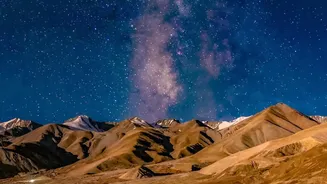
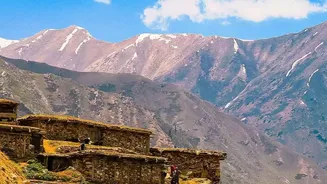
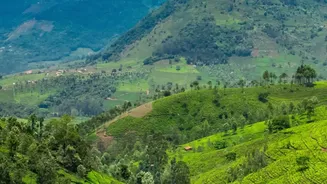
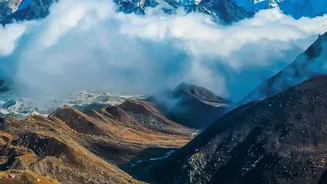
High in the Himalayas, a different reality exists. Regions like Spiti Valley are geographically blessed for stargazing. At altitudes often exceeding 12,000 feet, the air is thin, dry, and stable, offering exceptional clarity. Crucially, these areas are sparsely populated and far from major urban hubs, resulting in minimal light pollution and some of the darkest skies in India. Villages such as Langza, Komic, and Hikkim have long been informal havens for astrophotographers and star-gazers. This natural advantage provides the perfect foundation for a new, sustainable tourism model centred not on what has been built, but on what has been preserved: the pristine night sky.
A New Livelihood Under the Stars
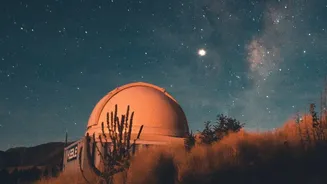
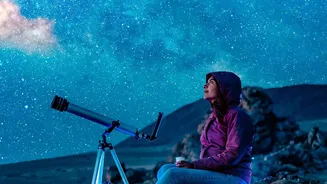
Recognising this unique asset, a powerful movement is taking shape. In July 2025, the Himachal Pradesh government, through the Himachal Pradesh Council for Science, Technology & Environment (HIMCOSTE), launched a landmark initiative to promote astrotourism in Spiti. The core idea is to empower local communities to turn their dark skies into a source of income. The government has been providing high-end computerized telescopes to residents in villages like Kaza, Langza, and Rangrik. Crucially, this isn't just about equipment; local youths, homestay owners, and aspiring guides are receiving training to operate the telescopes, lead night-sky observation sessions, and share celestial knowledge with visitors. This transforms stargazing from a passive activity into an engine for tribal community entrepreneurship.
More Than Just Looking Up
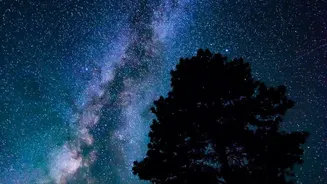
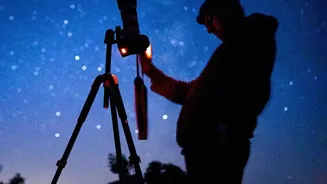
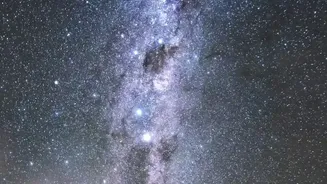
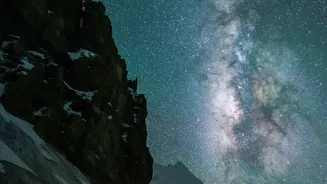
So what does an astrotourism outing here actually look like? It’s far more than just pointing a telescope at the sky. Led by newly trained local guides, visitors embark on immersive celestial journeys. These sessions involve identifying constellations, spotting planets, and getting breathtakingly clear views of the Milky Way, which is often visible to the naked eye. Organizations like Starscapes are also running workshops on astrophotography, helping travellers capture the cosmic beauty they witness. The experience is deeply educational, blending modern science with local culture and storytelling. For many travellers, it's an opportunity to connect with the universe in a way that feels both profound and personal, guided by the people who call these mountains home.
The Path to a Dark Sky Reserve
This community-led model is proving to be a win-win. It creates a sustainable income stream for local youth and homestay owners, reducing reliance on more conventional, and sometimes disruptive, forms of tourism. It also provides travellers with a unique, educational, and low-impact adventure. The success of India's first official Dark Sky Reserve in Hanle, Ladakh, which was certified in 2022, provides a powerful blueprint. The goal for many in Himachal is to follow a similar path, seeking official recognition that would protect these dark skies for generations to come. By formally integrating science with tourism, these villages are not just offering a holiday, but safeguarding a piece of our shared natural heritage.