


Our Planet's Greatest Threat
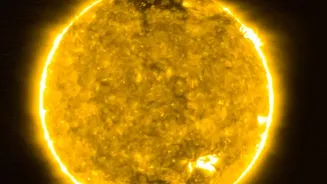
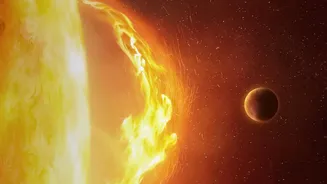
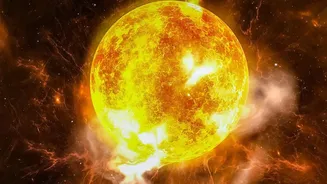
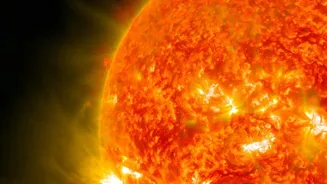
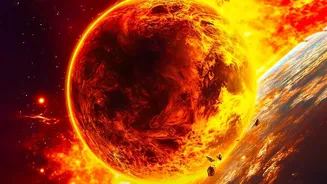
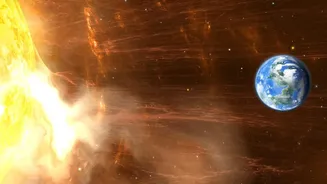
Solar storms, or Coronal Mass Ejections (CMEs), are massive explosions on the Sun’s surface that hurl billions of tonnes of plasma and magnetic fields into space. When a powerful CME strikes Earth, it can overwhelm our planet's natural magnetic shield,
the magnetosphere. The consequences can be catastrophic for our technology-dependent society. Such events can disrupt GPS navigation, interfere with crucial radio communications for aviation, damage satellites in orbit, and even cause widespread blackouts by inducing destructive electrical currents in power grids on the ground. These storms are a constant threat, and understanding them is not just an academic exercise; it's a matter of planetary defense. The ability to accurately predict their arrival and intensity is crucial to safeguarding our infrastructure.
India's Sentinel in Space
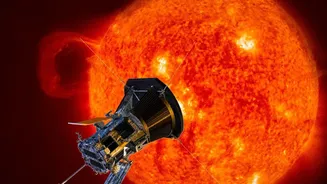
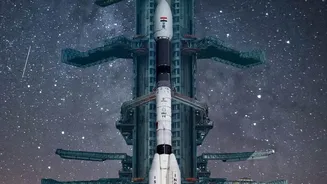
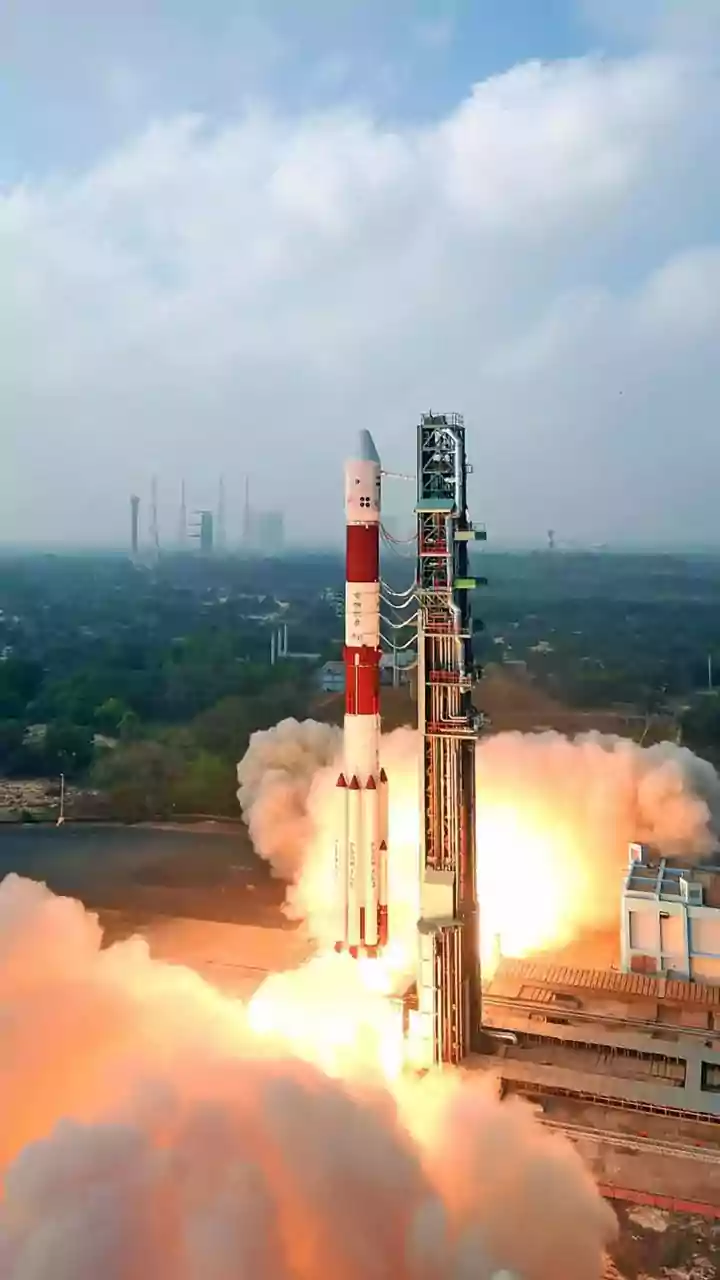
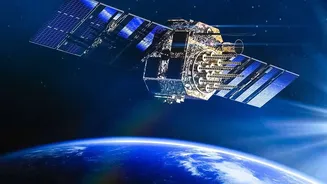
Enter Aditya-L1, India's first dedicated solar observatory. Launched by the Indian Space Research Organisation (ISRO), this state-of-the-art spacecraft is strategically positioned at Lagrange Point 1 (L1), about 1.5 million kilometers from Earth. This unique vantage point allows Aditya-L1 to have a continuous, uninterrupted view of the Sun, free from the eclipses or occultations that hinder ground-based observation. Its mission is to study the Sun's atmosphere, solar winds, and the powerful magnetic processes that drive solar weather. Equipped with a suite of seven sophisticated instruments, including the Visible Emission Line Coronagraph (VELC) and the Solar Ultraviolet Imaging Telescope (SUIT), Aditya-L1 is providing a stream of invaluable data that was previously unavailable to researchers.
A Breakthrough in Understanding
The headline claim of "mastery" points to a significant advancement in our understanding, rather than a completely solved problem. Recent findings published in the Astrophysical Journal Letters, based on Aditya-L1 data, have provided a crucial piece of the puzzle. By observing a major CME, scientists discovered that the reconfiguration of the Sun's magnetic field after an eruption is the dominant force that re-energizes the corona, accounting for roughly 93% of the energy. This is a monumental finding. Previously, the mechanisms behind the corona's extreme heat were not well quantified. Understanding how the Sun recharges itself after an eruption is fundamental to predicting the frequency and intensity of future events. By precisely measuring how the Sun’s magnetic fields behave, Aditya-L1 is helping scientists build more accurate models of space weather.
From Hours to Days: The Future of Forecasting
This newfound understanding directly translates into better forecasting. By observing the complex interplay of magnetic fields and energy release in the Sun's corona, scientists can more accurately predict when a CME is likely to occur and how it might behave as it travels toward Earth. Aditya-L1's unique ability to capture the onset of CMEs spectroscopically allows scientists to measure parameters like electron density, temperature, and velocity right at the source. This detailed information helps forecast the storm's potential impact with greater lead time, moving us from warnings of mere hours to potentially days. This extra time is critical, allowing satellite operators to put spacecraft into safe mode, power companies to protect their grids, and airlines to reroute flights, mitigating the worst effects of a solar storm.