

Ilulissat: Where Ice and Culture Meet
Ilulissat, which means 'Icebergs' in Greenlandic, is arguably the nation's most famous destination, primarily because it sits beside the UNESCO World Heritage-listed Ilulissat Icefjord. While the colossal icebergs are the main draw, the town itself is a fascinating
blend of modern life and deep-rooted heritage. Home to roughly 5,000 people and more than 2,000 sled dogs, it's a place where the rhythms of nature dictate the pace of life. For thousands of years, the rich fishing and hunting grounds created by the fjord have sustained Inuit communities. Today, travellers can witness this living history. In winter, the sound of sled dogs is a constant, as they remain a vital mode of transport for hunters. In summer, boat tours navigate the bay, offering close-up views of calving glaciers and opportunities to spot whales. To connect directly with the region's ancient past, a walk through the nearby Sermermiut Valley reveals archaeological sites from Saqqaq, Dorset, and Thule cultures, ancestors of the modern Inuit.
Kulusuk: Gateway to East Greenland
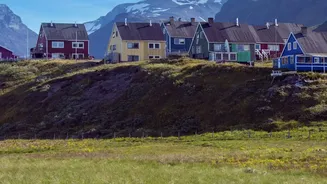
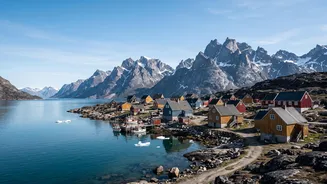
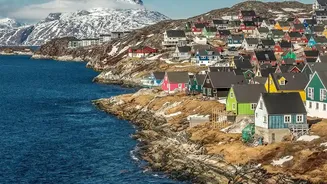
A short flight from Iceland, the small settlement of Kulusuk serves as the gateway to the remote and mythic landscapes of East Greenland. With a population of under 300, life here remains deeply connected to traditional hunting and fishing. Visitors often feel they have stepped into another world, where colourful wooden houses stand in stark contrast to the dramatic mountains and ever-present ice. Kulusuk offers a powerful introduction to East Greenlandic Inuit culture, which has its own distinct dialect and traditions. Local artisans are renowned for carving tupilaks (spirit figures) from wood and bone, and demonstrations of the ancient drum dance—a tradition once suppressed but now proudly revived—offer a powerful cultural experience. Though small, the village has a museum, a church adorned with sealskin, and a close-knit community that is welcoming to visitors who come to hike, kayak, or simply absorb the profound quiet of the Arctic.
Tasiilaq: The Colourful Heart of the East
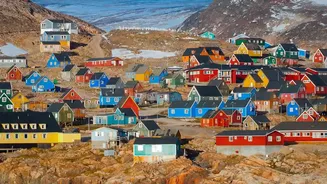
Nestled on Ammassalik Island, Tasiilaq is the largest town in East Greenland, yet it retains a small-town feel with its 1,800 residents. Surrounded by high, pointed mountains and bisected by a river, its setting is exceptionally picturesque. Tasiilaq serves as a hub for the region, but its culture remains firmly rooted in local traditions. The name itself relates to the abundance of 'Ammassat' (capelin fish), a staple of the local diet. The town is a fantastic base for adventure, from hiking in the 'Flower Valley' just behind the town to boat trips on the Sermilik Fjord, which is often choked with immense icebergs. Culturally, Tasiilaq is a melting pot where you can visit a local museum to understand the area's history and purchase high-quality local crafts. Despite its remote location, reachable only by helicopter or boat from the nearby Kulusuk airport, it offers an immersive experience of life in a unique and self-reliant Arctic community.
Qaqortoq: Arts and History in the South
South Greenland offers a different perspective, with its greener landscapes and sheep farms. Qaqortoq, the region's largest town, is a vibrant centre for culture, education, and art. The town is known for its colourful homes and an open-air sculpture project called 'Stone and Man', which features artworks carved into rocks throughout the town. Its centrepiece is a colonial-era square with Greenland's oldest fountain. Qaqortoq is not only a hub for modern Greenlandic life but also a gateway to exploring the region's rich Norse history. Nearby, visitors can take boat trips to the Hvalsey Church, the best-preserved Norse ruin in Greenland. The area combines Inuit heritage with the legacy of Viking settlement, creating a unique cultural tapestry. With a new airport opened in 2026, accessing this charming southern hub has become easier, inviting more travellers to explore its blend of history, art, and stunning fjord scenery.