








Beyond the Traditional Hubs
The story of Indian aviation is no longer exclusively centred on its megacities. While Delhi and Mumbai remain dominant, a significant transformation is taking place in tier-2 and tier-3 cities. Airports in cities like Guwahati, Indore, and Kolkata are
increasingly launching their own direct international services. In a landmark move for Northeast India, Guwahati is set to launch its first-ever flights to the Gulf, with Air India Express starting services to Dubai and Abu Dhabi in August 2026. This ends the long-standing necessity for travellers from the region to transit through Kolkata or Delhi for overseas journeys. Similarly, Central India's global access has been boosted with the resumption of international flights from Indore, which now features a direct Air India Express route to Abu Dhabi as of July 2026. Even Kolkata is enhancing its role as an eastern gateway, with IndiGo launching a direct flight to Shanghai. This decentralisation is not just adding convenience; it is fundamentally altering the economic and social landscape of these regions, making them feel more connected to the global stage than ever before.
The Low-Cost Carrier Revolution
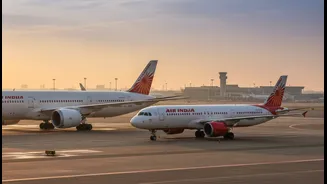
A major force driving this change is the aggressive international expansion of India's low-cost carriers (LCCs). Airlines like IndiGo, Air India Express, and the rapidly growing Akasa Air are at the forefront of this trend. Akasa Air, which only began operations in 2022, has been rapidly expanding its international footprint to destinations in the Middle East and has plans to enter Southeast Asia next. These airlines are deploying modern, fuel-efficient aircraft like the Boeing 737 MAX and the Airbus A321neo, which make direct, medium-haul international flights from smaller cities economically viable. This strategy focuses on point-to-point connectivity, bypassing the congested hub-and-spoke model. For example, Air India Express has made Navi Mumbai a key pillar of its strategy, launching the new airport's first international flight to Abu Dhabi in July 2026 and planning to scale up to 55 daily departures. This approach not only caters to the surging demand for outbound travel from India, but also helps decongest the traditional metro airports.
New Infrastructure Unlocks Potential
This aviation shift would be impossible without a massive upgrade in airport infrastructure. The recent openings of greenfield airports like Navi Mumbai International Airport and Noida International Airport in Jewar are game-changers. These state-of-the-art facilities provide the runway capacity, modern terminals, and customs facilities necessary for airlines to launch new international services. The Navi Mumbai airport, which began international operations on July 15, 2026, provides a crucial second international gateway for the Mumbai Metropolitan Region. Beyond the brand-new airports, existing terminals in cities like Guwahati have undergone significant upgrades, even earning international design awards. This widespread infrastructure development is a key enabler, providing the physical space for airlines to grow their networks and for cities to transform into independent hubs of commerce and tourism. This expansion is critical as Indian nationals made nearly 33 million trips abroad in 2025, a figure that continues to climb.
What This Means for Travellers
For the average Indian traveller, this trend translates into tangible benefits. The most obvious is the immense convenience and time saved by avoiding domestic layovers. A passenger from Guwahati can now fly directly to Dubai without a multi-hour stop in Delhi. This also leads to cost savings, as direct flights on LCCs are often more competitive than the combined cost of a domestic and an international leg on a full-service carrier. The expansion also opens up new travel possibilities. IndiGo's new services from Mumbai and Delhi to Athens, operated by the new Airbus A321XLR aircraft, mark the first time an Indian carrier is offering direct connectivity to Greece. While some routes are being added, airlines are also constantly adjusting their schedules based on demand, with some services being reduced or suspended. However, the overarching trend is one of expansion and diversification, offering more choices to more people across India. This shift signifies more than just new lines on a route map; it represents a more democratised and accessible era for international travel for millions of Indians.