




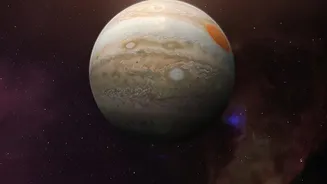

Your Window to the Cosmos
The magic of modern astronomy is that it's no longer reserved for those with expensive telescopes and access to remote, dark-sky locations. Even in brightly lit cities, the brightest objects in our solar system, like the planets Jupiter and Saturn, shine
through the haze. The challenge isn't their brightness, but knowing where to look. This is where mobile astronomy apps become your most essential tool. These applications use your phone's built-in GPS and compass to create a real-time map of the sky, showing you exactly what’s above you, day or night. They transform a seemingly random scatter of lights into a navigable chart of stars, constellations, and planets.
Top Astronomy Apps for Beginners
Getting started is as simple as downloading an app. Many excellent options are free or offer powerful free versions. Star Walk 2 is often recommended for beginners due to its user-friendly interface and beautiful graphics. Simply point your phone at the sky, and it identifies celestial bodies. SkyView Lite is another fantastic choice, celebrated for its simplicity and augmented reality (AR) feature, which overlays constellations and planets onto your camera's view of the sky. For those wanting a slightly more detailed experience, Stellarium Mobile offers a realistic sky simulation and a vast catalogue of celestial objects, bringing a desktop-planetarium experience to your phone. Most of these apps work offline, making them perfect for any stargazing situation.
How to Find Jupiter and Saturn Tonight
Once you have your app, finding the planets is a simple three-step process. First, open the app and give it a moment to calibrate to your location and the direction you're facing. Most apps will ask for location permissions to work accurately. Second, use the app's search function. Type in “Jupiter” or “Saturn.” The app will then typically display an arrow or guide on your screen. Third, follow the arrow. Move your phone across the sky in the direction it indicates. As you get closer, the planet will appear on your screen. Now, lower your phone and look in that same direction with your own eyes. You should be able to spot a bright, steady point of light that wasn't noticeable before—that's your target.
Tips for Better Urban Stargazing
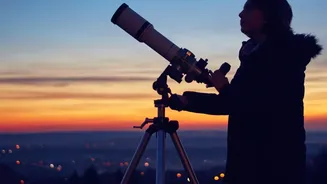
Viewing from a city comes with challenges, mainly from light pollution. To improve your experience, find the highest and darkest spot you can—a rooftop or a balcony facing away from major streetlights is ideal. Turn off all the lights in your flat to reduce immediate glare. Give your eyes at least 15 minutes to adapt to the darkness; you'll be surprised by how much more you can see. Many apps also feature a red-light 'Night Mode' which helps preserve your night vision while you use your phone. Finally, check for planet visibility. During September 2026, for instance, Saturn is visible for much of the night, while Jupiter appears in the pre-dawn hours. Knowing when to look is half the battle.
What to Expect to See
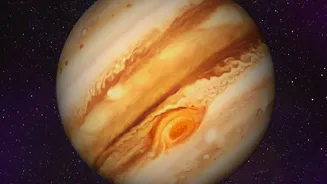
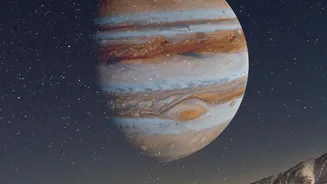
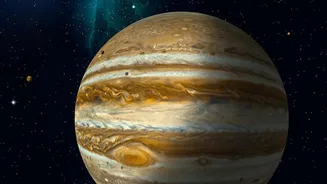
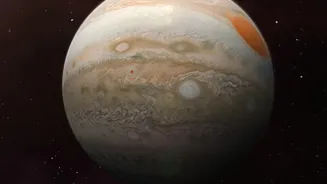
To the naked eye, planets look different from stars. While stars twinkle, planets shine with a steady, unwavering light. Jupiter is exceptionally bright, often the most brilliant point of light in its part of the sky. Saturn is also distinctly bright, appearing as a steady, yellowish-white 'star'. While you won't see Saturn's rings or Jupiter's moons without binoculars or a telescope, the thrill of identifying these distant worlds with your own eyes is immense. It's a powerful moment of connection to the vast universe, all made possible from the comfort of home.