




The Purity of the Press: What is Cold-Pressed?
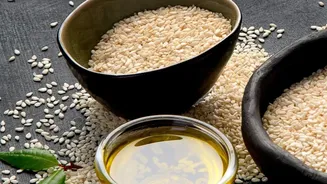
Cold-pressed extraction is a modern take on a traditional method, often known as 'kachi ghani' or 'chekku'. It involves mechanically crushing sesame seeds at a low temperature, typically below 40°C, to release the oil. This gentle process avoids external
heat and chemical additives, ensuring the oil that comes out is as close to its natural state as possible. By keeping temperatures low, the method preserves the delicate molecular structure of the oil, along with its natural flavour, aroma, and nutritional compounds. The resulting oil is often filtered to remove seed particles, leaving behind a pure, nutrient-rich product that reflects the true essence of the sesame seed.
The Industrial Method: Solvent Extraction
In contrast, most mass-produced cooking oils are made using solvent extraction to maximise yield. After an initial mechanical pressing, the remaining seed cake is washed with a chemical solvent, most commonly a petroleum-based substance called hexane. This solvent dissolves the rest of the oil from the seeds. The mixture of oil and solvent is then heated to a high temperature to evaporate the hexane, which is recovered for reuse. This highly efficient method produces more oil at a lower cost, but it fundamentally alters the final product. The high heat and chemical exposure strip the oil of its natural flavour, colour, and many beneficial nutrients.
The Question of Chemical Residue
The primary concern with solvent extraction is the potential for chemical residues to remain in the final product. While regulatory bodies set limits for acceptable levels of hexane in edible oils, the cold-pressing method sidesteps this issue entirely. By definition, cold-pressed oils are not exposed to hexane or any other chemical solvents, making them free from this type of contamination. Though manufacturers of refined oils state that the solvent is almost entirely removed during processing, choosing cold-pressed oil offers consumers peace of mind that they are getting an unadulterated product without any risk of consuming trace amounts of industrial chemicals.
More Than Just Purity: The Nutritional Advantage
The benefits of cold-pressing go far beyond avoiding solvents. The absence of high heat means the oil retains a significantly higher concentration of valuable nutrients. Cold-pressed sesame oil is rich in antioxidants like sesamol and sesaminol, which help protect the body from cellular damage. It also preserves vitamins, minerals, and heart-healthy polyunsaturated and monounsaturated fats. This nutritional integrity is largely lost during the high-heat refining process, which includes bleaching and deodorising to create a neutral, shelf-stable product but also strips away the very compounds that make the oil beneficial.
Flavour, Aroma, and Making an Informed Choice
Perhaps the most immediate difference for any home cook is the taste and smell. Cold-pressed sesame oil boasts a robust, nutty flavour and a rich aroma that can elevate a dish, making it ideal for dressings, marinades, and drizzling over finished meals. Refined sesame oil, on the other hand, is intentionally neutral in flavour and has a higher smoke point, making it suitable for high-heat frying but adding little in terms of taste. When shopping, look for labels that explicitly state "cold-pressed," "wood-pressed," or "kachi ghani." This guarantees you are getting a product valued for its purity, nutritional content, and superior flavour, rather than one engineered solely for volume and shelf life.