




The Science of Sound
At its core, this technology, often filed under the science of bioacoustics, isn't about simply blasting pests with loud noises. Instead, it's a far more subtle and sophisticated process. Researchers have discovered that specific sound frequencies can
influence living organisms in profound ways. For plants, certain vibrations can act as a trigger, stimulating their natural defense mechanisms. Think of it as an immune system workout. The sound waves can encourage plants to produce compounds that make them less palatable to insects or more resistant to fungal diseases. Research has shown that sound waves can enhance growth, increase yield, and even reduce the incidence of issues like rice sheath blight by up to 50% in certain studies. It’s a non-invasive way to tell a plant, "toughen up," using a language it can understand: vibration.
A Perfect Match for City Farming
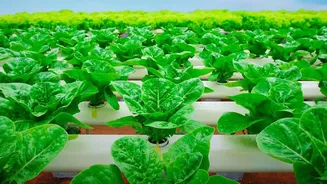
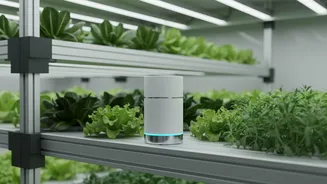
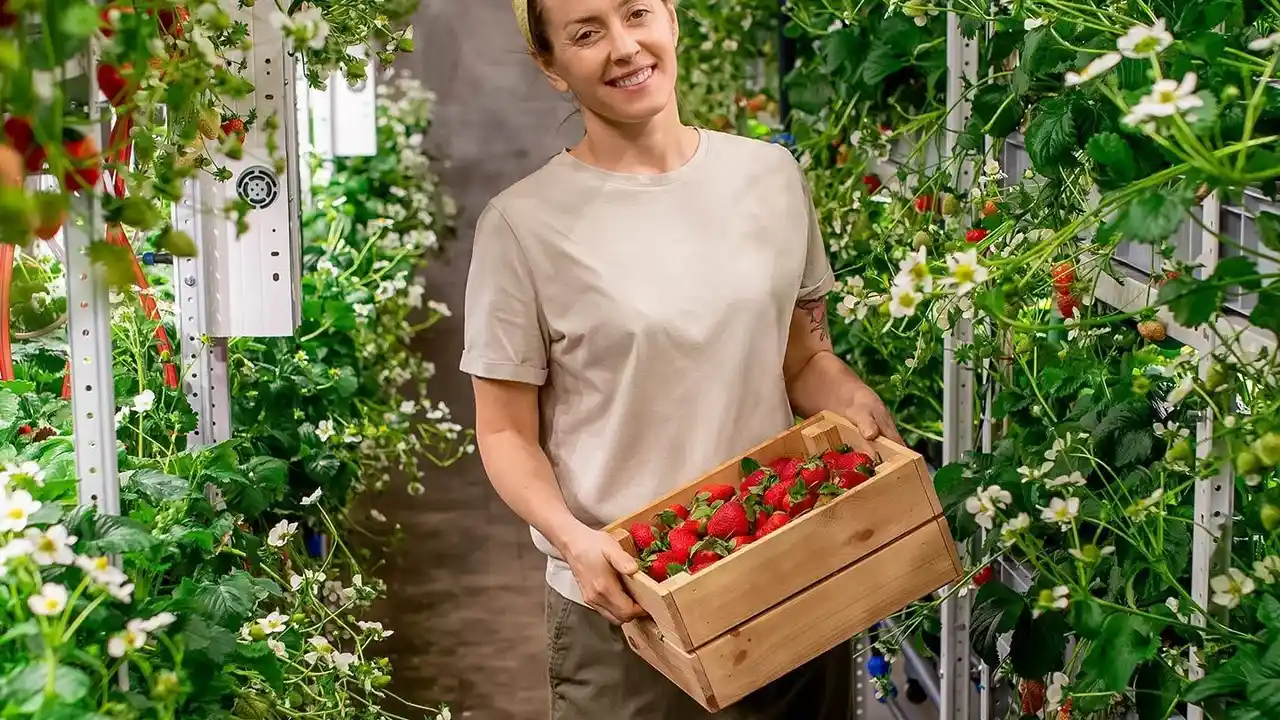
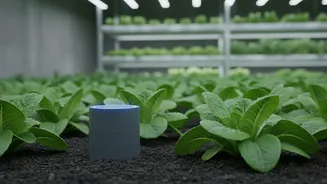
Urban agriculture, especially indoor and vertical farming, operates in a controlled environment where the use of chemical pesticides is often impractical or outright banned. The proximity to people, complex ventilation systems, and the enclosed nature of these farms create a unique challenge. How do you stop a pest outbreak without resorting to sprays that could be harmful in a closed loop system? This is where soundwave technology finds its ideal application. By broadcasting specific frequencies, a vertical farm can protect its entire crop without introducing a single foreign substance. It’s a clean, contained solution for a clean, contained environment. This chemical-free approach is a massive selling point for consumers who are increasingly demanding locally grown, pesticide-free produce.
More Than Just a Bug Zapper
The application of sound in agriculture extends beyond just pest deterrence. Some systems focus on disrupting the communication and mating cycles of insects, effectively preventing populations from ever taking hold. This is particularly useful for stopping infestations before they start. Furthermore, other sonic technologies are being developed for different purposes entirely. For instance, researchers at RMIT University have used high-frequency sound waves to create a fine mist that deposits a protective, crystalline film on leaves. This coating acts like a sunscreen, shielding the plant from harmful UV radiation without impeding photosynthesis. This shows that acoustics can be a versatile tool, used not only for defense but also for enhancing plant health and resilience in other innovative ways.
From Lab to Lettuce
While the science is promising, soundwave crop protection is still an emerging field. The primary hurdles are cost, scalability, and optimization. The equipment can be expensive, and determining the precise frequencies, duration, and intensity for different crops and different pests requires significant research and calibration. Environmental factors like background noise and humidity can also affect the technology's performance. However, several startups and research institutions are actively developing commercial systems. As the technology becomes more refined and affordable, it has the potential to become a standard tool in the urban farmer's toolkit. The successful use of acoustics to monitor for pests like termites in urban trees already proves the principle can work effectively in noisy, real-world environments.