


What Exactly Is the September Equinox?
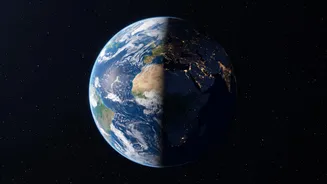
The September equinox is an astronomical event that happens on the same moment for the entire planet, marking the start of autumn in the Northern Hemisphere. In 2026, it occurs on September 23. The word 'equinox' comes from Latin words meaning 'equal
night', because on this day, daytime and nighttime are of approximately equal length everywhere on Earth. It's one of two days in the year when the Sun is positioned directly above the Earth's equator. As a result, the Sun rises due east and sets due west for everyone. This moment of balance is fleeting, as from this day forward, days will begin to get shorter and nights longer in the Northern Hemisphere, leading us into winter.
It's All About the Tilt
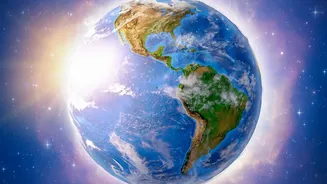
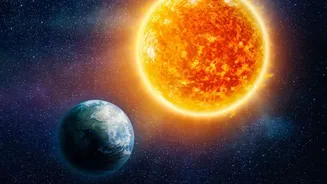
A common misconception is that seasons are caused by the Earth being closer to or farther from the Sun. In fact, our planet is actually closest to the Sun in January, during the Northern Hemisphere's winter. The real reason for the seasons is Earth's axial tilt. Our planet spins on an axis that is tilted at an angle of about 23.5 degrees. As Earth makes its year-long journey around the Sun, this tilt remains pointed in the same direction. Think of it like a spinning top that is leaning to one side as it moves. This constant tilt means that for half the year, the Northern Hemisphere is angled more towards the Sun, and for the other half, the Southern Hemisphere gets more direct sunlight. More direct sunlight means more concentrated heat and longer days, which gives us summer.
Our Planet's Orbital Dance
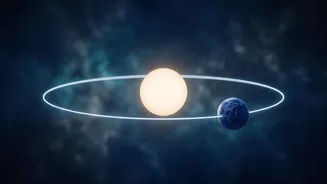
The equinoxes and solstices are the four key markers in our planet's annual orbit. While the tilt causes the seasons, the orbit determines when they change. The solstices, in June and December, are the points where Earth's tilt towards or away from the Sun is at its maximum. These days give us our longest and shortest periods of daylight. The equinoxes, in March and September, are the halfway points between the solstices. At these moments, the tilt is neither towards nor away from the Sun; it is sideways. This is when the Sun's rays shine most directly on the equator, and why light is distributed almost evenly across both hemispheres. These four points—two solstices and two equinoxes—define the astronomical beginning of each new season.
Autumn for the North, Spring for the South
The September equinox is a global event, but its effect depends on which hemisphere you are in. For India and the entire Northern Hemisphere, this event is the autumnal equinox, heralding the start of autumn. The Sun crosses the celestial equator moving southward. This means the Northern Hemisphere will now begin to tilt away from the Sun, resulting in less direct sunlight, cooler temperatures, and shorter days. Simultaneously, for the Southern Hemisphere, the exact same event marks the vernal, or spring, equinox. There, they will start tilting towards the Sun, enjoying longer days and the beginning of warmer weather. It's a beautiful demonstration of the planet's symmetry, with the seasons in the two hemispheres always being opposite.
What This Means for India
Astronomically, the September equinox signals the end of summer. For most of India, this aligns with the post-monsoon or retreating monsoon period, which runs from October to November. The intense heat and humidity of the monsoon season begin to fade, replaced by clearer skies and milder, more pleasant temperatures. You will notice the days getting progressively shorter and the nights longer as we head towards the winter solstice in December. This shift brings a palpable change to the environment. It is the season often traditionally associated with harvest and major festivals like Navratri and Diwali, which fall in the autumn months. It's a time of transition, a natural cue that the cool, dry days of winter are on their way.