




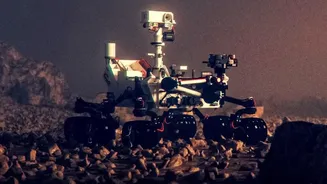

The Robotic Vanguards
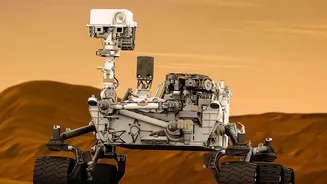
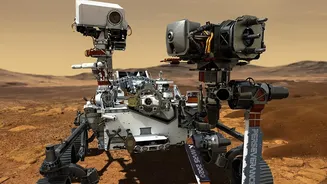
For decades, robotic explorers have been our proxies on the Red Planet, acting as our eyes, hands, and scientific instruments. Missions involving rovers like Curiosity and Perseverance have been triumphs of engineering, surviving extreme conditions to
send back invaluable data. These wheeled geologists can operate for years, patiently analyzing soil, mapping terrain, and seeking signs of past life, all without the costly and complex life support systems humans require. They are the logical first step, performing high-risk reconnaissance and laying the groundwork for future exploration, dramatically increasing our knowledge and inspiring a new generation. In many ways, robots are the perfect pioneers: resilient, methodical, and immune to the dangers of a hostile world.
The Dexterity Deficit
Despite their successes, robots suffer from what experts call a 'dexterity gap'. While they can perform pre-programmed tasks with precision, they lack the fine motor skills and tactile sensitivity of human hands. A human can effortlessly pick up a fragile rock, tie a knot, or improvise a repair; for a robot, these are monumental challenges. The Mars rover Perseverance, for instance, has struggled with rocks that are too fragile or jagged to be drilled safely, a task a human geologist could likely navigate with intuitive adjustments. This clumsiness isn't just an inconvenience. On a mission millions of miles from Earth, the inability to handle an unforeseen physical task—like freeing a stuck wheel or fixing a component—can be mission-ending. Human hands, with their ability to feel pressure, texture, and temperature, remain a far more versatile and adaptable tool.
A Question of Judgment
Beyond physical dexterity, the more profound limitation is judgment. Robots operate on logic and programming. They can follow a path and execute commands, but they cannot truly improvise or exercise intuition. A human explorer can spot an unusual geological formation from a distance and, based on a hunch, decide to investigate—a deviation from the plan that could lead to a monumental discovery. This is a form of on-the-spot decision-making that current AI is not equipped to handle, especially in novel situations. There is a significant time lag in communication between Earth and Mars, ranging from 5 to 20 minutes each way. This means every minor robotic action requires a slow, deliberate process of consultation with human controllers back home. An astronaut on the ground could make hundreds of such judgments in a single day, dramatically accelerating the pace of discovery.
The Human Advantage: Speed and Adaptability
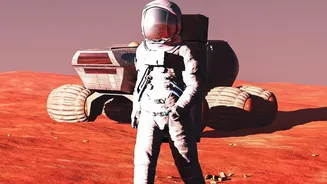
When you combine dexterity with judgment, the core human advantage becomes clear: adaptable speed. A task that might take a rover months of careful planning and execution, such as digging a small trench, could be accomplished by an astronaut with a shovel in minutes. Humans are simply more versatile. An astronaut can traverse difficult terrain that would trap a rover, use tools in ways they weren't designed for, and troubleshoot complex problems in real-time without waiting for instructions from a distant planet. The Apollo missions were filled with instances where astronauts used their quick thinking to collect scientifically valuable samples that a robot would have missed. While robots are excellent at gathering specific data points, human explorers excel at synthesis, context, and creative problem-solving in a dynamic environment.
A Collaborative Future on Mars
Ultimately, the 'robots vs. humans' framing is misleading. The future of Mars exploration isn't a choice between one or the other, but a partnership. Space agencies like NASA envision a model where robotic missions continue to act as precursors, mapping hazardous areas, identifying resources, and caching scientifically interesting samples. Humans will then follow, bringing their unique capacity for complex science, infrastructure building, and on-the-fly innovation. Robots will serve as indispensable tools for human crews, performing dangerous or repetitive tasks, while humans provide the high-level oversight and creative spark. The goal is a symbiosis where the strengths of each are maximized—the endurance and precision of the machine, paired with the ingenuity and adaptability of the human mind.