






The New Recruiter in the Room
For decades, the campus placement process was a logistical marathon for companies. Recruiters would sift through thousands of resumes, a time-consuming and often subjective task. Today, Artificial Intelligence has taken over the initial heavy lifting.
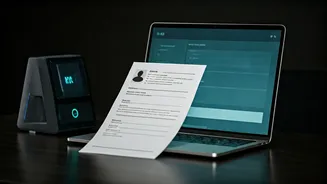
The most common application is the Applicant Tracking System (ATS), which uses AI to scan and rank resumes in seconds. These systems have moved beyond simple keyword matching; they now analyze skill clusters and project impact, filtering out a majority of applications before a human even sees them. For large-scale recruiters in sectors like IT and finance, this means unprecedented efficiency, allowing them to process a vast pool of candidates from colleges across the country without the massive overhead of manual screening. This shift marks a move away from hiring based on a college's brand name towards a more skill-focused approach.
Beyond the Resume Scan
AI's role extends far beyond just reading resumes. Companies are now deploying sophisticated AI tools for nearly every stage of the hiring funnel. AI-powered gamified behavioural assessments and psychometric tests are used to evaluate a candidate's personality and cognitive abilities. One of the most significant trends is the rise of the AI-led video interview. In these interviews, candidates interact with an AI bot that asks questions and analyzes their responses, body language, and even vocal tone. The goal is to create a consistent, bias-free evaluation process, available 24/7. Some companies report that candidates selected through AI-led processes have higher retention rates, suggesting the technology is becoming more effective at identifying not just qualified candidates, but also those who are a good cultural fit.
The Student's AI Toolkit
The AI revolution isn't just for recruiters; it's also empowering students. A new ecosystem of AI tools is helping graduates prepare for the highly competitive placement landscape. Generative AI platforms like ChatGPT are widely used for everything from drafting and refining resumes to get past ATS filters, to generating outlines for interview questions. More specialized platforms offer AI-powered mock interviews, where students can practice with a virtual interviewer and receive instant feedback on their communication and confidence. Some tools even offer simulations of real-world coding tests and behavioural assessments used by top companies. For many Indian students, these tools are levelling the playing field, providing access to high-quality placement preparation that was previously unavailable or expensive.
Navigating the New Landscape
This new AI-driven reality presents both opportunities and challenges. On one hand, AI can democratize hiring by focusing on skills over pedigree, potentially uncovering hidden talent from Tier-2 and Tier-3 colleges that might have been overlooked in the past. It offers efficiency and a data-driven approach that can reduce human bias. However, there are significant concerns. AI algorithms, if trained on biased historical data, can perpetuate and even amplify existing biases against certain demographics. There's also the risk of an impersonal hiring process that lacks the human touch, making it difficult to assess crucial soft skills like empathy and teamwork. For students, the pressure is on not only to have the right skills for the job but also to understand how to navigate and perform for these new AI gatekeepers.
Fairness and the Future
As AI becomes more integrated into placements, the focus is shifting towards ensuring fairness, transparency, and effectiveness. Many experts advocate for a 'human-in-the-loop' model, where AI is used as a powerful tool for initial screening and assessment, but final decisions are made by human recruiters who can evaluate cultural fit and other nuances. Higher education institutions are also adapting, with placement cells using AI to track student readiness and identify skill gaps early on. The message for students is clear: while AI is automating some entry-level tasks, it is also creating demand for new roles and placing a premium on human-centric skills like critical thinking, communication, and leadership. The students who will succeed are not those who fear AI, but those who learn to collaborate with it, using it as a tool to enhance their skills and showcase their capabilities in a new, digitally-defined job market.