





The Global Handshake: What Are Trade Deals?
At its core, a trade agreement is a deal between countries that sets the rules for buying and selling goods and services across borders. These rules often involve tariffs, which are taxes on imported products. When the United States, a major global trading
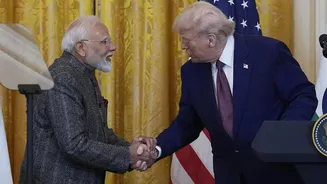
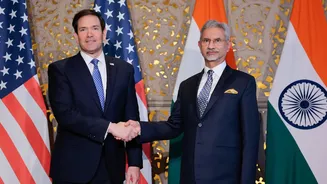
partner for India, changes its trade policies, the effects ripple across the world. Recent shifts in US policy have seen tariffs fluctuate, directly impacting the cost of bringing foreign goods into the country. For example, in early 2026, the US and India reached a framework for an interim agreement where the US would lower its 'reciprocal tariff' from 25% to 18% in exchange for India reducing duties on various American goods. This kind of negotiation directly alters the base cost of products before they even reach a store.
The Journey of Your Product
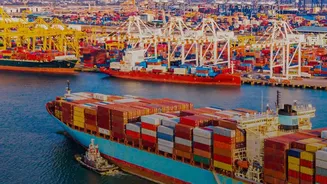
Imagine a cotton shirt made in a factory in Tirupur. To be sold in the US, it faces an American tariff. But even if that shirt is destined for a store in Mumbai, its final price can be influenced by US trade dynamics. Many components, from specialised dyes to machinery used in production, might be subject to global pricing pressures influenced by US tariffs. The total trade between the US and India was estimated at nearly $240 billion in 2025, highlighting how intertwined the two economies are. Any disruption or new cost in this massive supply chain, such as a punitive tariff imposed by the US, increases the 'landed cost'—the total expense of getting a product from the factory floor to the retailer's warehouse.
How Tariffs Add to the Price Tag
A tariff is more than just a number on a government document; it's a real cost that someone has to pay. When the US imposes a tariff on Indian goods, the Indian exporter or the American importer foots the bill. For instance, punitive tariffs as high as 25% to 50% were previously placed on certain Indian goods like textiles in response to geopolitical issues. This extra cost gets baked into the product's price. The importer, facing a higher cost, passes that increase to the wholesaler. The wholesaler, in turn, passes it to the retailer. By the time the product lands on a shelf in an Indian store (if it's re-imported or contains US-influenced components), its base cost has already been inflated by these international duties.
The Retailer’s Dilemma: Margin vs. Price
Here's where it hits the consumer. A retailer who paid a higher wholesale price for an item has two choices: absorb the extra cost or pass it on to the customer. Absorbing the cost means accepting a lower retail margin, which is the profit percentage made on each sale. For example, if a product's cost rises from ₹500 to ₹550 due to tariffs, and the retailer keeps the selling price at ₹800, their profit margin shrinks. Alternatively, they can raise the price to ₹880 to maintain their margin, but this risks alienating customers who are sensitive to price changes. Sectors like textiles, leather, engineering goods, and pharmaceuticals are particularly sensitive to these tariff negotiations.
Which Goods Are Most Vulnerable?
Not all products are affected equally. Labour-intensive goods like textiles and apparel, footwear, and handicrafts are often at the center of trade negotiations. Prior to recent agreements, the US had removed India from its Generalized System of Preferences (GSP) program, which had allowed thousands of Indian products to enter the US duty-free. The termination of this benefit meant that items like jewellery, certain auto parts, and agricultural products suddenly became more expensive to export, impacting competitiveness. While recent negotiations aim to ease some of this, the episode shows how quickly US policy can change the financial viability for entire sectors, the effects of which ultimately trickle down to the prices consumers see.