



A Leap into Orbital Computing
The term 'Orbital AI Mission' refers less to a single mission and more to a strategic shift in India's space technology. Spearheaded by both the Indian Space Research Organisation (ISRO) and a growing number of private startups, this new frontier is all
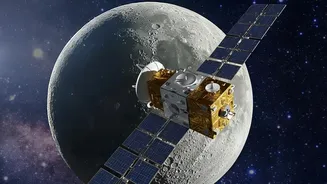
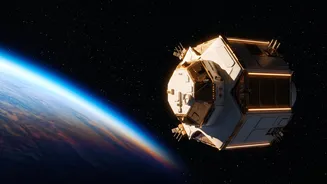
about on-board processing. On October 1, 2026, for instance, Hyderabad-based startup TakeMe2Space is scheduled to launch MOI-1A, described as India's first orbital computing satellite. This satellite is part of a broader push to give satellites the ability to think for themselves. Traditionally, satellites are like cosmic messengers; they capture vast amounts of data—images, signals, and measurements—and send it all back to powerful computers on Earth for analysis. This process is slow and creates a massive data bottleneck. Orbital computing flips the script by placing the 'brain' on the satellite itself.
How On-Board AI Works
Think of it like the difference between a simple digital camera and a modern smartphone. The old camera just captures images, which you later sort through on a laptop. A smartphone, however, can instantly identify faces, scenes, or even text directly on the device. AI-powered satellites do something similar. Equipped with powerful processors like the Nvidia Orin NX, these satellites can run AI models directly in orbit. Instead of beaming down terabytes of raw imagery of a flooded region, an AI-enabled satellite can process the images on board, identify the precise boundaries of the floodwaters, and send back a much smaller, analysis-ready map. This is a form of 'edge computing', where data processing happens close to the source, and it promises to make satellite intelligence faster and more efficient than ever before.
The Benefits of a Smarter Sky
The implications of this technology are enormous. For disaster management, it means getting critical information to first responders in minutes, not hours. An AI satellite could autonomously detect the start of a forest fire or track a cyclone's path in real time, providing immediate alerts. For agriculture, it can enable precision farming by delivering timely insights on crop health and soil moisture. National security also gets a significant boost. ISRO has plans for a constellation of AI-powered surveillance satellites that can interact with each other, tasking lower-orbit satellites to get a closer look at areas of interest flagged by higher ones. This creates a more responsive and intelligent surveillance network for monitoring borders and strategic assets.
India's Commercial Edge
This technological leap isn't just about public services; it's also a major commercial play. The global space economy is booming, and companies that can offer faster, more intelligent data services will have a competitive advantage. Indian startups like TakeMe2Space, Pixxel, and GalaxEye are at the forefront of this shift, developing satellites that can offer 'compute time' in orbit as a service. Customers can upload their own AI models to a satellite to perform specific analyses, paying for the processing time rather than massive data downloads. This opens up new business models and positions India as a key player in the next generation of space-based data services, moving from a technology consumer to a technology creator.
Challenges and the Road Ahead
Putting sophisticated computers into the harsh environment of space is not without its challenges. Electronics must be protected from extreme radiation, and the systems must be highly reliable with limited power and cooling. TakeMe2Space, for example, has developed proprietary radiation-shielding coatings to extend the life of its electronics. The company also experienced setbacks, including the loss of a satellite in a launch failure and a software bug on a previous demonstrator mission, highlighting the difficulty of this new domain. Despite these hurdles, the vision is clear. TakeMe2Space aims to build a constellation of six satellites by 2027, creating what is essentially a data centre in orbit. With ISRO also planning a large fleet of intelligent satellites, India is firmly on a path to creating a new digital infrastructure in the sky.