






A Lifeline from Low Earth Orbit
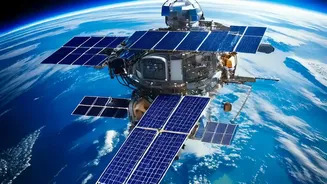
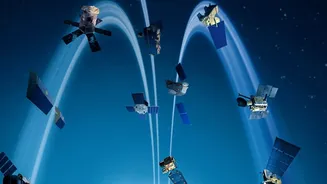
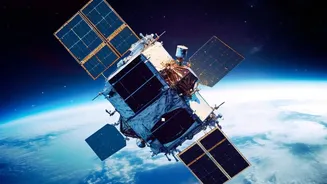
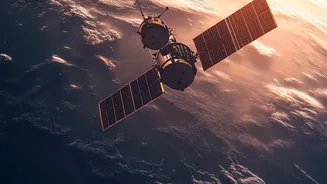
When Russia's full-scale invasion began, it targeted Ukraine's communication infrastructure, successfully disabling tens of thousands of satellite terminals. Into this void stepped SpaceX's Starlink, a constellation of satellites in low Earth orbit providing
high-speed internet. Activated in February 2022, it quickly became indispensable. For Ukraine's armed forces, Starlink is more than just internet; it is the central nervous system for modern warfare. It enables secure communication, guides drones for reconnaissance and strikes, and allows artillery units to coordinate with devastating precision. Military analysts have credited the system, which is notoriously difficult for Russia to jam, as a key factor in Ukraine's battlefield successes.
Sudden Restrictions and Alarming Outages
The concerns peaked around October 14, 2026, when Ukrainian officials and soldiers reported a sudden and unannounced disruption. The issue centered on Starshield, the military-grade version of the service. A new restriction was reportedly implemented, throttling connectivity for any terminal moving faster than 160 kilometers per hour (about 100 mph). The impact was immediate. Ukrainian forces reported that missions involving mid-range attack drones and fast interceptor drones had to be cancelled. These systems are crucial for striking Russian logistics behind the front lines and for defending against Russia's own jet-powered drones. President Volodymyr Zelensky stated the restriction directly hampered Ukraine's ability to protect civilians. Soldiers on the front lines also felt the effects, reporting that the degraded connection significantly impaired communication with their command centers.
The Attribution Puzzle: Who Is Responsible?
Figuring out who ordered the restriction is where the facts become murky and the accusations fly. Initially, Ukrainian officials expressed shock, stating they received no warning, and pointed fingers at both SpaceX and the US government. Elon Musk, CEO of SpaceX, publicly deflected responsibility for the military-grade Starshield service. On his social media platform X, he stated that Starshield systems are 'owned and controlled by the US government' and that any limits are 'decided by the US military and ultimately POTUS'. This placed the decision squarely on the White House. However, subsequent reporting, citing sources familiar with the matter, claimed it was Musk himself who proposed the speed cap to the US President, who then agreed. This tangled web of claims and counter-claims leaves Ukraine caught in the middle. President Zelensky said he did not believe the disruption was a technical glitch, but an act of 'will'. The incident has become intertwined with a broader souring of relations over issues like Ukrainian strikes on Russian oil refineries.
The Peril of Private Power in Public Wars
Beyond the immediate battlefield consequences, the Starlink situation exposes a profound challenge in 21st-century warfare: a nation's reliance on a private company and its mercurial CEO for a mission-critical capability. While the Pentagon does have a contract with SpaceX for the service, ultimate control appears to be a grey area, subject to the whims of geopolitics and corporate interests. The incident has prompted calls within the US for an investigation into what happened, with one senator calling the situation 'at best, an unacceptable error... and at worst a conscious decision to clear the field for a Russian attack'. For Ukraine and its allies, it's a stark reminder that the tools of war are no longer exclusively in the hands of states. As one analyst noted, it highlights the danger of relying on proprietary services led by billionaires without clear governance or accountability.