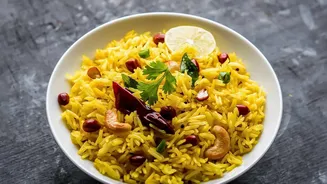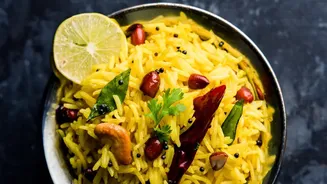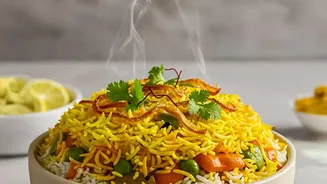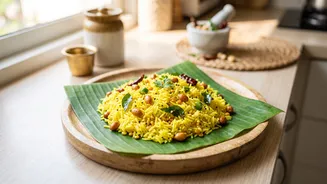




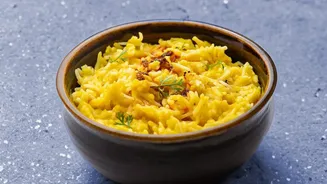
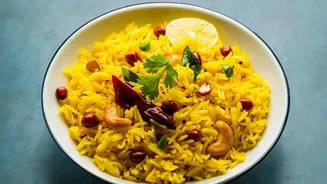
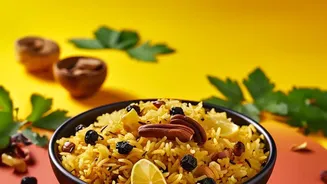
Lemon rice, or Chitranna, is a masterclass in simplicity. Bright, tangy, and comforting, its true genius lies in the delicate balance of textures and flavours. Getting the crunch of peanuts and the aroma of spices just right is the secret.
The Foundation: Perfectly Cooked Rice
Before we even
think about spices, the canvas for our dish must be perfect. The ideal lemon rice uses cooked rice that has been completely cooled. Hot or even warm rice tends to become mushy when mixed and can absorb the lemon juice unevenly, creating a pasty texture. Using leftover rice is a classic trick for a reason. The grains should be separate and fluffy, which allows the tempering and lemon to coat each one without breaking them. Spreading the cooked rice on a wide plate and drizzling a little oil over it while it cools can help ensure the grains remain distinct. While basmati is a popular choice for its long, separate grains, many traditional recipes from South India favour short-grain varieties like Sona Masuri, which absorb flavour beautifully.
The Tadka: A Symphony of Spices
The soul of lemon rice is born in the 'tadka', or tempering, a process of frying spices in hot oil or ghee to unlock their essential aromas. This is where the first layer of flavour is built. Start with heating oil (groundnut or sesame oil is traditional) and add mustard seeds, waiting for them to pop and splutter. Immediately follow with lentils like chana dal and urad dal, frying them until they turn a beautiful golden brown—this adds a nutty flavour and a subtle, delightful crunch. Be careful not to let them get too dark. Next, add curry leaves, which will crackle intensely, along with split green or whole dried red chillies for heat. A generous pinch of turmeric provides the signature golden colour and an earthy note, while a dash of asafoetida (hing) lends a complex, savoury depth that is quintessentially Indian.
The Peanut Predicament: Timing and Texture
Peanuts are not just a garnish in lemon rice; they are a crucial textural element. Their rich, nutty flavour and satisfying crunch provide a necessary contrast to the soft rice and tangy lemon. The key to perfect peanuts is to fry them separately before making the tadka. Heat some oil and fry raw, skin-on peanuts until they are golden and fragrant. Frying them separately ensures they become perfectly crisp without the risk of burning the other spices in the tadka, which cook much faster. Set the fried peanuts aside and add them back into the rice at the very end. This timing is critical—if added too early, they can absorb moisture from the other ingredients and lose their signature crunch.
The Final Flourish: The Acid Test
The final, and perhaps most critical, step is adding the lemon juice. The number one rule is to always add it off the heat. Adding lemon juice to a hot pan will cook the juice, diminishing its fresh, bright flavour and potentially turning it bitter. Switch off the flame, allow the pan with the tempering to cool for just a moment, and then stir in the fresh lemon juice. Some cooks even prefer to add the tempering to the cooled rice first, mix it gently, and then sprinkle the lemon juice over the entire dish before the final mix. This method ensures the lemon flavour remains vibrant and fresh. Always use freshly squeezed juice; bottled juice simply cannot compare and lacks the bright aromatic quality that makes the dish sing. Adding a little lemon zest along with the juice can also intensify the citrus notes.