






The Heart of the Matter: Intensity
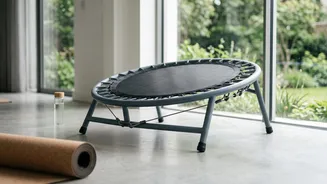
Before comparing any two workouts, it's crucial to understand intensity. Whether you're in a step class or bouncing on a mini-trampoline (also known as a rebounder), the benefits you reap are directly tied to how hard you push yourself. Exercise intensity is generally
measured by your heart rate or your Rate of Perceived Exertion (RPE)—basically, how hard the workout feels to you. A light-intensity activity allows you to sing, a moderate one lets you talk but not sing, and during high-intensity work, you can barely speak in full sentences. This principle is key: a high-intensity trampoline session will always be more effective for cardiovascular fitness than a low-intensity aerobics class, and vice versa. The label on the class schedule matters less than the effort you bring.
Cardiovascular Gains and Calorie Burn
Both aerobics and trampolining are excellent for cardiovascular health, elevating your heart rate to strengthen the heart muscle and improve circulation. The calorie burn depends entirely on the intensity. A high-impact aerobics class can burn a significant number of calories. However, research, including a foundational study by NASA, has shown that rebounding can be a remarkably efficient workout. Some studies suggest that 10 minutes of bouncing can offer cardiovascular benefits equivalent to a 30-minute run. While calorie-burning numbers can be similar between the two activities when performed at a similar intensity, some tests indicate rebounding may burn slightly more calories with less perceived effort.
A Question of Joint Impact
This is where trampolining truly shines. The rebounder's surface absorbs a significant amount of the impact from each jump, making it a low-impact exercise that is much gentler on the joints. This is a major advantage for individuals with joint pain, those recovering from injuries, or anyone looking to protect their knees and ankles over the long term. Traditional aerobics, especially high-impact variations involving jumping and running on a hard floor, can place considerable stress on the joints. While low-impact aerobic options exist, the inherent nature of a trampoline is to reduce that shock, allowing for vigorous activity with less wear and tear.
Muscle Engagement and Other Perks
Aerobics routines are fantastic for targeting large muscle groups in the legs and glutes. Trampolining, however, offers a unique full-body workout. The unstable surface forces you to constantly engage your core and smaller stabilizing muscles to maintain balance and control. This enhances coordination and proprioception. Furthermore, the bouncing motion is celebrated for stimulating the lymphatic system, which helps the body with detoxification—a benefit not typically associated with standard aerobic classes.
The Fun Factor and Long-Term Success
The single most effective workout is the one you consistently show up for. For many, the playful, joyful nature of bouncing on a trampoline makes exercise feel less like a chore. This 'fun factor' can be a powerful motivator, encouraging longer and more frequent workouts. Aerobics, on the other hand, often has a strong social and community component, with structured classes and group energy providing a different kind of motivation. The choice here is deeply personal. Do you thrive on playful freedom or structured, music-driven group routines? Your answer will likely predict which activity you'll stick with.