






More Than Just a Pretty Picture
When you see a vibrant, swirling image of a distant nebula or a color-coded map of Earth’s ocean currents from NASA, you're not just looking at art. You're looking at science. For decades, NASA has pioneered the use of artistic interpretation as a vital
tool for understanding the universe. This practice, known as scientific visualization, transforms billions of points of raw, numerical data—often invisible to the naked eye—into images and animations that scientists can interpret. Shapes, colors, and motion breathe life into the data, revealing complex patterns and phenomena that might otherwise remain hidden in spreadsheets and equations. This process is so crucial that NASA's Goddard Space Flight Center has a dedicated Scientific Visualization Studio (SVS). The mission of the SVS is to work directly with scientists to create visuals that promote a greater understanding of Earth and Space Science research.
Making Data Tangible
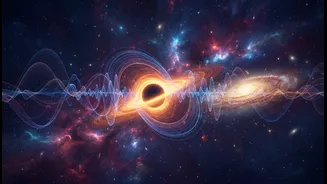
Consider the challenge of understanding a black hole or the sprawling 'cosmic web' that forms the large-scale structure of the universe. These are concepts so abstract and vast they defy easy comprehension. The SVS and other creative teams at NASA, like the Conceptual Image Lab, create illustrations and animations based on scientific simulations and observations. For example, a visualization of the cosmic web uses bright knots to represent entire galaxies and purple filaments to show the intergalactic material that is otherwise invisible. These aren't just artistic embellishments; they are data-driven decisions. An artist might depict an exoplanet as a 'water world' if its observed density is lower than Earth's, suggesting more water, or rockier if its density is higher. These visual choices, made in close collaboration with scientists, turn theoretical data into a tangible scene, offering a scientifically-grounded glimpse of what a distant world might actually look like.
Art as a Bridge to the Public
Beyond its use as a research tool, art is one of NASA's most powerful methods for communication and public engagement. Since its original art program began in 1962, the agency has commissioned artists to capture the awe of space exploration. This tradition continues today in diverse and popular forms. One of the most beloved examples is the 'Visions of the Future' poster series from the Jet Propulsion Laboratory (JPL). Inspired by the iconic style of vintage national park posters, this series imagines a future of space tourism to destinations like Mars, Jupiter's moon Europa, and even planets orbiting other stars. The goal isn't just to create beautiful decor. Each poster is the result of brainstorming sessions between artists and scientists to highlight a specific, real scientific concept about that destination, sparking imagination and connecting the public to the very real work of exploration.
Bringing Space Down to Earth
NASA’s use of art isn't limited to far-flung galaxies. The agency also uses it to make satellite data relevant to everyday life on Earth. The NASA Lifelines program, for instance, translates complex satellite data into large-scale public murals. These artworks depict how NASA data helps communities understand and respond to challenges like heatwaves, floods, and crop management. In some cities, these murals are enhanced with augmented reality (AR), allowing people to use their smartphones to see data, like a time-lapse of a changing river, overlaid on the artwork. By turning data into accessible public art, NASA demonstrates the practical value of its research, helping people see how satellite information can directly benefit their communities. This approach makes science personal, tangible, and actionable.