





A Monsoon Kitchen Soundtrack: Rain and Sizzle
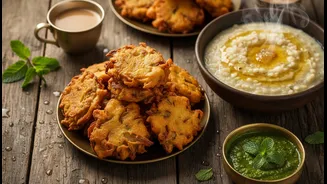
Across India, the arrival of the monsoon signals a shift in the kitchen. As the air cools and the scent of petrichor fills the streets, cravings for something hot, crispy, and indulgent take over. This is the season of the fritter. From the classic onion
bhajiya and potato pakoras to more regional delights like Bengal's pumpkin flower 'bora' or the garlic chive fritters of the Northeast, every region has its champion. The shared ritual involves a spiced gram flour batter, a kadai of shimmering hot oil, and the satisfying sizzle as the fritters turn golden. Yet, this comforting scene often includes a less welcome sound: the aggressive crackle and pop of oil spitting from the pan, turning a beloved tradition into a slightly hazardous activity.
The Science of the Splatter: Water vs. Oil
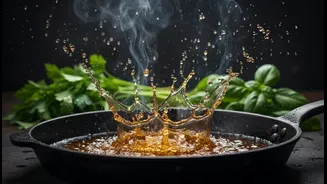
The dramatic reaction is a simple, yet powerful, lesson in physics. It all comes down to the fundamental principle that oil and water do not mix, combined with their vastly different boiling points. Frying oil is typically heated to temperatures between 175°C and 190°C, far above the 100°C boiling point of water. When a droplet of water enters this superheated oil, its density causes it to sink. Surrounded by intense heat, the water instantly flash-boils into steam. This phase change is incredibly expansive; water can expand to 1,700 times its original volume as it becomes steam. This sudden, violent expansion creates a pocket of pressure that erupts through the oil's surface, forcibly ejecting the hot oil in all directions. It’s not just a pop; it’s a miniature, steam-driven explosion.
Why Fresh Herbs Are the Prime Suspects
While any moisture can cause splattering, fresh herbs like coriander, mint, spinach, and curry leaves are particularly notorious culprits. Their leaves, especially after being washed, are experts at trapping water. Even a quick rinse can leave a significant amount of moisture clinging to the surface and tucked into the folds of the leaves. When these herbs are mixed into a batter or dropped directly into the hot oil, they introduce dozens of tiny water pockets. Each one of these becomes a potential site for a violent steam explosion, leading to the sustained, angry splattering that sends cooks ducking for cover. The more moisture on the herbs, the more intense and dangerous the reaction.
The Simple Solution: Prioritise Dryness
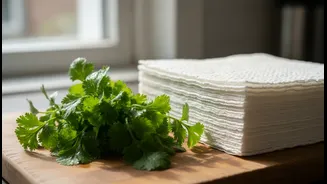
Preventing these kitchen fireworks is surprisingly simple: ensure your ingredients are as dry as possible before they meet the hot oil. This is the single most effective step you can take. After washing your herbs, don't just give them a cursory shake. Take the time to thoroughly pat them dry with a clean kitchen towel or paper towels. For larger quantities, a salad spinner works wonders to wick away excess water. If you have the time, you can even spread the herbs on a towel and let them air-dry for a while before chopping and adding them to your batter. This principle extends beyond herbs to all your fritter ingredients, including onions, potatoes, or other vegetables, which should also be patted dry. A dry ingredient fries, a wet one steams and splatters.
Extra Tips for a Peaceful Frying Experience
Beyond drying your ingredients, a few other techniques can help minimise the mess and risk. Using a deep pan or kadai gives the oil more room to bubble without easily splashing over the sides. When adding your fritters to the pan, lower them in gently rather than dropping them from a height. Placing the food so it moves away from you ensures that any initial splatter is directed toward the back of the stove. Some cooks swear by adding a small pinch of salt to the oil before frying, which can help absorb trace amounts of moisture, though thoroughly drying ingredients remains the most crucial step. Finally, using a splatter screen—a fine mesh cover that lets steam escape but traps oil—can be an excellent final line of defence for your stove and your arms.