


A Tale of Two Moons
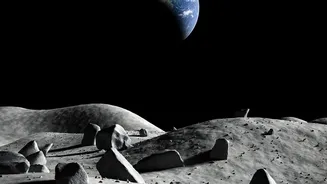
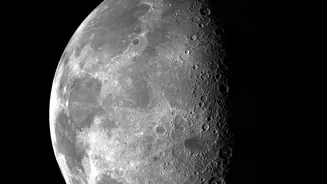
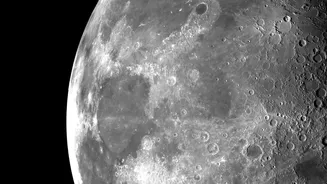
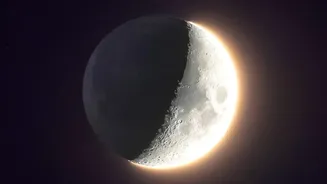
Anyone who has looked up at the night sky is familiar with the 'man in the moon'—the dark, smooth plains of volcanic rock that define the Moon's Earth-facing side. These vast 'maria' or seas are remnants of ancient lava flows. But for most of human history,
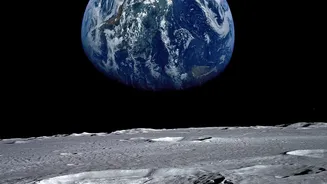
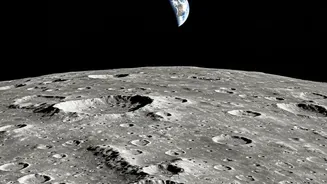
what the other side looked like was pure speculation. Early space missions in the 1960s revealed a completely different world: a rugged, heavily cratered surface with very few maria. The far side's crust is also significantly thicker. This stark difference, known as the lunar dichotomy, has been one of the greatest mysteries in planetary science. Why would one side of the same celestial body be so different from the other? The answer, it seems, was waiting to be dug up.
A Groundbreaking Mission to the Far Side
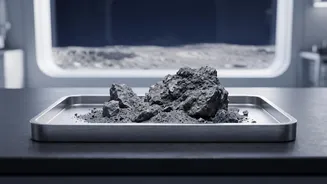
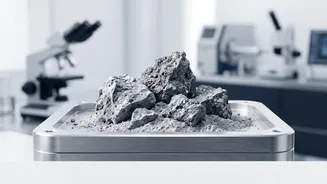
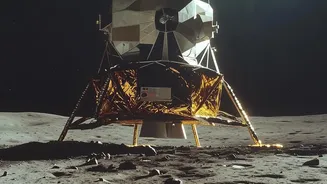
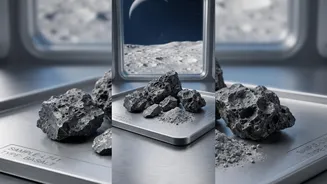
For decades, our understanding of the far side was based entirely on remote sensing from orbiters. While incredibly useful, these instruments can't match the insights gained from analysing physical samples in a lab. All rocks brought back by the Apollo and Soviet Luna missions came from the near side. That all changed with China's historic Chang'e-6 mission, which in 2024 became the first to successfully land on the far side and return nearly two kilograms of soil and rock to Earth. The mission targeted the South Pole-Aitken (SPA) basin, the largest, deepest, and oldest impact crater on the Moon, and one of the largest in the entire solar system. This enormous impact, which occurred over four billion years ago, is believed to have punched deep into the lunar crust, possibly even exposing material from the Moon's mantle, making it a prime location to hunt for geological clues.
Whispers from a Molten Past
The leading theory for the Moon's formation suggests it was born from the debris of a giant impact between a Mars-sized object and a young Earth. The immense energy of this event would have left the early Moon covered in a global 'magma ocean'. As this ocean of molten rock cooled and crystallised over hundreds of millions of years, denser minerals sank while lighter ones, like anorthosite, floated to the top to form the primordial crust. The final dregs of this magma, rich in heat-producing elements like potassium, rare-earth elements, and phosphorus (collectively known as KREEP), were trapped between the crust and the solidifying mantle. New research suggests the colossal impact that formed the SPA basin generated a massive plume of heat that fundamentally reorganised the Moon's interior, pushing this KREEP material towards the near side. This concentration of radioactive, heat-producing elements could have kept the near side's mantle warmer for longer, fuelling the prolonged volcanism that created the dark maria we see today, while the far side cooled more quickly.
What the Far Side Rocks Reveal
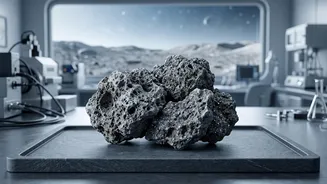
Initial analysis of the Chang'e-6 samples has provided the first 'ground truth' to test these theories. The samples contain a mix of local volcanic basalt and other fragments, giving scientists a direct look at the far side's composition. Intriguingly, while the crustal rocks confirm some expectations based on orbital data, they also show key chemical differences from their near-side counterparts, particularly in their concentrations of certain elements. For example, the far-side rocks have much lower concentrations of thorium, a key component of KREEP. These findings support the model of a massive, heat-driven migration of magma within the ancient Moon, which concentrated these heat-producing elements on the near side. This process would have created two very different geological environments, explaining why the far side has a thicker, more cratered crust and the near side is home to the vast volcanic plains.