






From Forest Floor to Water Filter
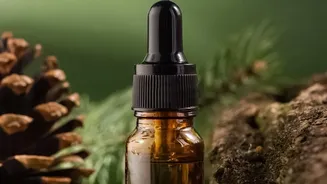
The technology centers on a material called biochar, a stable, carbon-rich substance that looks like charcoal. It is created by heating organic materials, such as wood chips, agricultural waste, or in this case, pine cones, in a low-oxygen environment
through a process called pyrolysis. Often overlooked as forest debris, pine cones are an abundant and renewable resource. Transforming them into biochar turns a common waste product into a powerful tool for environmental remediation. The resulting material is incredibly porous, featuring a vast network of microscopic pores that give it an enormous internal surface area, making it ideal for filtration.
How Biochar Cleans Water
Biochar filters work primarily through a process called adsorption, where contaminants in water stick to the vast surface of the char as it passes through. This mechanism allows it to trap a wide range of pollutants, including heavy metals like lead, organic chemicals from pesticides, and even some pharmaceuticals and antibiotics. Recent research has also revealed that biochar does more than just trap contaminants; it can actively break them down. Some studies show that through a process of direct electron transfer, biochar can degrade certain organic pollutants, essentially destroying them rather than just holding them. This dual-action capability—trapping and destroying—makes it a highly effective purification agent.
A Sustainable and Low-Cost Alternative
Compared to traditional water treatment methods, such as activated carbon, biochar presents several key advantages. First, it is significantly cheaper to produce, especially when made from locally sourced waste materials like pine cones. This makes it an accessible option for small towns and rural communities that may lack the resources for expensive, large-scale infrastructure. Furthermore, the production process itself is a form of carbon sequestration, locking carbon into a stable form that prevents it from being released into the atmosphere as CO2. After its use in water filtration, spent biochar can even be repurposed as a soil amendment, improving soil health and water retention in agriculture.
From the Lab to a Town Near You?
While the headline suggests widespread use, biochar filtration for municipal water is still an emerging field, with most applications currently in pilot programs and smaller-scale systems rather than full municipal deployment. Researchers are actively testing its effectiveness in real-world conditions, which can be more complex than controlled lab settings. Studies using pine cone-derived biochar have shown remarkable success in removing specific contaminants, including antibiotics and fluoride, with removal efficiencies up to 92% in some experiments. These promising results are driving interest in scaling up the technology for broader applications, from household point-of-use filters to larger community water systems.
Challenges on the Road to Adoption
Despite its potential, several challenges must be addressed before biochar becomes a mainstream solution. The effectiveness of biochar can vary significantly depending on the feedstock—in this case, pine cones—and the specific pyrolysis conditions used to create it, such as temperature and duration. This variability means that standardization and quality control are critical to ensure reliable performance. Researchers are also studying the long-term durability of biochar filters and how factors in real-world water sources, such as competing ions and microbial growth, might affect their performance over time. Overcoming these hurdles will be key to translating laboratory success into dependable, field-ready filtration systems for towns and cities.