




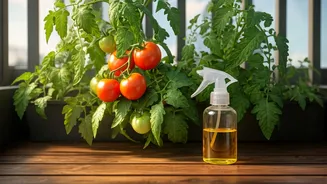



The Whitefly Menace in Your Tomato Patch
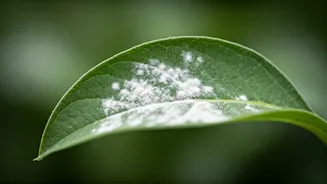
Whiteflies are tiny, sap-sucking insects that thrive in the warm, humid conditions of the Indian monsoon. [16] You'll often find them clustered on the undersides of tomato leaves. [12] They feed on the plant's juices, causing leaves to yellow, curl, and
drop prematurely. [5] This weakens the plant and can significantly reduce your tomato harvest. [5] Furthermore, they excrete a sticky substance called honeydew, which encourages the growth of a black, sooty mould that can interfere with photosynthesis. [4] Some whitefly species can also transmit plant viruses, like the Tomato yellow leaf curl virus, posing a serious threat to your crop. [12, 4]
Neem Oil: An Organic Guardian
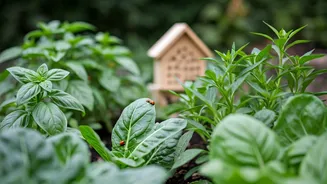
Derived from the seeds of the neem tree (Azadirachta indica), a plant revered in India for centuries, neem oil is a powerful tool for any organic gardener. Its key active compound, Azadirachtin, acts as a potent insecticide and fungicide. [7, 19] It works not as a harsh chemical that kills on contact, but by disrupting the life cycle of pests. [11] It repels insects, deters them from feeding, and interferes with their hormonal systems, preventing them from growing and reproducing. [7, 19] Unlike many synthetic pesticides, neem oil is biodegradable and safe for many beneficial insects like bees and ladybugs when applied correctly. [7]
Your Step-by-Step Guide to a Perfect Mix
Making your own neem oil spray is easy and cost-effective. For the best results, use 100% cold-pressed neem oil, which is less processed and more potent. [19] To make one litre of a general-purpose spray, you will need: * 1 litre of warm water * 5 ml (1 teaspoon) of cold-pressed neem oil * 1-2 ml (about ⅓ teaspoon) of a mild liquid soap Oil and water don't mix, so the soap acts as an essential emulsifier, allowing the oil to disperse evenly in the water. [20] First, mix the soap into the warm water, then slowly add the neem oil while stirring or shaking vigorously. [21] Pour the mixture into a spray bottle and remember to shake it often during application to keep the oil from separating. [10] Always make a fresh batch for each use, as the mixture loses its effectiveness within about eight hours. [2, 19]
Application: The Right Way and the Right Time
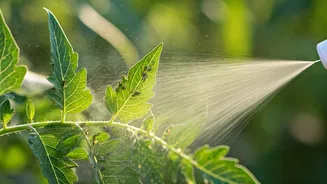
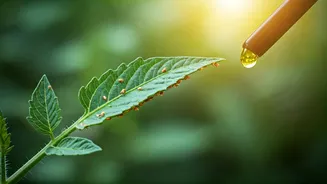
The key to effective whitefly control is thorough application. Use a sprayer that produces a fine mist and coat all surfaces of the tomato plant, paying special attention to the undersides of leaves where whiteflies and their eggs hide. [9, 12] The best time to spray is in the early morning or late evening. [9, 6] Applying neem oil in direct, hot sunlight can cause the oil to heat up and burn the leaves of your plants. [3] A consistent weekly application is recommended as a preventative measure throughout the monsoon. [18] If you're dealing with an active infestation, you may need to spray every few days for a week or two to bring it under control. [23]
Special Tips for the Monsoon Season
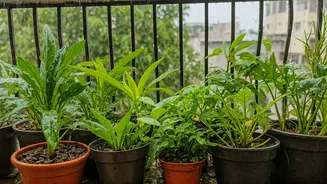
Gardening during the monsoon requires a bit of strategic timing. Rain can wash the neem oil off your plants, rendering it ineffective. [15] Always try to spray during a dry spell when rain isn't expected for at least a few hours, allowing the oil time to dry on the leaves. [25, 9] An evening application is often ideal, as it gives the spray the entire night to work before the morning sun. [25] If a heavy downpour occurs shortly after you've sprayed, you will need to reapply the neem oil once the leaves have dried. [25] Consistency is your greatest ally; a regular neem oil routine will create an unwelcoming environment for pests and help prevent fungal diseases that are also common in damp weather. [6]
Safety and Best Practices
While neem oil is natural, it's a potent substance. Always perform a patch test by spraying a small leaf and waiting 24 hours to ensure your plant doesn't have an adverse reaction. [11] Never apply a more concentrated solution than recommended, as this can harm the plant. [3] Though neem oil is considered safe, and you can even eat tomatoes from a sprayed plant, it's always best practice to wash your harvest thoroughly before consumption. [2] Store your bottle of pure neem oil in a cool, dark place to preserve its potency.