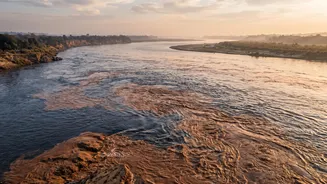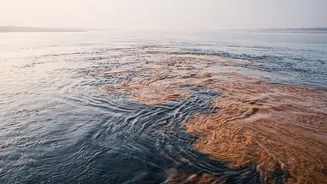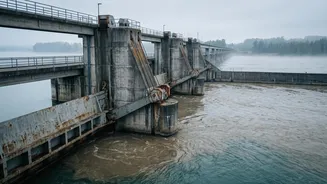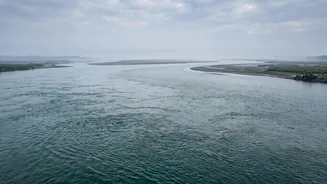






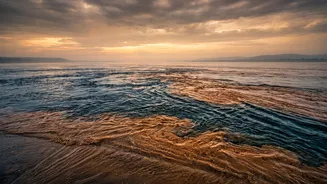


One of South Asia’s most significant bilateral treaties, the India-Bangladesh Ganges Water Sharing Agreement, is set to expire in December 2026. This 30-year pact has been a cornerstone of diplomacy, but its next chapter is far from certain.
A Landmark Accord Born from necessity
Signed in
December 1996, the Ganges Water Treaty was a historic achievement aimed at resolving decades of tension over water rights. The core of the dispute was India's Farakka Barrage, located just 18 kilometres from the Bangladesh border in West Bengal. Commissioned in 1975, the barrage was designed to divert water into the Hooghly River to improve navigation for Kolkata Port. However, this diversion significantly reduced the dry-season flow of the Ganges (known as the Padma in Bangladesh), causing widespread environmental and economic problems for the downstream nation. The 1996 treaty established a 30-year framework for sharing water from January 1 to May 31 each year, providing a crucial, if imperfect, mechanism for cooperation.
The Treaty’s Mixed Legacy
For three decades, the treaty has provided a structured formula for water allocation, preventing the dispute from spiralling into open conflict. It created a joint committee to monitor flows and established a baseline for diplomatic engagement. However, it has not been without its critics. Bangladesh has consistently argued that the flow received during the critical dry months is insufficient, impacting agriculture, fisheries, and increasing salinity in its southwestern regions. The 1996 agreement did not include a 'minimum guarantee' clause that was part of a previous 1977 accord, a point of contention for many in Bangladesh. Meanwhile, on the Indian side, states like Bihar and West Bengal have voiced growing concerns about their own rising water needs for agriculture and industry.
New Pressures on an Old Pact
The context for the treaty's renewal is far more complex than it was in 1996. Climate change is making river flows more erratic, with lower dry-season levels and more intense monsoon floods. Both nations face mounting domestic demand for water from growing populations and industries. Furthermore, the political landscape has shifted. India is facing calls from its own states to renegotiate terms to protect their interests. In Bangladesh, there is a push to address the long-term ecological consequences of reduced flows and to incorporate a more comprehensive, basin-wide approach rather than a simple volumetric sharing at a single point.
The Lingering Shadow of the Teesta
Complicating the Ganges negotiations is the unresolved issue of the Teesta River, another of the 54 rivers shared by the two countries. An agreement to share Teesta's waters was close to being signed in 2011 but was stalled by last-minute opposition from West Bengal's Chief Minister. This longstading impasse has become a major irritant in bilateral relations and a symbol of the challenges in transboundary water management. Many analysts believe that progress on the Ganges renewal may be indirectly linked to finding a path forward on the Teesta, as the two issues are intertwined in the public and political imagination of both countries.
The Path to Renewal
As the December 2026 deadline approaches, diplomatic activity is intensifying. The Joint Rivers Commission (JRC), the main bilateral mechanism for water cooperation, serves as the formal platform for discussions. However, a highlevel political push is deemed essential. India has invited the new Bangladeshi Prime Minister, Tarique Rahman, to visit, suggesting that a renewal will require toplevel engagement, similar to the original signing. Options on the table range from a straightforward renewal to a complete renegotiation with new terms, potentially including a shorter duration or updated watersharing formulas that account for climate change and ecological needs. Bangladesh is hopeful for a renewal before the expiry, but India has not yet formally responded to negotiation requests, creating a sense of uncertainty.