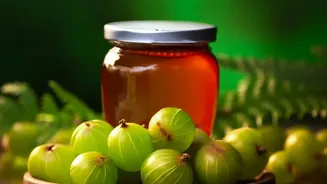







Amla (Indian Gooseberry)
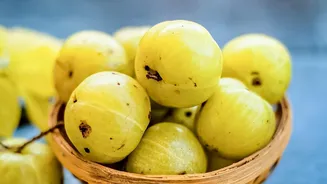
This small, translucent green fruit is a powerhouse of nutrition, celebrated for centuries in Ayurveda. Amla has a distinctively sharp, sour, and astringent taste that often finishes with a surprising hint of sweetness. While eating it raw is a popular
option, many prefer it pickled, candied (amla murabba), or juiced to balance its potent flavour. It's famously rich in Vitamin C, containing significantly more than oranges, which makes it an excellent choice for boosting immunity during the cold and flu season. This high vitamin content, along with other antioxidants, also contributes to better skin health by fighting dryness and promoting a natural glow.
Sitaphal (Custard Apple)
The bumpy, green exterior of the Sitaphal hides a wonderfully sweet and fragrant pulp. With a texture that lives up to its English name, 'custard apple', the fruit offers a creamy, soft flesh that tastes like a blend of pear, vanilla, and caramel. Its peak season in India runs from September through February. To enjoy it, you simply break the ripe fruit open and scoop out the pulp with a spoon, making sure to discard the glossy black seeds. Sitaphal is rich in fibre and antioxidants, making it a delicious and wholesome dessert fruit. While perfect on its own, its pulp is also famously used in desserts like rabdi, basundi, and ice cream.
Guava (Amrood)
A staple winter fruit across India, guava is prized for its versatility and robust nutritional profile. Depending on the variety, its flesh can be white or pink, with a flavour ranging from sweet to mildly tart. Guavas are an exceptional source of Vitamin C, even surpassing oranges, which helps in strengthening the body's defence against common winter illnesses like colds and flu. The fruit is also packed with dietary fibre, which aids digestion and helps create a feeling of fullness. It can be enjoyed fresh, often sliced and sprinkled with salt and chilli powder, or juiced.
Ber (Indian Jujube)
Known by many names including Indian jujube or Chinese date, Ber is a small, round fruit that is both sweet and tangy. It has a crisp, apple-like texture when fresh and a chewy, date-like consistency when dried. Ber is a good source of Vitamin C and antioxidants that help strengthen the immune system and improve skin health. Its high fibre content promotes healthy digestion and can provide relief from constipation. Traditionally, it is also valued for its calming properties that may aid in reducing anxiety and improving sleep.
Chikoo (Sapodilla)
With its grainy texture and malty, pear-like sweetness, Chikoo is a beloved winter fruit. It is an instant energy booster due to its natural sugars like fructose and sucrose. The fruit is a good source of dietary fibre, making it excellent for digestive health and preventing constipation. Rich in minerals like calcium, phosphorus, and iron, chikoo also helps in strengthening bones, which is particularly beneficial during colder months when joint stiffness can be an issue. Its Vitamin C and antioxidant content further support a strong immune system.
Oranges (Santra)
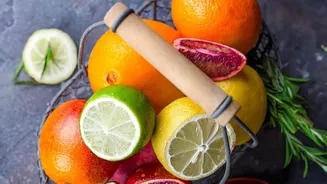
Winter in India is synonymous with the arrival of juicy oranges. Varieties like the famous Nagpur orange, the juice-heavy Kinnow from Punjab, and the aromatic Coorg and Khasi mandarins flood the markets. Known for their high Vitamin C content, oranges are essential for enhancing immunity during the colder months. They are also a good source of fibre and antioxidants. While perfect for eating fresh as a snack, their sweet and tangy flavour makes them ideal for juices, salads, and desserts.
Pomelo (Chakotra)
The largest of the citrus fruits, the pomelo, known as Chakotra in Hindi, is a winter delight. Its thick rind protects a mild, sweet flesh that is less bitter than its relative, the grapefruit. The pulp can range in colour from pale yellow to pink or red. Pomelo is rich in Vitamin C and antioxidants, making it another great fruit for boosting immunity. In India, it is often eaten fresh, sometimes with a sprinkle of salt and spices, or used in salads and traditional preparations like the Bengali 'Batabi Lebu Bhorta'.