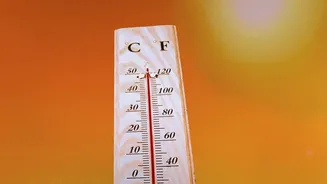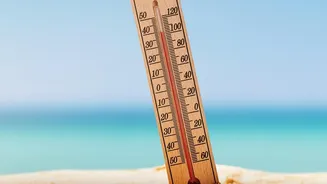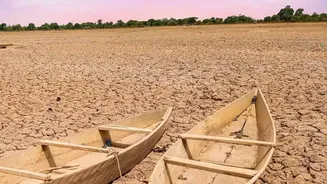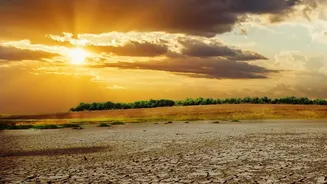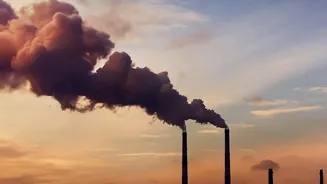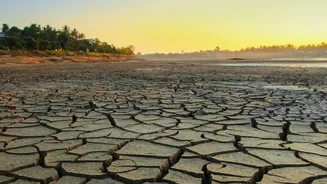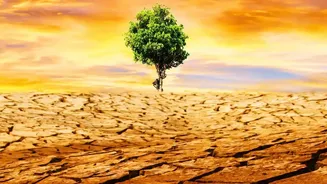




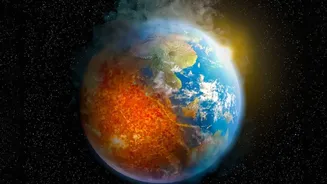
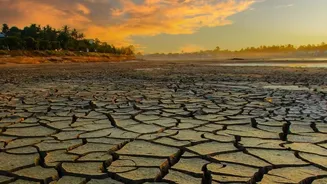

A stark new report released at the UN's COP31 climate conference in Antalya, Türkiye, confirms a worrying reality: global climate action has effectively stalled, making it nearly certain the world will overshoot its crucial 1.5°C warming goal.
Five Years of Stagnation
According
to the latest global update from the independent Climate Action Tracker (CAT), released to coincide with the COP31 summit, collective efforts to curb emissions have flatlined for five consecutive years. After initial progress following the 2015 Paris Agreement, which reduced long-term warming projections, the momentum has ceased. The report finds that positive steps, like the record deployment of renewable energy in China and India, are being cancelled out by rising overall energy demand and continued investment in fossil fuel infrastructure. As a result, global greenhouse gas emissions continue to rise, and the world is now on a trajectory for 2.7°C of warming by 2100 if only current policies are followed. Even if all national pledges are met, warming would still hit a dangerous 2.6°C.
What is the 1.5°C Limit?
The 1.5°C target is the central pillar of the Paris Agreement, an international treaty where nearly 200 countries committed to limiting the global average temperature increase to 'well below 2°C' above pre-industrial levels, while pursuing efforts to cap it at 1.5°C. This specific number wasn't arbitrary. Scientific bodies like the Intergovernmental Panel on Climate Change (IPCC) have shown that impacts become significantly more severe beyond this threshold. Vulnerable nations, particularly low-lying island states, fought for the inclusion of the 1.5°C goal, arguing it was essential for their survival against rising sea levels and extreme weather. Exceeding 1.5°C, even temporarily, dramatically increases the risk of triggering irreversible 'tipping points', such as the collapse of major ice sheets or the die-off of the Amazon rainforest.
An 'Irrecoverable Overshoot' is Now Unavoidable
The latest UN-backed reports, including the recent Emissions Gap Report from the UN Environment Programme (UNEP), state that decades of insufficient action have made it unavoidable that the world will temporarily exceed the 1.5°C warming limit, a scenario known as 'overshoot'. The focus of climate policy must now shift to minimizing the extent and duration of this overshoot. Current projections show the world is likely to cross the 1.5°C threshold around 2030. The UNEP report outlines that the 'lowest possible' overshoot path would see temperatures peak around 1.7°C to 1.8°C mid-century before hopefully returning to 1.5°C by 2100. However, achieving even this best-case scenario requires an immediate and drastic acceleration of emissions cuts—far beyond what countries have currently pledged.
The Contradiction of the Host Nation
The location of the COP31 summit in Antalya places host nation Türkiye under a particular spotlight. While the country is calling for accelerated global action, its own climate targets are rated as 'Critically Insufficient' by the Climate Action Tracker. Türkiye's national climate plan would see its emissions continue to increase over the next decade. This is despite its significant progress in expanding wind and solar energy. The government's parallel efforts to expand fossil fuel production and position itself as a fossil gas hub undermine its credibility and highlight the global challenge: a disconnect between long term net zero goals and short term policy actions that continue to fuel the crisis.
What Happens Now?
The message from these reports is one of extreme urgency. The window to avoid overshoot has closed, but the chance to limit its severity remains. To bring temperatures back down to $1$. $5$°C by the end of the century, the rate of emission cuts must accelerate dramatically. Analysts calculate this requires a $7$% year on year reduction in the first half of the $2030$s. Leaders at COP$3$ $1$ face a stark choice: continue supporting the fossil fuel industry or pivot fully to cheaper, readily available clean energy solutions. While the goalposts have shifted from prevention to damage control, experts stress that every fraction of a degree of warming that can be avoided will save lives and livelihoods, making the fight more critical than ever.