






Why the Raw Mango Pickle?
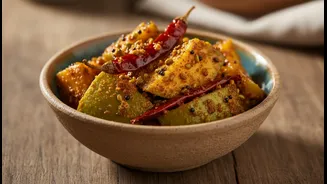
Across India, the arrival of summer is synonymous with the arrival of firm, green, unapologetically sour mangoes destined for the pickling jar. Aam ka achar is more than just a condiment; it's a vessel of nostalgia and a culinary cornerstone. Found in nearly
every household, it has the power to transform a simple meal of dal and rice or a plain paratha into a feast for the senses. Making it from scratch connects you to a tradition of preservation and flavour that has been passed down through generations. While many recipes exist, mastering a basic, quick version provides a foundation in balancing the core tastes of Indian cuisine: sour, spicy, salty, and pungent. It is a versatile staple that every home cook should have in their arsenal.
Selecting the Perfect Raw Mango
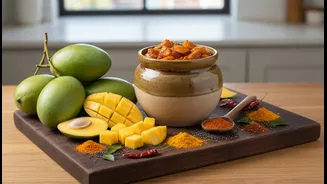
The success of your pickle begins at the market. You are not looking for the sweet, ripe mangoes of dessert fame. For a stellar achar, you need raw, unripe mangoes, often called 'kairi'. Look for fruit that is uniformly dark green, firm to the touch, and completely free of soft spots or wrinkles. The flesh should be crisp and stark white. The sourer the mango, the better it will stand up to the bold spices and act as a natural preservative. Varieties like Ramkela or local tart mangoes are often prized for pickling because they have firm flesh that doesn't turn to mush. Always ensure the mangoes are washed and, most importantly, completely dried before you begin cutting, as any moisture is the enemy of a long-lasting pickle.
The Essential Spice Melange
The soul of the mango pickle lies in its masala. While recipes vary by region and family, a classic blend includes a few key players. Mustard seeds (rai) provide pungency, fenugreek seeds (methi) add a pleasant bitterness, and fennel seeds (saunf) contribute a subtle sweetness. Turmeric powder (haldi) gives the pickle its vibrant colour and earthy notes, while red chilli powder provides the necessary heat. Finally, a pinch of asafoetida (hing) lends a unique, savoury depth. For the best flavour, many experts recommend lightly dry-roasting the whole spices before coarsely grinding them. This awakens their essential oils and creates a far more aromatic and flavourful pickle.
A Simple Method for Beginners
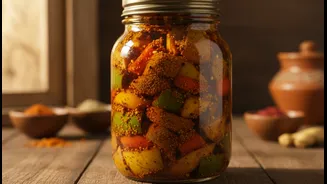
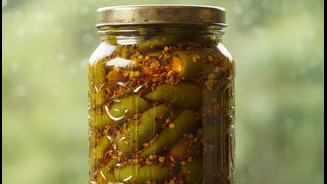
This quick method skips the days of sun-drying without sacrificing flavour. First, wash and thoroughly dry about 500g of raw mangoes. Cut them into small, uniform cubes, discarding the inner seed. In a large, dry bowl, toss the mango pieces with salt and turmeric powder and set aside. Next, prepare the spice mix by coarsely grinding roasted mustard seeds, fennel seeds, and fenugreek seeds. Add this ground masala to the mangoes along with red chilli powder and asafoetida. In a separate pan, heat about a cup of mustard oil until it just begins to smoke; this tempers its pungency. Turn off the heat and let the oil cool down completely. Once cool, pour the oil over the mango and spice mixture. Stir everything together with a clean, dry spoon until every piece is coated. Your pickle is ready to be bottled.
Tips for Pickle Perfection
Pickle making is an exact science, and a few rules are non-negotiable for success. First, sterility is key. Ensure your cutting board, knife, bowl, spoon, and especially the jar you'll be storing the pickle in are washed, completely dry, and preferably sterilised. Any trace of moisture can lead to spoilage. Second, be generous with the oil. The layer of oil on top of the pickle acts as a barrier against air and bacteria, ensuring a longer shelf life. Finally, while this pickle can be eaten almost immediately, its flavours will deepen and mature over a few days. Store it in a cool, dry place, and always use a clean, dry spoon to serve.