








The Problem of 'Talk Data'
Every business runs on conversations. Sales teams pitch, customer service agents troubleshoot, and project managers coordinate. This generates a massive amount of unstructured 'talk data'. Until recently, this data has been incredibly difficult to analyse.
Manual transcription is slow and expensive. Automated transcription often struggles with accents, industry-specific jargon, interruptions, and multiple speakers talking at once—creating messy, unreliable text that is almost as useless as the original recording.
What Are AI Copilots?
Enter the workspace AI copilot. These are not just simple transcription tools. Think of them as intelligent assistants embedded in your communication platforms like Microsoft Teams, Zoom, or Google Meet. Powered by advanced Large Language Models (LLMs)—the same technology behind tools like ChatGPT—these copilots listen in, transcribe in real-time, and, most importantly, understand the context of the conversation. Companies like Microsoft, Otter.ai, and Gong are leading this space, integrating AI to do more than just convert speech to text.
From Messy Transcript to Structured Insight
The magic happens in a multi-step process. First, the AI generates a raw transcript. It’s often imperfect, but this is just the starting point. Next, the AI uses Natural Language Processing (NLP) to clean and structure this mess. It identifies who is speaking, distinguishes between a question and a statement, and picks up on key terms. It can be trained on your company’s specific vocabulary, improving its accuracy over time. The AI then tags the conversation for key themes, action items, decisions made, and even sentiment—is the customer happy, frustrated, or confused? This structured data is far more valuable than a wall of text.
The Power of the Dashboard
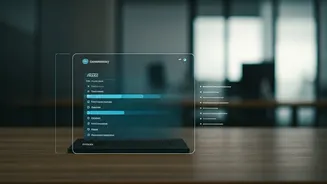
This is where the real transformation occurs. The structured data is fed into a visual dashboard that tells a story. Instead of reading a 30-page transcript of a sales call, a manager can look at a dashboard and see key information at a glance. What were the customer’s main objections? What competitor was mentioned most? Did the salesperson remember to discuss pricing for the new feature? These dashboards can track trends over time. For example, a customer support centre could analyse thousands of calls to identify the top three reasons for customer complaints in a given month, allowing them to fix the root cause rather than just handle individual calls. Action items are automatically pulled and assigned, ensuring no follow-up is forgotten.
Why This Matters for Indian Businesses
In a diverse market like India, with its multitude of languages and accents, this technology is particularly powerful. AI models are rapidly improving their ability to handle Indian English and regional linguistic nuances. For the massive BPO and customer service industry, it means a quantum leap in quality control and agent training. For burgeoning tech startups and corporate sales teams, it offers a way to mine every interaction for competitive intelligence without adding hours of manual work. It democratises data, giving teams instant access to insights that were previously locked away in forgotten conversations.
Challenges and the Road Ahead
Of course, the technology isn't perfect. Concerns around data privacy, security, and the accuracy of AI interpretation are valid and need careful consideration. Implementing these systems requires an investment and a cultural shift towards data-driven decision-making. However, the direction of travel is clear. These copilots are evolving from passive note-takers into proactive strategic partners. The future will likely see them offering predictive insights—flagging a deal at risk based on conversational sentiment or suggesting a solution to a customer problem before the agent even asks.