





The Great Lifespan Divide
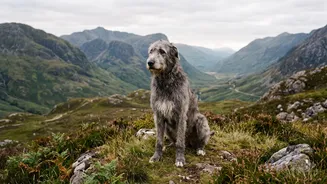
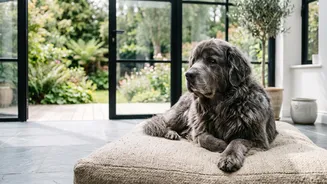
Anyone who has loved a Great Dane or a Saint Bernard knows the painful reality that their time is often far too short, while a Chihuahua or a toy poodle can remain a spry companion for 15 years or more. This seems counterintuitive; across the animal kingdom,
larger species like elephants and whales typically outlive smaller ones like mice. For a long time, the reason for this exception in dogs remained a mystery. A new wave of research, analyzing genetic data from hundreds of breeds, has uncovered that the answer lies in a fundamental evolutionary trade-off. It turns out that the very thing we prize in large dogs—their impressive size—comes at a steep biological cost.
Growth vs. Maintenance: A Genetic Trade-Off
The core finding of recent studies is that selective breeding for size has put large dogs on an accelerated life path. To achieve their size, these breeds grow incredibly quickly, with some puppies gaining over 100 pounds in their first year. This rapid growth is driven by genetic pathways, particularly involving a hormone called insulin-like growth factor 1 (IGF-1), which promotes fast cell division. However, this evolutionary fast-forwarding of growth did not come with a corresponding upgrade to the body’s maintenance and repair systems. In essence, their bodies are built for rapid expansion, but not for long-term endurance, leading to a faster rate of aging at a cellular level.
Unstable DNA and 'Jumping Genes'
A groundbreaking study published in the journal 'Science' drills down to the epigenetic level—the chemical tags on DNA that regulate which genes are active. Researchers at Arizona State University, using data from the Dog Aging Project, found that as dogs age, they lose control over sections of DNA called 'jumping genes' or transposable elements. These rogue bits of DNA can copy themselves and reinsert into the genome, causing instability and damage. One key type, known as LINE-1, was found to be a major factor. The study of 864 dogs revealed that larger breeds lose the chemical controls on these jumping genes much faster—about 35% more per year than small breeds—which appears to drive their accelerated aging.
Cancer: An Unfortunate Side Effect
One of the most devastating consequences of this accelerated growth is a significantly higher risk of cancer. Rapid cell division inherently increases the chances of mutations that can lead to cancer. Studies involving tens of thousands of dogs confirmed that large breeds are far more likely to die from cancer, and at a younger age, compared to their smaller counterparts. Their bodies simply have more cells, and those cells divide faster, creating more opportunities for something to go wrong without the enhanced cancer-fighting defenses needed to counteract it. This suggests the link isn't just a coincidence but a direct result of the genetic pathways selected for size.
What This Means For Your Big Best Friend
While these genetic findings might seem grim, they provide invaluable knowledge. Understanding the specific mechanisms of aging in large dogs opens the door for future research into targeted health interventions. Scientists hope that by studying dogs, who share our environment and suffer from similar age-related diseases, we can learn more about aging in humans, too. For owners, this research underscores the importance of proactive veterinary care. Regular check-ups, maintaining a healthy weight to reduce stress on the body, and early screening for conditions like cancer are crucial for helping your large-breed dog live the longest, healthiest life possible.