




The Challenge of Data Overload
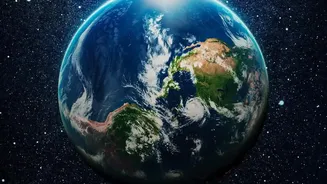
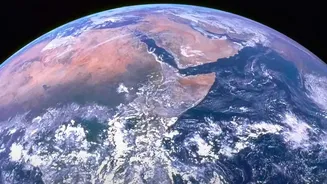
For decades, NASA has been our eyes in the sky, using a fleet of Earth-observing satellites to collect a staggering amount of information about our planet. These instruments gather crucial data on everything from polar ice sheets and ocean currents to atmospheric
gases and forest cover. This constant stream of data is essential for understanding climate change, but it also presents a massive challenge. The sheer volume, now measured in petabytes (one petabyte is equivalent to about 20 million feature-length films), has outpaced the ability of scientists to manually analyse it. Traditional methods of processing this information are slow and labour-intensive, creating a bottleneck that can delay critical insights. In a world facing rapid environmental shifts, waiting months or years to understand new trends is a luxury we can no longer afford.
Meet Prithvi: An AI for Planet Earth
In response to this data deluge, NASA has partnered with technology giant IBM to develop a new generation of artificial intelligence known as 'foundation models'. One of the flagship models is aptly named Prithvi, the Sanskrit word for Earth. Think of a foundation model like a highly educated university graduate. It has been trained on a massive, general dataset—in this case, years of harmonized satellite imagery from NASA and the European Space Agency—allowing it to learn the fundamental patterns of our planet without human supervision. This pre-trained knowledge makes Prithvi incredibly versatile. Instead of building a new AI for every single task, scientists can take this 'foundation' and quickly fine-tune it with a small amount of specific data to perform specialised jobs.
From Raw Data to Real-Time Insights
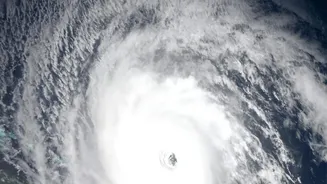
So, what can this AI actually do? Its applications are vast and transformative. Scientists have already successfully used Prithvi to automatically map burn scars left by wildfires, identify areas of flooding after a storm, and classify different types of land use, such as distinguishing between forests and farmlands. Another model in the family, Prithvi-Weather-Climate, can sift through 40 years of climate data to improve weather forecasting and climate projections. One of its most powerful capabilities is 'downscaling', where it can take low-resolution global climate predictions and zoom in to provide high-resolution forecasts for a specific region, sharpening the picture from a 150-square-kilometre view to just 12.5 square kilometres. This could mean more accurate warnings for extreme weather events like floods and hurricanes.
An Open-Source Revolution in Climate Science
Crucially, NASA and IBM have made these powerful AI models open-source, meaning they are freely available for anyone in the world to use and build upon. This democratic approach is designed to accelerate discovery and empower a global community of researchers, academics, and even corporations to tackle environmental challenges. By removing the immense computational cost of building such a model from scratch, a small university or a non-profit in a climate-vulnerable nation can now leverage the same cutting-edge technology as a major government agency. This collaborative spirit is already bearing fruit; one team unexpectedly used the model to predict locust breeding grounds in Africa, a problem they had struggled with for years. Another model, TERRAHydro, is being developed to specifically focus on the water cycle, with applications for understanding water availability in critical regions like the Himalayas.
The Future of Earth Observation is Here
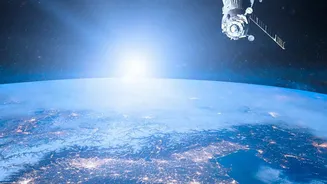
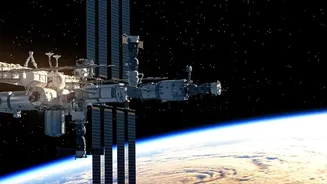
The deployment of these AI models marks a fundamental shift in Earth science—from reacting to changes to predicting them. Recently, a version of Prithvi was successfully deployed aboard the International Space Station, allowing it to analyse data directly in orbit without first sending it back to Earth. This opens the door to truly real-time monitoring of natural disasters. Looking ahead, the goal is to create a suite of foundation models for all of NASA's science domains, from heliophysics to astrophysics. Scientists envision a future where they can interact with these AI models in natural language, essentially having a conversation with the satellite to ask questions about the planet's health. This fusion of human expertise and artificial intelligence promises to not only speed up climate research but also to uncover complex patterns in Earth's systems that we have yet to understand.