

The Spirit of the Sadya
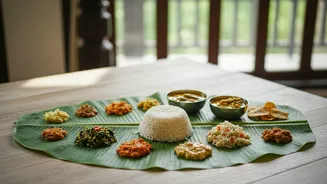
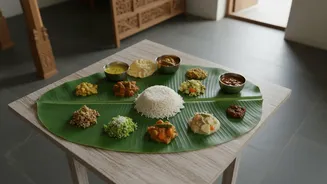
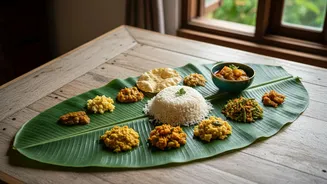
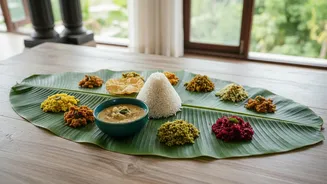
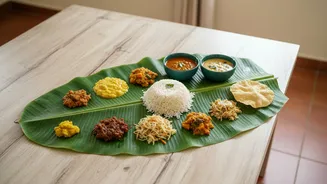
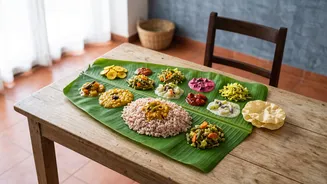
Sadya, meaning banquet in Malayalam, is more than just a meal; it's a cultural experience. This elaborate feast, traditionally served on a fresh banana leaf, can feature anywhere from 20 to over 60 vegetarian dishes. It celebrates the legendary King Mahabali's
homecoming and represents a golden age of prosperity and equality. Each dish has its place and purpose, creating a perfect balance of sweet, salty, sour, spicy, and bitter tastes that reflect Ayurvedic principles of complete nourishment.
The Essentials: Pickles and Starters
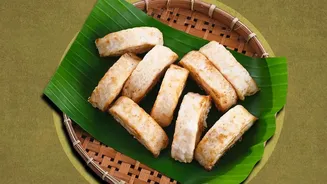
The feast begins with a variety of accompaniments served on the upper half of the banana leaf. A pinch of salt is placed first. Then come the crunch: Upperi (banana chips) and the sweet, jaggery-coated Sharkara Varatti. A small, ripe banana (Pazham) is also essential. Next are the pickles (Achaar), like tangy mango and lime, and the indispensable Inji Puli or Puli Inji, a sweet and sour ginger-tamarind chutney that aids digestion.
The Core Curries and Vegetable Dishes
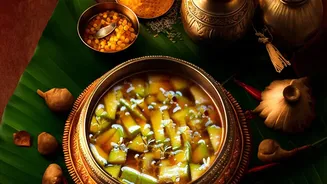
This is the heart of the Sadya, a colourful array of vegetable preparations. Avial is arguably the most iconic, a thick medley of mixed vegetables in a coconut and yogurt base. Thoran is a dry stir-fry of finely chopped vegetables like cabbage or beans with grated coconut. Olan is a milder, delicate curry of ash gourd and red beans in coconut milk, while Kalan is a thicker, sour curry made from yam or raw banana in yogurt. Erissery, a comforting dish of pumpkin and lentils with roasted coconut, is another staple. You'll also find Pachadi and Kichadi, which are yogurt-based side dishes, often made with cucumber, beetroot or pineapple, adding a cooling, tangy element to the meal.
The Main Course: Rice and Gravies
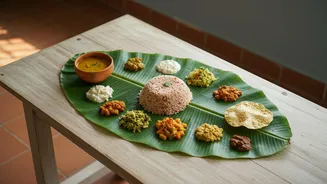
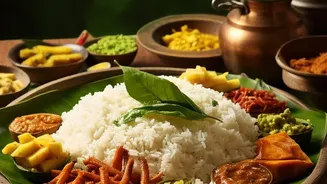
Once all the side dishes are served, a mound of fluffy Kerala red rice (Matta rice) is placed in the centre of the lower half of the leaf. The meal proceeds in courses. The first serving is Parippu, a simple lentil curry, served with a spoonful of fragrant ghee. This is followed by Sambar, the famous tangy lentil stew with vegetables. Other liquid curries like Pulissery (a yogurt-based curry) and the peppery, tamarind-infused Rasam follow, each cleansing the palate for the next flavour.
The Art of Serving on a Banana Leaf
The placement of each dish on the banana leaf, or 'Thooshanila', is a tradition in itself. The leaf should be placed with its narrow tip pointing to the guest's left. All the side dishes, pickles, and chips are served on the top half of the leaf, starting from the left tip. The Pappadam is placed on the bottom left. The rice is served in the center of the bottom half, leaving space for mixing. This specific arrangement is not just for aesthetics; it allows for a systematic and enjoyable eating experience, with the right hand used to mix small portions of rice with different curries.
The Sweet Finale: Payasam
No Sadya is complete without Payasam, a rich and creamy dessert. Often, two or three varieties are served. Popular choices include Palada Pradhaman, made with rice flakes and milk, and Parippu Pradhaman, made with lentils and jaggery. The payasam is sometimes enjoyed by mixing it with a small piece of banana and a crushed pappadam, creating a unique blend of sweet and savoury flavours to conclude the feast.