






A Policy-Powered Launch
The dramatic shift began with key policy reforms, most notably the Indian Space Policy 2023. This landmark policy unlocked the entire space value chain for private participation. Before this, private firms were largely limited to being component suppliers
for the Indian Space Research Organisation (ISRO). Now, they are encouraged to undertake end-to-end activities, from building satellites and launch vehicles to managing ground stations and developing new space-based applications. To facilitate this, the government established the Indian National Space Promotion and Authorisation Centre (IN-SPACe) as a single-window agency. IN-SPACe's role is to authorise, promote, and handhold private entities, providing them access to ISRO's state-of-the-art facilities and expertise, which was previously inaccessible.
The Rise of the Space Startups
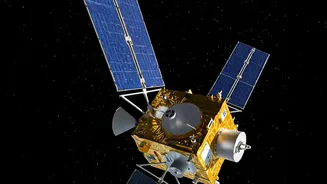
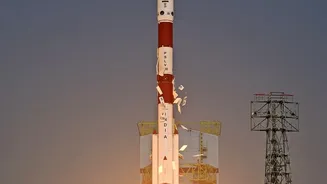
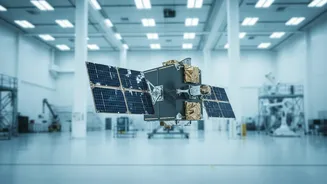
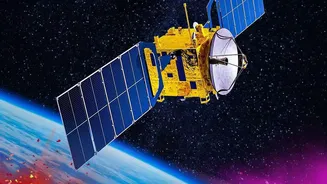
This new, open environment has led to an explosion of entrepreneurship. India is now home to over 450 space startups, a massive leap from just a handful six years ago. Companies like Skyroot Aerospace and Agnikul Cosmos are making headlines by developing their own rockets. Skyroot recently marked a historic milestone with its Vikram-1 rocket, making India only the third country, after the US and China, to have a privately developed orbital launch vehicle. Meanwhile, Agnikul has distinguished itself by building India's first semi-cryogenic, 3D-printed engine and establishing its own private launchpad. Others like Pixxel are focused on creating constellations of advanced Earth-observation satellites capable of monitoring everything from crop health to pollution in real-time with hyperspectral imaging.
An Economic Liftoff
The impact on India's economy is already significant and poised for exponential growth. India's space economy, valued at approximately $8.4 billion today, is projected to surge to around $44 billion by 2033 and $100 billion by 2040. This growth is being fuelled by a surge in domestic and foreign investment. Over the last few years, Indian space startups have raised hundreds of millions of dollars in funding, with major global investors like Alphabet Inc. taking notice. The government is also catalysing this growth, establishing dedicated venture capital funds to support early-stage companies. This influx of capital not only funds innovation but also creates thousands of high-skilled jobs, and is even reversing brain drain by attracting experienced Indian scientists back from state institutions and global firms.
Innovation Beyond the Launchpad
The true significance of India's private space boom lies in how it will revolutionise industries on the ground. The data and services provided by private satellite constellations will have a transformative effect on agriculture, disaster management, urban planning, logistics, and climate monitoring. Pixxel’s hyperspectral satellites, for instance, can provide farmers with precise data to improve crop yields and manage resources more efficiently. The development of cost-effective, private launch services democratises access to space, allowing smaller companies, universities, and even other nations to deploy their own satellites affordably. This creates a ripple effect of innovation, as more players can now leverage space technology to solve Earth-bound problems.